


Coloring can leave hair feeling rough, porous, or less resilient because the process affects more than the surface cuticle. A useful repair routine considers the cuticle, cortex, and cell membrane complex together. It does not treat every sign of damage as a single broken bond.
Shop the Solanesse post-color hair treatment
A peptide hair treatment uses short chains of amino acids, the building blocks of proteins such as keratin, in a conditioning formula designed to support the feel and appearance of weakened hair. It is a cosmetic repair step, not a medical hair-loss treatment, and works best as part of consistent care for color-treated or heat-stressed strands.
What Is a Peptide Hair Treatment?
A peptide hair treatment is a cosmetic conditioner that uses short amino-acid chains to support the feel and appearance of weakened hair. It is designed for the existing hair fiber, not for medical hair-loss treatment. For color-treated strands, the practical aim is smoother, softer, more manageable hair.
In a rinse-out formula, peptides work as part of a broader conditioning system. They may help the hair fiber feel smoother and more resilient by supporting the surface and structure of damaged strands. That does not mean a conditioner can rebuild living tissue or permanently reverse every change caused by chemical processing. Hair fiber is nonliving once it emerges from the scalp, so visible improvement generally means better feel, manageability, shine, and the appearance of healthier ends.
Peptides are not all the same
Peptide is a category, not a single promised outcome. Size, source, concentration, and the surrounding formula all influence how an ingredient behaves. Read the full formula and product directions instead of assuming every peptide hair treatment works in the same way.
Cosmetic repair versus medical hair-loss treatment
This distinction matters. A peptide hair treatment applied to the lengths and ends is designed to condition the existing fiber. It can be useful when color-treated hair feels dry, dull, tangled, or fragile. It cannot diagnose the reason for shedding, stimulate a dormant follicle, or substitute for evaluation by a dermatologist. Persistent shedding, sudden thinning, scalp inflammation, or bald patches deserve medical attention.
How Do Peptides Support Hair Protein Structure?
Peptides support hair care by contributing amino-acid-based conditioning within a formula designed for the keratin-rich hair fiber. They work alongside conditioning agents that improve surface slip and softness. This can support the appearance of resilience without promising to permanently rebuild every damaged bond.
The cuticle: the protective outer layer
The cuticle is the hair’s outer shield, made of overlapping cells that help protect the layers beneath. Color processing can disturb this surface and affect the oils that help hair feel smooth. When the cuticle is raised or roughened, light reflects less evenly, so hair may look dull and feel less polished. Conditioning ingredients can improve slip and surface feel, while protein-based ingredients help support the appearance and resilience of the fiber.
The cortex: the body of the hair fiber
The cortex sits beneath the cuticle and provides much of the hair’s strength, elasticity, and shape. It contains keratin, the structural protein that gives hair its framework. Chemical processing and repeated heat can place stress on this internal structure. Peptides are short chains of amino acids and building blocks associated with proteins such as keratin and collagen. In a rinse-out treatment, they can help condition and reinforce the feel of weakened hair. But that does not mean they permanently rebuild every damaged bond or penetrate through every layer.
The cell membrane complex: the connection between layers
Between the hair’s structural regions is the cell membrane complex, a lipid-rich material that helps hold adjacent cells together and supports cohesion within the fiber. Color services can affect this internal “glue,” which is one reason a surface-only approach may not address the full experience of dry, porous, or fragile hair.
How Does a Peptide Hair Treatment Fit Color-Treated Hair Care?
A peptide hair treatment fits after cleansing as a rinse-out conditioning step for color-stressed lengths. It can help improve softness, slip, and manageability while the hair is cared for consistently. The role is cosmetic support for the existing fiber, not a claim that chemical damage can be erased.
That is where a peptide-containing rinse-out treatment can earn a place. Peptides are short chains of amino acids, and amino acids are building blocks of proteins such as keratin. In a cosmetic treatment, peptides are best understood as part of a conditioning and structural-support formula, not as a promise to reverse every effect of chemical processing. For a closer look at the cuticle, cortex, and cell membrane complex, read Solanesse’s guide to hair repair science.
Why use it after a color service?
Immediately after coloring, hair may feel less smooth because the cuticle has been stressed and the fiber can lose moisture more easily. A rinse-out treatment can coat and condition the strand, helping improve slip, softness, and manageability while you continue caring for the hair. It can also complement habits that protect the color itself, such as gentle cleansing, heat control, and consistent conditioning. The goal is to make damaged, processed lengths easier to handle and less vulnerable to everyday friction. A treatment cannot make processed hair permanently unaltered.
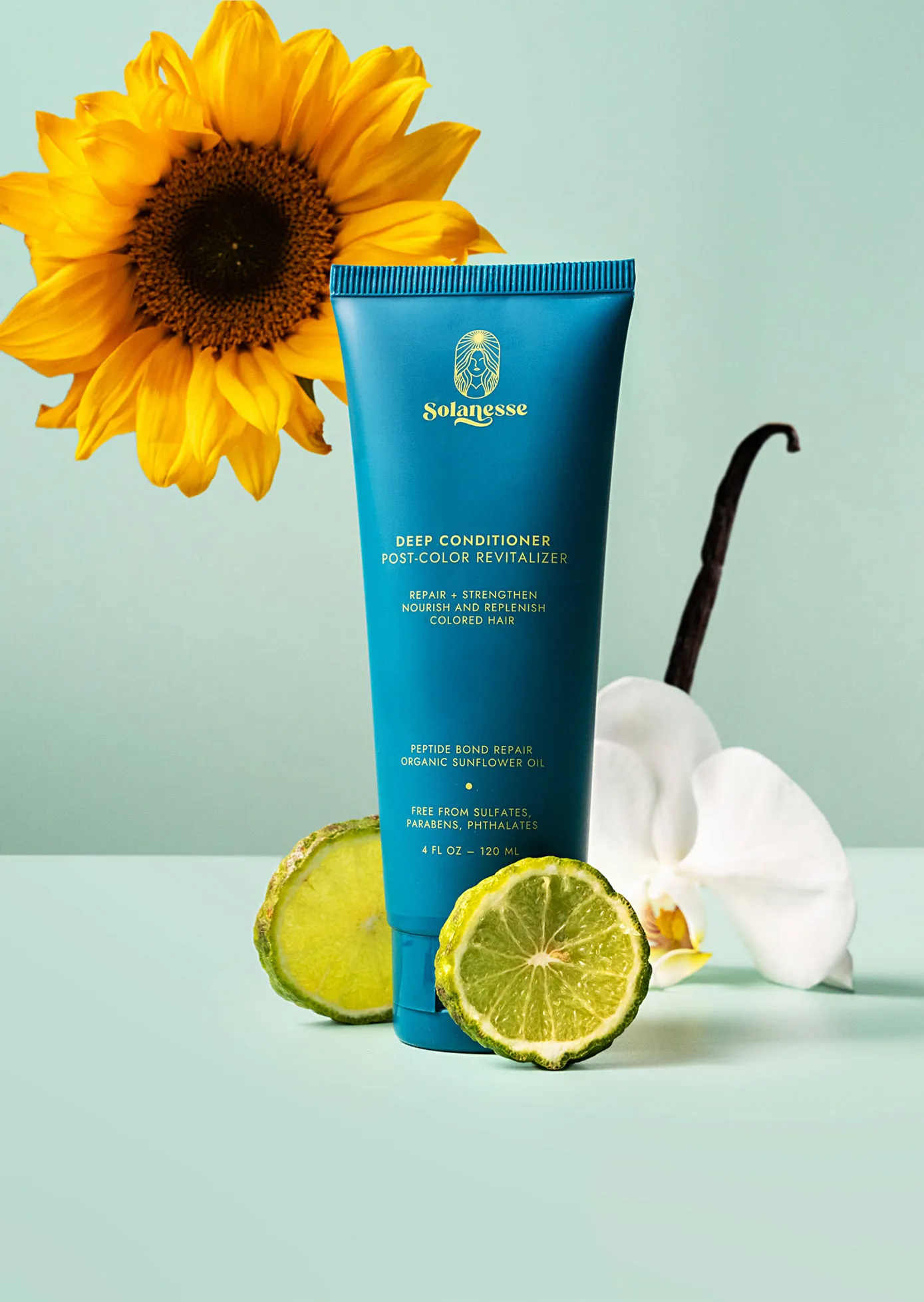
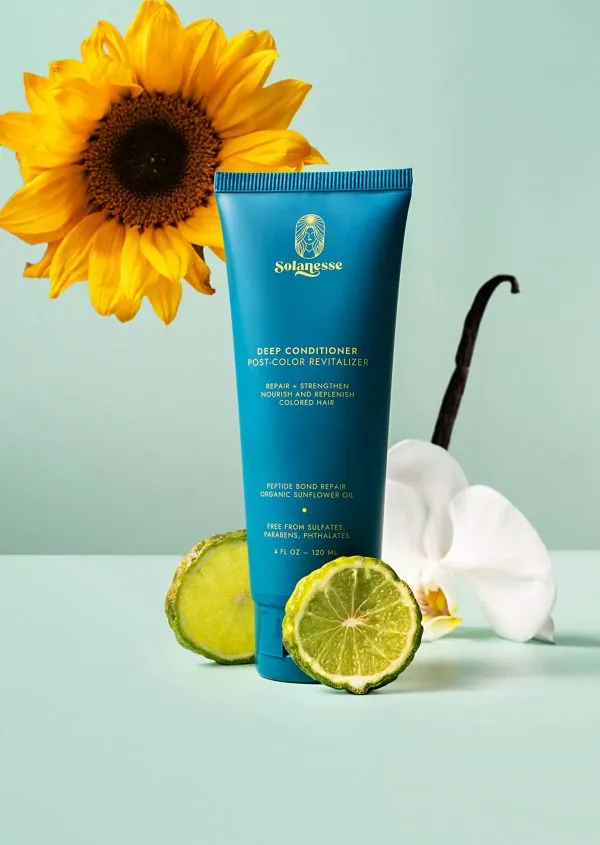
Solanesse’s post-color hair treatment combines peptides with keratin and collagen. Apply it as a rinse-out treatment for 10 to 15 minutes, then use it weekly or as needed for intensive care. The current product details list the 4 oz size at $39. That format makes it a treatment step for the lengths and ends, rather than a leave-on scalp product.
What it cannot do
A peptide hair treatment cannot restore virgin hair, prevent all breakage, or replace a professional assessment when shedding or scalp symptoms are the concern. It also should not be confused with a medical hair-growth treatment. Cosmetic repair is cumulative care: keep chemical services appropriately spaced, handle wet hair gently, and adjust treatment frequency to your hair’s texture and condition. For a practical sequence of protective steps, explore the peptide-based post-color recovery guide.
Peptide Hair Treatment vs Scalp Serum: What Is the Difference?
A rinse-out peptide hair treatment is applied to the lengths and ends, while a peptide scalp serum is applied to the scalp and usually remains there. Choose the format based on the area you want to address. Neither should be treated as a proven medical hair-growth treatment.
The distinction matters after coloring or bleaching. Hair fiber care and scalp care are related, but they are not interchangeable. Choose based on the site you want to address, the amount of contact time the formula requires, and the cosmetic purpose supported by its directions.
| Consideration | Rinse-out peptide-containing conditioner | Leave-on scalp peptide serum |
|---|---|---|
| Intended site | Applied through the lengths and ends of the hair. This is the most relevant placement when the concern is dry, rough, tangled, or color-stressed fiber. | Applied directly to the scalp, usually along the part lines or other areas specified by the product directions. It is intended for scalp-focused care. |
| Contact time | Works during a defined treatment window, then is rinsed away. The Solanesse Deep Conditioner Post-Color Revitalizer is directed for 10 to 15 minutes and can be used weekly or as needed. | Remains on the scalp after application. The Ordinary’s product directions provide an example of a leave-on format, with application built around continued scalp contact rather than a rinse-out mask. |
| Realistic purpose | Cosmetic conditioning and a smoother, softer hair feel. Solanesse describes a formula containing peptides, keratin, and collagen for post-color hair care. | Scalp-focused cosmetic support. A serum should not be treated as proof of new growth or as a substitute for evaluation and medical treatments for hair loss. |
How Should You Use a Peptide Hair Treatment?
Use a rinse-out peptide treatment after cleansing, on warm damp hair, with even coverage through the lengths. Leave it on for the instructed treatment window, then rinse thoroughly. Solanesse recommends 10 to 15 minutes and weekly or as-needed use for its post-color treatment.
-
Start with warm, damp hair
After washing, leave the hair warm and damp before applying the treatment. Gently remove excess water so the hair is not dripping. This gives you a workable base for distributing the conditioner from the roots through the ends.
-
Massage from root to tip
Apply the Solanesse Deep Conditioner Post-Color Revitalizer and massage it through the hair from root to tip. Work methodically so the treatment reaches the areas that feel dry or stressed after color processing. Avoid rushing through the lengths, where tangling and rough texture can make even application more difficult.
-
Leave it on for 10 to 15 minutes
Allow the treatment to remain on the hair for 10 to 15 minutes. Use this time to let the conditioner sit without adding heat or changing the instructed timing. If your hair is color-treated, bleached, or frequently exposed to heat, consistency matters more than leaving the product on longer than directed.
-
Rinse with warm water
Rinse the hair thoroughly with warm water once the 10 to 15 minutes are complete. Continue until the treatment has been removed and the hair feels clean without a heavy coating. A complete rinse helps preserve a light, manageable finish.
-
Repeat weekly or as needed
Use the treatment weekly or as needed, depending on how your hair feels and how often it is exposed to color processing or other stress. A weekly rhythm can provide a consistent conditioning step, while as-needed use allows you to adjust around your existing color-care routine. The product is designed as a cosmetic rinse-out treatment, not as a scalp serum or medical hair-loss treatment.
What Results Can You Reasonably Expect?
The most realistic results from a peptide hair treatment are cosmetic: softer-feeling strands, improved slip, more shine, and easier detangling. Results vary with porosity, color history, and styling habits. Claims about regrowth or medical hair-loss changes require a different standard of evidence.
What you may notice after the first use
A rinse-out treatment can provide an immediate improvement in feel because conditioning ingredients coat and lubricate the hair fiber. After rinsing and drying, hair may feel smoother through the lengths, appear more polished, and respond better to brushing. This is a sensory and visual result, not proof that the internal structure has been permanently restored. Your starting condition, porosity, recent color service, and styling habits all affect how noticeable the change will be.
Solanesse is designed as a 10- to 15-minute post-color conditioning treatment. Its formula combines peptides with keratin and collagen, supporting a whole-structure approach that considers the cuticle, cortex, and cell membrane complex. You can learn more about the brand’s approach to hair repair science without confusing improved manageability with a medical result.
What consistent use can support
With weekly or as-needed use, the goal is to maintain a more conditioned feel as new styling and color stress accumulate. Hair may remain easier to comb, less prone to a dry-looking finish, and more manageable between color appointments. Consistency also helps you assess whether the product suits your hair, rather than judging it by one wash alone. Use the treatment according to its instructions and adjust based on how your hair feels, especially if your strands are fine or easily weighed down.
Expectations should be different for scalp and growth claims. Evidence for peptide products producing hair growth, reversing hair loss, or creating medical changes remains limited. A cosmetic treatment should not be presented as a substitute for an evaluation or an established medical treatment for thinning or shedding. If you are concerned about persistent hair loss, speak with a qualified healthcare professional.
Shop the Solanesse Deep Conditioner Post-Color Revitalizer
Frequently Asked Questions
What does a peptide hair treatment do for color-treated hair?
It supports a broader repair routine by conditioning areas affected by coloring, including the cuticle, cortex, and cell membrane complex. Peptides are short amino-acid chains that contribute to protein structure, but they are not a substitute for gentle cleansing, heat protection, or careful handling.
Are peptide hair treatments the same as hair-growth treatments?
No. A rinse-out treatment is designed primarily for cosmetic conditioning, softness, manageability, and the appearance of healthier hair. Evidence for peptides and hair growth remains limited and developing, so products positioned for breakage repair should not be presented as medical treatments for hair loss. Persistent shedding or thinning warrants evaluation by a qualified clinician.
How is a peptide conditioner different from a peptide scalp serum?
A conditioner is applied through the lengths and ends, then rinsed away after its stated processing time. A scalp serum is typically a leave-on product applied to the scalp, with different instructions and goals. Follow the directions for the specific formula rather than treating the two formats as interchangeable.
How often should I use a peptide hair treatment?
For the Solanesse Deep Conditioner Post-Color Revitalizer, the product guidance is weekly or as needed for intensive repair, with a 10- to 15-minute rinse-out application. Source: Solanesse product instructions.
Can I use one after every color service?
It can fit into a post-color routine when your hair needs conditioning, especially if coloring leaves it dry, rough, or less manageable. Use the product instructions as your baseline, then adjust frequency based on your hair’s condition and how it responds. More product or more frequent use is not automatically better.
Ready to support your post-color repair ritual?
If color-treated hair feels dry, rough, or less manageable, a focused rinse-out treatment can add a practical conditioning step to your routine. Solanesse Deep Conditioner Post-Color Revitalizer is designed for post-color care with a science-backed approach to hair’s structure. Shop the Solanesse Deep Conditioner Post-Color Revitalizer and get started with a considered treatment for color-treated hair.


