


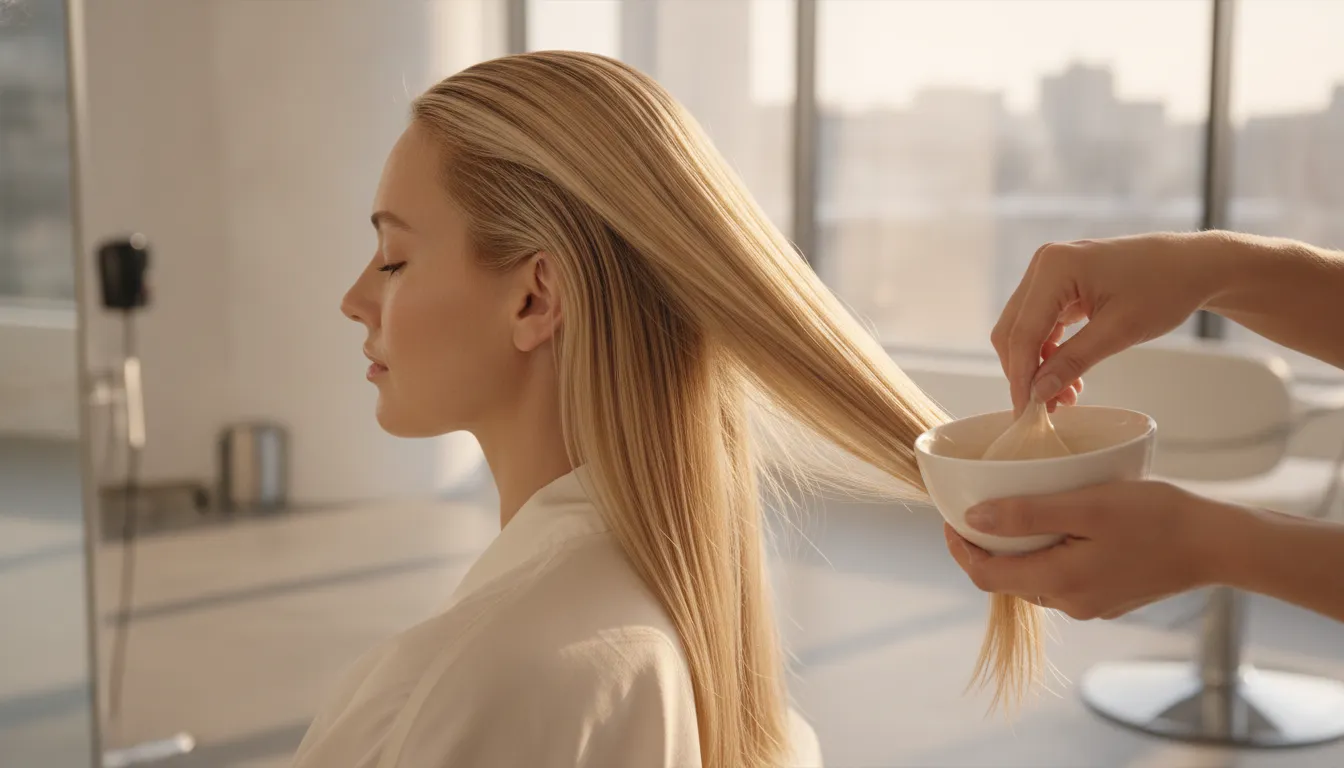
If you are wondering how to fix hair breakage from bleach, first reduce chemical and mechanical stress. Pause additional lightening and handle the lengths gently. Use conditioning care to improve softness and slip. Treatments can improve feel and manageability. They cannot reconnect a split strand or restore hair that has broken.
Explore the Deep Conditioner – Post Color Revitalizer for color-treated lengths.
Bleach-related breakage is easier to manage when you identify it early. Short pieces around the shoulders, rough ends, increased tangling, or strands snapping during detangling can point to more than ordinary shedding from the root.
Look at your hair wet and dry. Adjust cleansing, conditioning, strengthening support, heat, and detangling as one calm routine. Preserve the lengths you have while deciding whether a stylist or clinician should assess your hair or scalp.
What Does Bleach Damage Look Like Before It Becomes Breakage?
Bleach-related damage often appears before a strand snaps. Assess the shaft rather than the amount of hair in your brush. Short broken pieces, rough ends, unusual tangling, and a gummy wet feel are useful warning signs.
Hair that feels rough, tangles quickly, or stays elongated when wet may be losing strength. Research indexed by PubMed notes that bleaching can weaken hair fibers and increase breakage risk. A separate proteomic study found that hydrogen peroxide bleaching increases oxidative damage within the fiber (PubMed).
Breakage or ordinary shedding?
Shedding comes from the root. A shed strand is usually close to your full hair length and may have a small bulb at one end. Breakage happens along the shaft, so pieces may be much shorter than your normal length.
Look for short fragments on clothing, bedding, or the sink. Broken ends may appear blunt, frayed, split, or uneven. A widening halo of short hairs around the crown or hairline can also point to snapping after lightening. Texture and behavior matter too.
What to do when warning signs appear
- Pause additional bleaching or high-lift color until a stylist assesses the lengths.
- Wash gently, condition the mid-lengths and ends, and detangle from the ends upward.
- Use lukewarm water, a soft towel or cotton T-shirt, and minimal heat while the hair is fragile.
- Seek professional advice if breakage is severe or bleaching caused scalp pain, blistering, persistent burning, swelling, or sores.
Once you know whether you are seeing shaft breakage or routine shedding, you can choose a more precise recovery plan. This is more useful than treating every hair concern as simple dryness.
How to Fix Hair Breakage from Bleach Safely
To fix hair breakage from bleach safely, reduce chemical and mechanical stress before adding more treatments. Protect the lengths that remain. Keep wash day low-friction. Use a measured conditioning routine while a stylist assesses the damage.
The first response should be simple enough to repeat. Avoid correcting every color concern at once. A calm routine shows what improves manageability and what makes hair feel more fragile.
-
Pause bleach and other chemical processing
Do not correct uneven color, brassiness, or regrowth with another round of lightener immediately. Pause bleaching until the fragile areas have been assessed. If the scalp is painful, blistered, intensely irritated, or showing an unusual reaction, contact a qualified professional instead of treating it at home.
-
Cleanse gently when you next wash
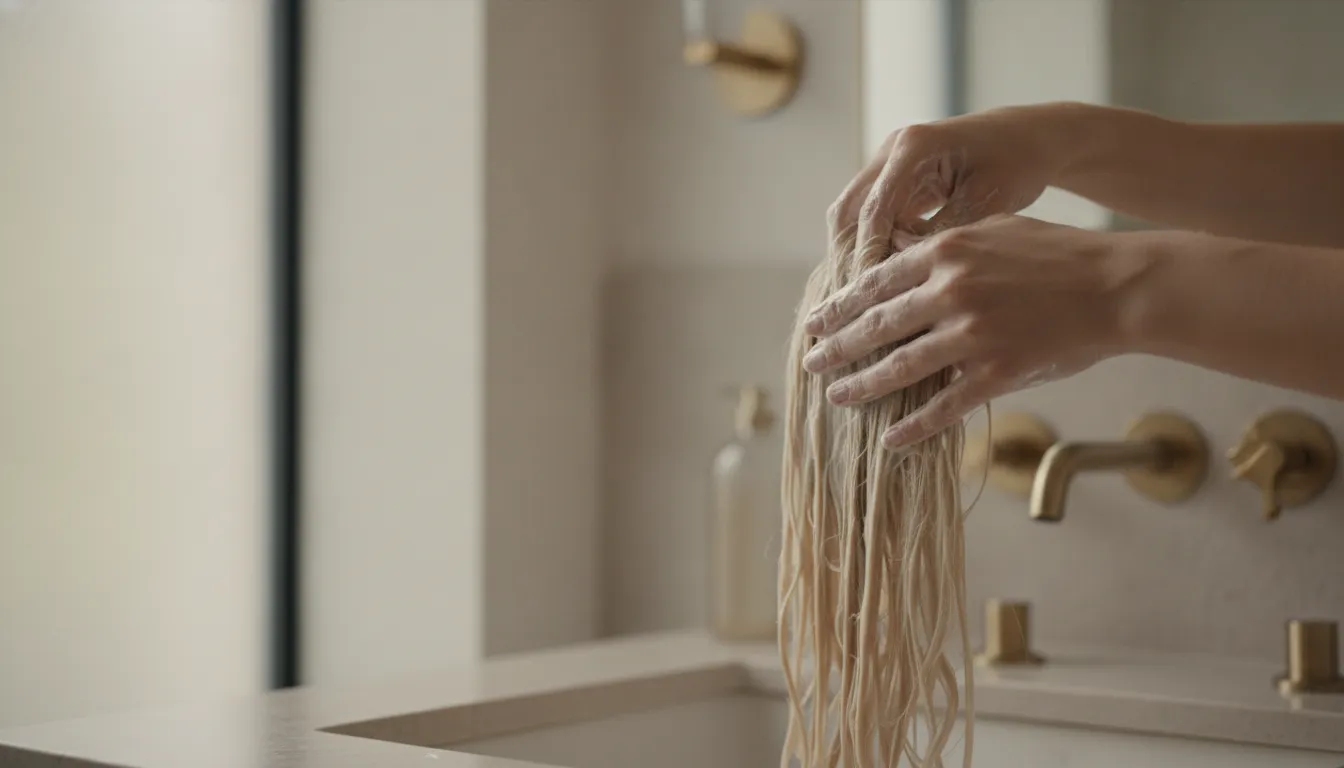
Use a gentle shampoo and lukewarm water. Work cleanser through the scalp with your fingertips. Let the lather rinse through the lengths instead of scrubbing or piling hair on top of your head. Avoid vigorous wringing, aggressive rubbing, and very hot water, which add friction.
-
Condition the lengths thoroughly
Apply conditioner from the mid-lengths through the ends, where dryness and tangling are often most noticeable. Give the formula time to coat the hair, then rinse carefully. Conditioning cannot reconnect a broken strand. It can improve slip and make detangling easier.
-
Handle wet hair as if it is fragile fabric
Use your fingers or a wide-tooth comb to work from the ends upward. Release knots in small sections. Press water out with a soft towel or cotton T-shirt rather than twisting the hair. For a fuller routine, follow this post-bleach recovery ritual between washes.
-
Ask a stylist about a trim and the next service
Book a professional assessment if breakage is spreading, ends are splitting extensively, or you cannot tell whether you are seeing breakage or shedding. A stylist can identify the most compromised length. They can also discuss a lower-impact color plan and decide whether a trim will improve manageability.
-
Record what changes before the next wash
Note where snapping occurs, how hair feels wet and dry, and which products change detangling. Record heat styling, tight hairstyles, and recent color services. A short record helps you change one variable at a time instead of layering treatments without knowing what helped.
Build a Moisture and Protein Routine for Fragile Hair
Bleached hair often needs conditioning moisture and measured strengthening support. Conditioning can improve softness and detangling. Strengthening care may help fragile lengths feel more substantial. Neither replaces a broken section, so use balance and manageability as your guide.
Start with how the hair behaves. Rough, dry lengths usually need more conditioning slip. Hair that feels weak or overly elastic may need measured strengthening support. Hair that becomes stiff, coated, or hard to style may be receiving too much of one approach.
Start with conditioning slip
Condition the mid-lengths and ends after cleansing. Give the product time to coat the fiber. Then detangle in small sections from the ends upward. The purpose is to reduce friction during handling. It is not to promise a complete reversal of chemical processing.
For a product-specific explanation of formula features and the role of ingredients, review Solanesse science and ingredients. Keep the language practical: smoother feel, easier detangling, and improved manageability are appropriate cosmetic outcomes.
Add measured strengthening support
Some strengthening products are designed for fragile hair, but more is not always better. Introduce one product at a time and assess the result over several washes. If the hair feels stiff or rougher, reduce the frequency and return attention to conditioning and gentle handling.
Research on overbleached hair has explored ingredients that improve mechanical properties, including low-molecular-weight hyaluronate. That finding applies to the studied ingredient and formula, not automatically to every product marketed as repairing hair. A protein balance approach for color-treated hair should remain measured and cosmetic rather than promising permanent biological repair.
| What your hair feels like | First adjustment | What to avoid |
|---|---|---|
| Dry, rough, or tangly | Prioritize conditioning slip and gentle detangling | Adding several strengthening treatments at once |
| Weak or overly elastic when wet | Consider measured strengthening support | Repeated heat and aggressive brushing |
| Stiff, coated, or limp | Reduce intensive products and reassess | Layering more treatments without a pause |
How to Fix Hair Breakage from Bleach While Hair Recovers
While you work out how to fix hair breakage from bleach, treat daily handling as part of recovery. Heat, brushing, towel rubbing, tight styling, and repeated friction can turn a fragile length into a shorter one, even when you have paused chemical services.
Lower heat and detangle from the ends
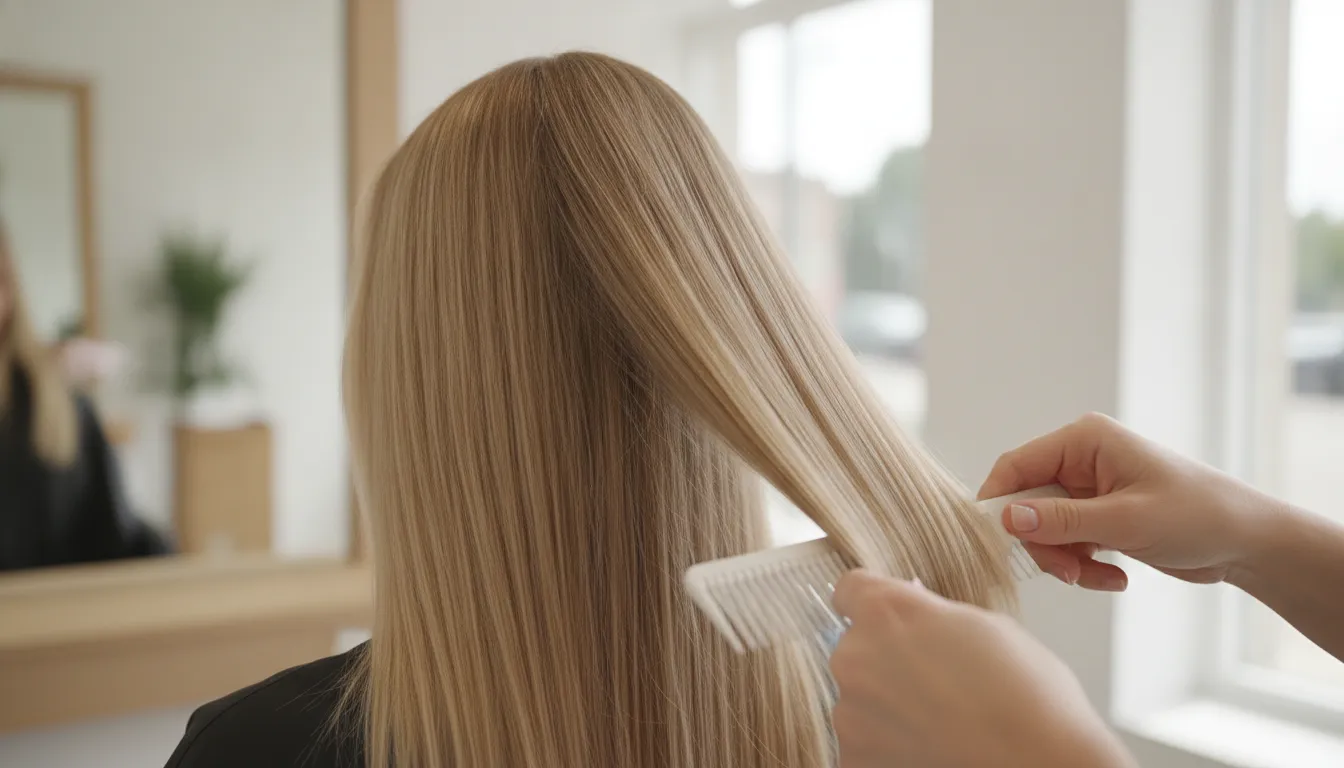
Let hair dry partially before using a dryer, choose the lowest practical heat, and keep the tool moving. Avoid repeatedly passing a hot tool over the same section. Detangle the ends first, then move upward in small sections. If a knot resists, add conditioner or detangling slip rather than pulling harder.
Make drying and sleeping gentler
Press water out instead of twisting the hair. Avoid rough towel rubbing and do not pile wet hair tightly on top of your head. Before sleep, make sure the hair is dry enough to avoid unnecessary pulling. A loose style is generally less stressful than a tight band or repeated high-tension arrangement.
Remove constant tension
Rotate hairstyles and avoid tight ponytails, buns, extensions, or clips that pull on the same area every day. Watch for tenderness around the hairline. If a style hurts, feels tight, or leaves persistent marks, loosen it and choose a lower-tension option.
These changes do not repair a severed fiber. They reduce avoidable stress while you protect healthier lengths and decide whether professional care is needed.
Where Post-Bleach Deep Conditioning Fits
A post-bleach deep conditioner can support softness, slip, and manageability for color-treated lengths that feel dry or tangled. It cannot reconnect a broken strand. Use it as one controlled wash-day step alongside lower heat, gentle detangling, and a pause from further lightening when breakage is active.
Solanesse Deep Conditioner – Post Color Revitalizer is an optional rinse-out treatment for color-treated hair, including hair exposed to bleach. Its formula features keratin, collagen, and peptides. Those ingredients support a conditioning ritual designed to leave the hair feeling smoother. That is different from claiming a permanent biological repair.
How to use the treatment after color
Use the treatment on a wash day when your hair needs additional conditioning instead of layering several intensive products. Apply it to warm, damp hair from root to tip, massage it through the lengths, and leave it in for 10 to 15 minutes. Rinse with warm water and handle the hair gently as you dry it. The product can be used weekly or as needed, depending on how your hair feels and how often it is colored.
When Can You Bleach Again? A Safer Maintenance Plan
There is no universal date for bleaching again after breakage. Pause additional lightening while snapping is increasing, then ask an experienced colorist to assess the lengths. The safest timing depends on texture, previous processing, overlap, heat exposure, and how the hair behaves wet and dry.
Let the condition of your hair set the pace
If the lengths feel unusually stretchy, rough, gummy, or prone to snapping during gentle detangling, keep the pause in place. A stylist can evaluate compromised areas, discuss a lower-impact color plan, and decide whether a trim is appropriate. Trimming cannot restore a broken fiber, but removing visibly split or severely frayed ends can make remaining hair easier to manage.
A realistic maintenance checklist
- Pause bleach while breakage is actively increasing.
- Schedule a stylist assessment before choosing the next chemical appointment.
- Discuss a regrowth-focused application and avoid processing fragile lengths.
- Trim split or severely frayed ends when needed.
- Use gentle cleansing, conditioning, and end-first detangling.
- Reduce high heat, rough towel drying, tight styles, and repeated brushing.
- Track snapping, texture, tangling, and manageability instead of relying on a fixed date.
For a simpler routine between appointments, continue a structured post-color recovery routine and adjust it to how your hair feels. The goal is to reduce avoidable stress and make the next color decision with clear evidence rather than urgency.
Explore the Deep Conditioner – Post Color Revitalizer for a focused post-color conditioning step.
Frequently Asked Questions
Can bleach-damaged hair be repaired permanently?
No cosmetic product can reconnect a strand that has split or broken. Conditioning and strengthening treatments can improve softness, slip, flexibility, and the appearance of the remaining fiber. Trims remove visibly damaged ends, while lower-friction care helps limit additional snapping.
How often should I use a deep conditioner after bleaching?
Use a deep conditioner according to the product directions and adjust based on how your hair feels. If lengths feel rough or tangle easily, conditioning may improve slip. If hair feels coated, limp, or difficult to style, alternate with regular conditioner rather than adding more product.
Should I use protein or moisture for bleach-related breakage?
Many fragile, bleached lengths need both conditioning and measured strengthening support, but the balance is personal. Choose conditioning when hair feels dry and rough. Consider strengthening when it feels weak or overly elastic. Change one variable at a time so you can assess the result.
When should I see a professional about hair breakage?
Arrange a stylist assessment before further lightening if breakage is spreading, hair feels gummy when wet, or you cannot detangle it without significant loss. Seek medical advice for scalp pain, burns, persistent redness, sores, or sudden hair loss from the root. A trim may improve the visible result, but it cannot restore a severed fiber.
Get Started with a Simpler Post-Bleach Ritual
Bleached lengths often benefit from consistent, gentle conditioning that improves softness, slip, and manageability without promising to reverse a broken fiber. For a focused wash-day step after color, explore the Solanesse Deep Conditioner – Post Color Revitalizer and make it part of a measured post-bleach routine.


