


Post color hair repair is a cosmetic care plan for improving the feel, manageability, and surface appearance of color-treated hair after a chemical service. It can reduce friction, support softness and flexibility, and help limit additional wear, but it cannot permanently regenerate damaged fiber or reverse a split end.
Shop the Deep Conditioner Post Color Revitalizer
Coloring does not affect every head of hair in the same way. A permanent color service, a demi-permanent gloss, a semi-permanent tint, and bleach use different chemistry and can create different degrees of porosity, dryness, or breakage. This guide explains the underlying structure, then turns that science into a practical at-home routine for color-treated hair.
What Is Post Color Hair Repair?
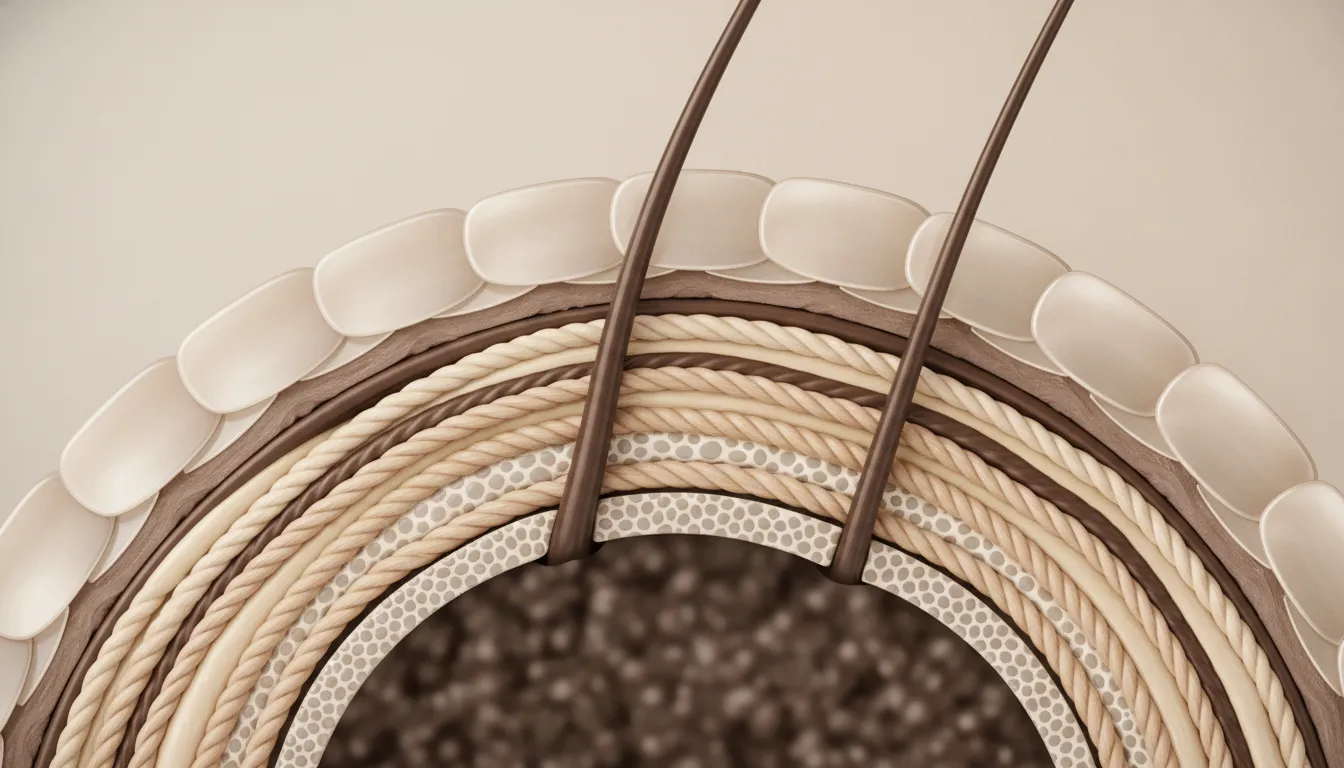
Post color hair repair is the process of improving the feel, manageability, surface smoothness, and resilience of color-treated hair after a chemical service. It is not a promise to regrow damaged fiber or permanently reverse a split end. Hair fiber is nonliving once it leaves the scalp, so effective care works by conditioning the existing fiber, reducing friction, limiting additional stress, and helping the hair behave more like healthy hair.
A useful repair plan has three layers. First, it supports the outside of the fiber so the cuticle feels smoother and catches less on neighboring strands. Second, it helps the inner cortex retain strength and flexibility through appropriate conditioning and, when useful, protein or bond-focused care. Third, it supports the lipid-rich interfaces between structural cells, where friction and moisture movement influence how the hair feels.
The best routine is also severity-aware. Slight roughness after a gloss calls for a different response than elastic, snapping ends after repeated bleaching. If hair is breaking at the scalp, coming out in handfuls, or causing scalp pain, pause chemical services and consult a licensed colorist or medical professional rather than adding more treatments.
What Happens to Hair During Coloring?
Color services can alter the fiber through a combination of pH change, swelling, oxidation, and deposition or removal of pigments. Alkaline ingredients can lift the cuticle enough for color molecules or lightening agents to move inward. Oxidative color uses peroxide chemistry to develop or modify pigment, while bleach removes natural and cosmetic pigment more aggressively. The extent of change depends on the formula, timing, developer, starting condition, number of overlapping services, and the skill of the application.
Research on oxidative hair dyes describes reactions in the cuticle layers and at the cuticular cell membrane complex. Research on bleaching has also associated the process with cuticle and cortex disruption, protein loss, and oxidation of sulfur-containing amino acids. These findings explain why chemically treated hair may feel rougher, become more porous, lose elasticity, or break more easily, but they do not mean every color service produces the same damage.
Permanent, Demi-Permanent, Semi-Permanent Color, and Bleach
- Permanent color: Uses oxidative chemistry to change natural pigment and deposit new color inside the fiber. Repeated overlap on already-colored lengths can increase dryness and porosity.
- Demi-permanent color: Deposits or refreshes tone with less lift than permanent color. It can still affect feel and porosity, especially when hair is already fragile.
- Semi-permanent color: Primarily deposits color near the surface and generally does not provide the same lift as oxidative permanent color. Fading and repeated application can still create a need for gentle conditioning.
- Bleach: Removes pigment through oxidation and can create a larger structural challenge than a deposit-only service. Lightened hair often needs especially careful handling and a balanced repair routine.
For a deeper explanation of the question, does hair dye damage hair, compare the service chemistry with the condition of your own hair rather than relying on a single universal rule.
The Three Layers of Color Damage
Cuticle Damage
The cuticle is the outer layer of overlapping scales that protects the inner fiber. When it is raised, chipped, or irregular, the hair can feel coarse, tangle more readily, lose shine, and take up water unevenly. Cuticle care focuses on reducing friction and improving surface lubrication: use a gentle cleansing routine, apply conditioner through the lengths, detangle from ends upward, and avoid rough towel drying.
Cuticle support does not mean sealing the hair permanently. A conditioner can temporarily improve slip and smoothness, while careful technique helps preserve that result between washes. If your main complaint is dullness or rough texture, start with the surface before adding multiple intensive treatments.
Cortex Damage
The cortex provides much of the hair fiber’s strength, flexibility, and shape. Chemical processing can make the cortex more vulnerable to protein loss and mechanical stress, particularly when lightening is repeated or overlapped. Symptoms can include reduced stretch, snapping, a gummy feeling when wet, or ends that refuse to hold shape.
Cortex support may include a measured protein treatment, a bond-focused formula, or a conditioner that combines film-forming and strengthening ingredients. More is not always better. Hair that becomes stiff, brittle, or straw-like after frequent strengthening may need more moisture, lubrication, or less treatment frequency instead.
Cell Membrane Complex Damage
The cell membrane complex, or CMC, is a lipid-rich intercellular region that helps adjacent structural cells fit together and influences friction and moisture movement. It is more accurate to describe it as a specialized interface than as glue. Color chemistry and repeated wetting, drying, heat, and brushing can all affect how the fiber feels at these interfaces.
Care that supports this area is usually broader than a single repair claim. Conditioning agents, oils, lower-friction handling, and reduced heat can improve manageability and help limit additional wear. Cosmetic products do not regrow a CMC or rebuild a permanently removed section of fiber, but they can make the existing hair easier to handle.
Use symptoms as a starting point, not a diagnosis:
- Roughness, dullness, or tangling: prioritize cuticle support and lower-friction handling.
- Stretchiness, snapping, or weakness: focus on damage management and measured strengthening for the cortex, rather than stacking intensive treatments.
- Dry, friction-prone lengths: prioritize conditioning and lubrication through the lengths and ends, including support for the cell membrane complex.
- Scalp pain, sudden shedding, or breakage near the scalp: pause added treatments and seek a professional assessment. This framework is cosmetic guidance, not a diagnosis.
Bond Repair vs. Whole-Structure Hair Repair
Bond-focused care and whole-structure care are related but not identical. A bond-focused treatment is designed around particular chemical connections or internal strengthening goals. A whole-structure routine considers those goals alongside cuticle friction, cortex conditioning, lipid support, moisture balance, heat, and handling.
Swipe horizontally to compare all columns.
| Approach | Primary focus | Useful goal | Limitation |
|---|---|---|---|
| Bond-focused treatment | Internal strengthening concept | Support for hair stressed by chemical processing | Does not replace surface conditioning or gentle handling |
| Whole-structure care | Cuticle, cortex, CMC, and routine factors | Better manageability, softness, strength support, and less friction | Cannot permanently regenerate damaged fiber |
| Moisture and lipid conditioning | Slip, lubrication, and flexibility | Less tangling and a smoother feel | May not meet the needs of severely weakened hair alone |
What Bond-Focused Treatments Address
Bond-focused treatments can be useful when hair has been weakened by oxidation or lightening and needs a targeted strengthening step. Follow the product directions and watch the response of your hair over time. A strengthening product is not a substitute for a colorist’s assessment, and the word “bond” on packaging does not tell you everything about the formula’s performance.
Why Complete Post-Color Care Goes Further
Hair can feel damaged even when the main complaint is surface friction, mineral buildup, heat exposure, or moisture imbalance. A complete routine therefore asks more questions: Is the hair rough or stretchy? Does it break during detangling? Is the scalp comfortable? How often is heat used? Are color services overlapping? This broader view helps you avoid treating every symptom with the same intensive product.
Compare bond repair with whole-structure hair repair
Key Ingredients for Post Color Hair Repair
Hydrolyzed Keratin
Hydrolyzed keratin is keratin that has been broken into smaller fragments for use in a cosmetic formula. It can contribute to a conditioned, strengthened, or more substantial feel on the hair surface, depending on the formula and the hair’s condition. It does not permanently replace every protein lost during chemical processing.
Collagen
In hair care, collagen is used as a conditioning or film-forming ingredient. It can help support a softer, smoother feel in a rinse-out treatment. Evaluate it with the rest of the ingredient list and the product’s use instructions rather than treating the ingredient name as proof of a clinical repair effect.
Plant-Based Peptides
Peptides are short chains of amino acids or amino-acid-derived materials. In a cosmetic conditioner, plant-based peptides can be part of a strengthening and conditioning system. Their practical value depends on concentration, formula design, contact time, and how your hair responds.
Sunflower Oil and Lipid Support
Sunflower oil can provide emollience and lubrication, helping reduce a dry or rough sensation. Oils are not interchangeable with water-based hydration, and an oily feel is not always a sign that hair is healthier. Balance lubrication with cleansing, conditioning, and your texture’s needs.
Solanesse’s hair science and ingredients page provides the brand’s ingredient context. Bergamot and vanilla are best understood here as sensorial formula elements, not as stand-alone repair actives.
A Weekly At-Home Post-Color Repair Routine
Use this sequence as a flexible framework. Your colorist’s instructions, product directions, hair texture, and response should determine the timing and frequency.
1. Follow first-wash guidance
After a color service, follow your colorist’s advice and the product instructions for the first wash rather than applying a universal schedule. This gives the service and your hair condition appropriate context.
2. Condition on wash day
On wash day, cleanse the scalp gently with lukewarm water, then apply conditioner or a deep treatment through the mid-lengths and ends. For the Solanesse Deep Conditioner Post Color Revitalizer, follow the product direction to leave it on for 10 to 15 minutes, then rinse thoroughly.
3. Handle hair gently after rinsing
Detangle from the ends upward with a wide-tooth comb or suitable brush. Blot with a soft towel or T-shirt instead of rubbing, apply heat protection before hot tools, and let the hair dry with as little unnecessary manipulation as possible.
4. Protect between washes
Reduce high heat, repeated brushing, tight styles, and prolonged sun or pool exposure when possible. If your hair is porous, read post-color hair porosity guidance before changing several products at once. For a shorter routine, see this guide to repairing color-damaged hair at home. If bleach is part of the history, a dedicated post-bleach recovery ritual may be more relevant.
5. Reassess before intensive treatments
Track softness, slip, elasticity, and breakage as the routine settles. If hair becomes stiff, brittle, or more difficult to detangle, reduce intensive treatments and reassess the balance of conditioning, lubrication, and strengthening. Severe breakage or scalp symptoms warrant a professional assessment.
How to Choose a Post-Color Repair Product
Choose by the problem you are trying to solve, not by the loudest repair claim. Look for a product that matches your hair texture, color compatibility needs, application time, and tolerance for richer conditioning. A useful checklist includes:
- Repair scope: Does the product address only bonds, or does it also provide surface conditioning and lubrication?
- Hair response: Does your hair need more slip, more flexibility, more strengthening, or less product weight?
- Color compatibility: Is the routine gentle enough for your current color and wash cadence?
- Ingredient transparency: Can you understand the role of the featured ingredients without relying on unsupported clinical language?
- Application time: Will you realistically use the product as directed?
- Texture fit: Can the formula provide support without leaving fine hair limp or coarse hair under-conditioned?
Keep the rest of the routine stable when testing a new treatment. One change at a time makes it easier to identify what improves softness, breakage, or manageability.
Solanesse Deep Conditioner Post Color Revitalizer
The Solanesse Deep Conditioner Post Color Revitalizer is a rinse-out cosmetic deep conditioner for color-treated hair. It is positioned to support softness, slip, manageability, and strength support when used as directed within a broader post-color routine. Its formula story includes hydrolyzed keratin, collagen, plant-based peptides, sunflower oil, bergamot, and vanilla.
Apply it through the mid-lengths and ends and leave it on for 10 to 15 minutes before rinsing thoroughly. It is not a promise of permanent fiber regeneration, clinical repair, or guaranteed results. Pair conditioning with gentle detangling, lower-friction handling, heat protection, and a pause for professional assessment when symptoms are severe.
Explore the Solanesse Deep Conditioner Post Color Revitalizer
Frequently Asked Questions
Can color damaged hair be repaired?
Color damaged hair can be improved cosmetically, but existing fiber cannot be permanently regenerated. Start with conditioning, lower-friction handling, and heat protection, then match strengthening support to the hair’s response. Pause further chemical processing and seek professional advice if hair is snapping or the scalp is painful.
What is the best treatment for damaged colored hair?
Choose by symptom and severity. Roughness and tangling call for surface conditioning and lubrication; stretchiness or snapping may call for measured strengthening; dry lengths need conditioning and lower-friction handling. Clear directions and color compatibility matter more than a broad repair promise.
How do you repair color damaged hair at home?
Follow your colorist’s advice for the first wash, then cleanse gently, condition the lengths as directed, detangle from ends upward, and reduce heat and mechanical stress. A weekly deep-conditioning step may suit dry or processed hair, but frequency should follow texture and response. Severe breakage needs an in-person assessment.
Is bond repair enough after coloring?
Not always. Bond repair may support chemically weakened hair, but post-color care also needs cuticle conditioning, lubrication, gentle detangling, and protection between washes. Choose the scope based on symptoms and avoid stacking intensive treatments if hair becomes stiff or brittle.
References
- Grosvenor et al., The physical and chemical disruption of human hair after bleaching, International Journal of Cosmetic Science, doi:10.1111/ics.12495.
- Imai et al., The Reaction of Oxidative Hair Dyes in Cuticle Layers, International Journal of Cosmetic Science, doi:10.1111/j.1468-2494.2009.00518_3.x.
- Da França et al., Types of Hair Dye and Their Mechanisms of Action, Cosmetics, doi:10.3390/cosmetics2020110.


