


Yes, hair dye can damage hair, but the degree depends on the color method, formula, starting condition, and processing history. Permanent color and lightener can lift the cuticle, alter proteins, and disturb lipids that help a strand stay smooth. Thoughtful application and a consistent post-color ritual can support softness, shine, manageability, and strength without treating self-expression as a problem.
Shop the Deep Conditioner Post-Color Revitalizer →
Color-treated hair is not automatically unhealthy. The useful question is what changed inside the fiber, how much stress the lengths have already experienced, and which habits can reduce additional wear. This guide separates surface wear, bond stress, and whole-structure changes so you can make a more informed color-care plan.
Does hair dye damage hair? The short answer
Hair dye can stress the cuticle, cortex, and cell membrane complex. Temporary color generally creates the least structural change, while permanent color and bleach usually create more. Hair history, overlap, lift, processing time, and aftercare determine the result for an individual head of hair.
Temporary color mostly coats the outside of the strand. For a closer look at how hair dye works, see the mechanism-focused guide. Semi-permanent and demi-permanent color deposit tone with less penetration, although formulas vary. Permanent color opens the cuticle and changes pigment within the cortex. Bleach or lightener removes natural pigment and can create the greatest combination of porosity, dryness, and reduced resilience.
Hair fiber is not living tissue, so it cannot biologically heal like skin. A conditioner cannot recreate a section of cuticle that has worn away or fuse a broken fiber. Care can still improve lubrication, moisture retention, shine, flexibility, and manageability, which makes stressed hair easier to handle while new growth replaces the most compromised lengths.
Damage is a spectrum, not a certainty
A careful appointment on healthy hair may cause subtle changes. Repeated permanent color on fragile lengths, overlapping lightener, aggressive lift, and frequent high heat can compound stress. The frequency of your color appointments matters, as does whether the next service touches previously treated hair.
Roughness, dullness, tangling, fast fading, split ends, and breakage are useful signals to watch. Hair that feels gummy when wet, stretches unusually far, or snaps with gentle handling may be seriously compromised. Pause chemical processing and ask a qualified colorist or dermatologist for guidance when damage or scalp symptoms are significant.
Common signs of color stress
- Roughness: Raised or worn cuticle scales create a less even surface.
- Loss of shine: An uneven surface reflects light less consistently.
- Tangling: Rough fibers catch on one another more easily.
- Fast color fade: Porous hair may release deposited color sooner.
- Breakage: Chemically stressed fibers may snap during brushing or styling.
- Persistent frizz: A weakened surface can make moisture control harder.
What happens inside each strand during coloring?
Coloring can affect three connected parts of a strand: the protective cuticle, the strength-giving cortex, and the lipid-rich cell membrane complex. Permanent color and bleach reach beyond the surface, so repeated processing can change softness, shine, flexibility, and resistance to breakage.
Think of hair as a layered fiber rather than a single solid thread. The cuticle shields the outside. The cortex provides much of the strand’s strength and contains natural pigment. The cell membrane complex, or CMC, contains lipid-rich material between cells and helps support cohesion. The same service can affect more than one layer, even when the visible symptom is simply dry ends.
The cuticle: the protective outer layer
The cuticle is made of overlapping scales that help shield the inner fiber. Permanent color commonly uses an alkaline agent to swell the strand so color precursors can pass through. Oxidizing agents support the color change inside. The surface can feel rougher when this process is repeated or combined with heat, friction, and forceful handling.
A smoother cuticle helps hair feel soft, reflect light, and regulate water movement. When scales lift, chip, or wear away, hair may feel dry and tangle more readily. Mid-lengths and ends often show the effect first because they have experienced more washing, styling, sunlight, and previous color.
The cortex: strength, elasticity, and pigment
The cortex contains keratin structures and natural melanin that contribute to strength and color. Permanent dye changes pigment in this layer, while bleach oxidizes natural pigment so hair becomes lighter. Strong or repeated oxidation can reduce how well the fiber handles stretching and everyday wear.
Lightened hair can look beautiful while requiring gentler detangling and lower heat. The concern is not only dryness. A weakened cortex may make the strand less resilient, increasing the chance that it stretches too far or breaks under tension.
The cell membrane complex: structural support
The CMC sits between cells and contains lipid-rich material that helps hold the fiber together. Chemical processing can disturb this network along with the cuticle and cortex. That is why surface shine alone does not tell the whole story. A useful routine considers feel, flexibility, friction, and manageability across the full strand.
Is bond damage the whole story?
No. Bond stress is one part of color damage, but it does not describe every change in a treated fiber. Hair can also experience cuticle wear, loss or disturbance of surface lipids, CMC changes, increased porosity, and cortex-level protein stress.
Disulfide bonds and other protein interactions help the cortex resist stretching. Oxidative services can place stress on those structures, which is why bond-focused care can be relevant after lightening. But bonds sit inside a fiber whose surface and intercellular materials also influence friction, water movement, shine, and strength.
The CMC and the cuticle are not interchangeable with a bond. If the surface is rough or some lipid material has been disturbed, hair may tangle and lose moisture even when the main concern is not a broken disulfide bond. A whole-structure view therefore looks at the cuticle, cortex, CMC, and daily handling together.
A 2023 review in Frontiers in Medicine describes how coloring and bleaching can affect the hair fiber’s layers, physical properties, and chemical constituents, including the cuticle, cortex, and CMC. This is a review of hair-fiber science, not a prediction of the outcome for one person’s formula.
How do temporary, semi-permanent, permanent color, and bleach compare?
Temporary color mainly coats the surface. Semi-permanent color deposits tone with limited penetration. Permanent color changes pigment within the cortex, while bleach removes pigment and usually creates the most structural stress. Exact formulas and application methods still matter.
The deeper and more lasting the color change, the more the process interacts with the fiber. The comparison below is a practical guide, not a guarantee for every product or service.
| Color type | How it generally works | Typical longevity | Relative damage risk |
|---|---|---|---|
| Temporary | Coats the outer surface | Usually washes out quickly | Very low |
| Semi-permanent | Deposits tone with limited penetration | Fades over several washes | Low, though formulas vary |
| Permanent | Opens the cuticle and changes pigment in the cortex | Remains until growth or recoloring | Moderate to high |
| Bleach or lightener | Oxidizes natural pigment to lighten hair | Permanent lightening of treated hair | High, especially with repetition |
Why bleach usually creates the most stress
Bleach breaks down natural pigment rather than simply adding tone. Reaching a much lighter result may require longer or repeated processing, which can increase porosity and weaken the strand. Starting color, desired lift, developer strength, application skill, and timing all affect the outcome.
A qualified colorist can assess previous processing and stop when the fiber shows warning signs. At home, follow product directions and complete any recommended patch and strand tests. Do not assume that a longer processing time will produce a healthier or more even result.
Why permanent color can still vary
A root touch-up that avoids previously colored lengths is different from pulling permanent color through the entire head every few weeks. Gray coverage, darker color, highlights, and vivid transformations involve different decisions. The label alone does not reveal the complete risk.
How can you tell if color has damaged your hair?
Look for a combination of persistent roughness, dullness, tangling, fast fading, split ends, or breakage. When wet, seriously stressed hair may feel gummy, unusually stretchy, or weak. Compare older lengths with healthier roots and pause coloring if strands snap with gentle handling.
Start with changes you can see and feel. Compare texture before and after coloring, paying attention to the oldest lengths. One change does not automatically mean severe damage, but several persistent signs together may show that your routine or color schedule needs adjustment.
Check hair when it is dry
Run your fingers from roots to ends without pulling. Look for white dots, split ends, short broken pieces, and areas that tangle repeatedly. Notice whether shine returns after normal conditioning or whether the hair stays dull and rigid. Use a wide-tooth comb, begin at the ends, and work upward through knots.
Check hair when it is wet
Wet hair is more vulnerable to stretching and breakage. Hair that feels unusually gummy, overly stretchy, or weak when saturated may be significantly compromised. Do not repeatedly pull strands to test them, since the test can cause more wear. One gentle observation is enough.
If breakage appears suddenly or comes with scalp irritation, sores, increased shedding from the root, or persistent hair loss, seek medical guidance. Hair-shaft breakage and hair loss from the follicle are different concerns.
How much hair-dye damage is reversible?
Some effects are manageable, but the fiber is not biologically restored. Conditioning can improve feel, shine, lubrication, moisture retention, and manageability. It cannot recreate removed cuticle or permanently fuse a broken section of hair.
Hair can feel substantially better when friction is reduced and the surface is conditioned. A consistent routine can make combing easier, reduce the rough feel of porous lengths, and help hair hold onto moisture. These are meaningful improvements in appearance and handling, not proof that the original structure has been rebuilt.
Research helps explain why expectations should stay precise. A 2024 controlled-hair-sample study in Heliyon reported measurable nanoscale cuticle changes that increased with repeated dye applications. The experiment used controlled hair samples, so it does not provide a population risk percentage or predict the result of every salon formula.
A 2025 oxidative-damage study reported progressive cuticle degradation, increased roughness, and reduced mechanical properties with prolonged exposure under its study conditions. Read the published study for its design and limitations. The practical takeaway is to support treated lengths and avoid promising that a topical product reverses all structural damage.
Severely split or broken ends may need trimming while new hair grows. If the fiber feels mushy, snaps easily, or cannot hold a style, delay another chemical service and ask a qualified professional to assess it.
Build a simple post-color ritual with the Deep Conditioner Post-Color Revitalizer.
How can you reduce damage without giving up hair color?
Reduce avoidable stress by sharing your full color history, using strand tests, choosing realistic shade changes, limiting overlap on processed lengths, and following directions. Between appointments, use gentle detangling, moderate heat, consistent conditioning, and enough recovery time.
Before and during a color appointment
- Share your full color history. Tell your colorist about bleach, permanent dye, relaxers, perms, henna, and other chemical services, even if they were months ago.
- Use a strand test. A test section can reveal how color develops and how the hair tolerates the process.
- Set a realistic goal. Moving several levels lighter may require more than one appointment.
- Avoid unnecessary overlap. Apply permanent color or lightener only where needed instead of repeatedly processing fragile lengths.
- Respect processing directions. Longer is not automatically better and may increase stress.
Between color appointments
Wash with comfortably warm rather than very hot water, detangle gently, and limit high-heat tools. Use the lowest effective temperature and an appropriate heat protectant when heat is necessary. Protect hair from prolonged sun and pool exposure, both of which can affect color and dryness.
Space services according to your hair’s condition and your colorist’s advice. There is no universal recovery schedule. Hair type, prior services, styling habits, and the intensity of the next process all matter.
Follow the FDA’s 2025 hair-dye guidance for patch testing and reaction precautions. The American Academy of Dermatology also recommends following product directions, limiting how much you lighten, and seeking care for signs of an allergic reaction. Stop using a product and seek medical guidance if a reaction occurs.
What does a smarter post-color repair ritual look like?
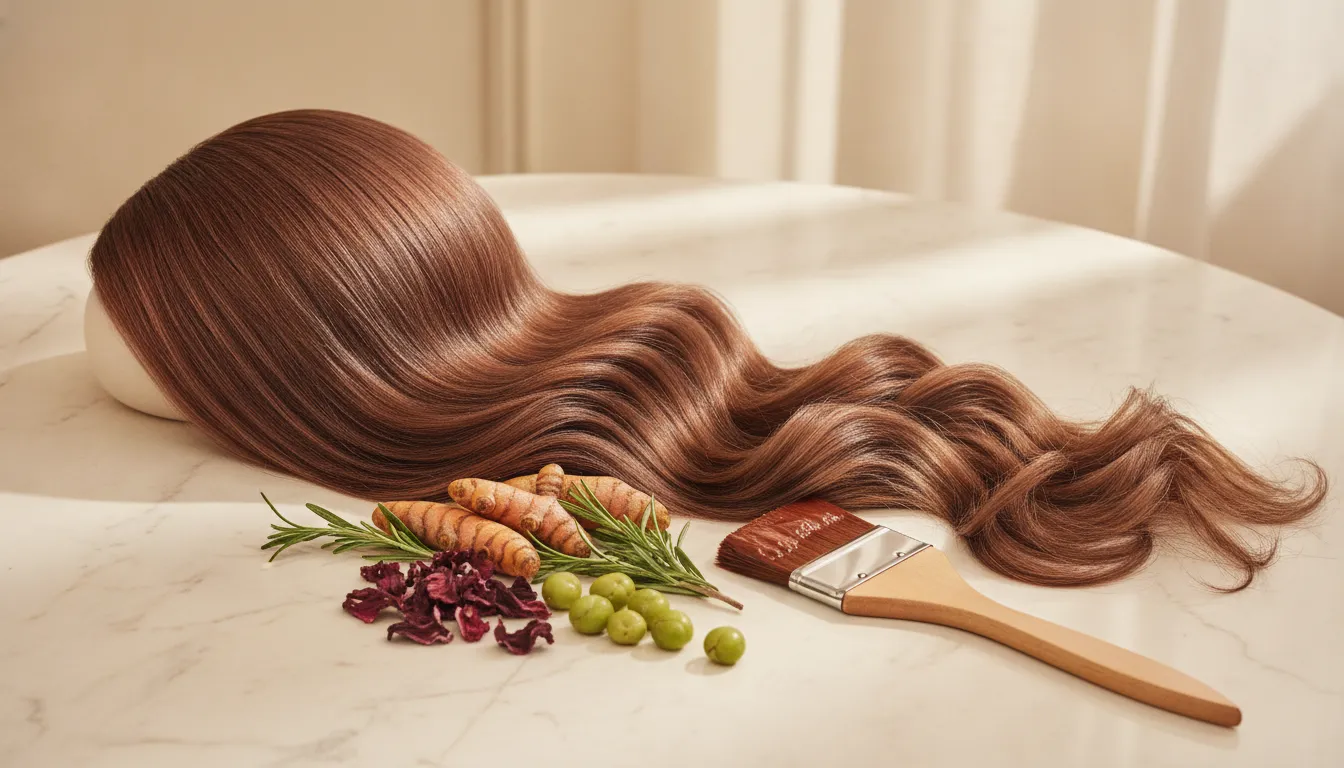
A smarter post-color ritual supports the whole strand while staying simple enough to repeat. Solanesse combines hydrolyzed keratin, collagen, plant-based peptides, and sunflower oil in a 10 to 15 minute treatment designed to support softness, shine, manageability, and lasting strength.
A practical routine should address more than cosmetic shine. Color-treated hair benefits from care that reduces friction, supports softness, and improves manageability across the full length. It should be easy enough to use consistently after coloring and between appointments.
Prioritize the whole strand
Bond-focused care can be useful, but hair structure includes the cuticle, cortex, and CMC. Solanesse’s whole-structure philosophy considers all three. Its formula combines proteins, peptides, and sunflower oil in a clean, science-backed post-color ritual free from sulfates, parabens, silicones, phthalates, mineral oils, and GMOs.
The Deep Conditioner Post-Color Revitalizer is intended to support instant softness and shine along with lasting strength. Individual results vary, and no topical product can reverse every form of severe structural damage. For a broader repair plan, see how to fix hair breakage from bleach and how a hair bond repair treatment fits into post-color care.
Build a consistent 10 to 15 minute practice
Follow the product directions and focus on areas most affected by chemical processing, usually the mid-lengths and ends. Use the treatment as supportive care, not as permission to overprocess hair. Pair conditioning with careful coloring, thoughtful heat use, and regular trims when needed.
Market context is not the same as clinical evidence. A public Mintel summary of a February 2025 survey of 1,934 internet users aged 18 and older reported that 84% viewed hair as part of personal identity. That figure is not a hair-color usage rate and should not be used to predict damage or treatment results.
Frequently asked questions
Does hair dye cause permanent damage to your hair?
Color can create lasting changes in the treated portion of the hair shaft, especially when permanent dye or bleach alters the cuticle and cortex. Hair fiber cannot biologically heal, so removed cuticle and broken sections cannot be fully restored. Conditioning and gentle care can improve softness, manageability, shine, and protection while treated hair remains.
Does hair dye cause hair loss?
Hair dye more commonly contributes to breakage along the shaft than true hair loss from the follicle. Irritation or an allergic reaction can affect the scalp. Follow patch-test directions, stop use if a reaction occurs, and seek medical guidance for scalp symptoms, sudden shedding, or persistent hair loss.
Can you dye your hair without causing any damage?
No chemical color process can be guaranteed to cause zero damage. Temporary and some semi-permanent colors generally create less structural change than permanent color or bleach. Careful application, realistic goals, strand testing, limited overlap, and supportive aftercare can reduce risk.
How long does it take for hair to recover after dyeing?
There is no single recovery timeline. Treated fiber does not heal biologically, but feel and manageability may improve with conditioning and gentler handling. Severely damaged portions may need trimming as new hair grows. Ask a qualified colorist to assess the hair before another chemical service.
What should you do if hair dye irritates your scalp?
Stop using the product if irritation or another reaction occurs, follow the product’s safety directions, and seek medical guidance for persistent or severe symptoms. The FDA recommends patch testing as directed and taking reactions seriously. Hair-shaft dryness and scalp allergy are different concerns.
Support color-treated hair with the Deep Conditioner Post-Color Revitalizer.
For ingredient details, visit Solanesse’s Science and Ingredients page. A supportive post-color routine can improve how treated hair feels and behaves, while realistic color planning protects the structure that remains.


