


Fresh color can feel empowering, yet repeated coloring may leave hair rough, dull, or difficult to manage. A deep conditioning treatment gives color-treated hair concentrated support beyond everyday conditioner, helping restore softness, shine, manageability, and strength after chemical processing.
The right ritual supports the cuticle, cortex, and cell membrane complex without weighing hair down. Understanding how that care works makes it easier to choose a formula that fits your hair and your color routine.
What is a deep conditioning treatment?
A deep conditioning treatment is a richer, longer-contact conditioning ritual designed to give dry or stressed hair more support than an everyday rinse-out conditioner. Daily conditioner is made for speed and regular detangling. A deep treatment stays on longer, allowing its blend of conditioning agents, proteins, peptides, and oils to coat and support vulnerable lengths.
How it differs from daily conditioner
Think of everyday conditioner as routine maintenance and deep conditioning as a deliberate reset. A daily formula may make the surface feel smoother after shampooing. A well-designed deep conditioner pairs that immediate softness with ingredients selected for hair that has endured coloring, heat styling, friction, and repeated washing.
The distinction is not simply thickness. A heavy formula is not automatically effective, and a lightweight formula is not automatically weak. Evaluate the ingredient blend, recommended contact time, and how your hair feels after rinsing and styling.
What results should you look for?
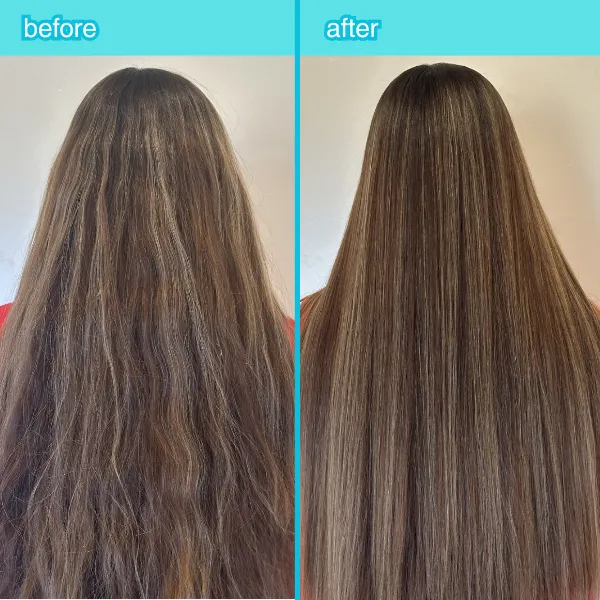
After a successful treatment, hair should feel softer, look more luminous, and be easier to detangle without feeling coated or flat. Over time, a consistent ritual can help color-treated hair feel more manageable between appointments. Results depend on your starting condition, texture, routine, and frequency of chemical services.
For color-treated hair, the best treatment is one you can use consistently. A clear application method and realistic treatment time matter because even an excellent formula cannot help when it stays forgotten on the shelf.
Why color-treated hair needs deeper care
Hair color works by changing more than the strand’s appearance. Depending on the process, coloring can lift or disturb the protective cuticle so pigments can enter or leave the cortex. That helps create the shade you want, but repeated processing can also leave hair more porous, rough, and vulnerable to moisture loss. A deep conditioning treatment gives those stressed lengths more sustained support than a quick rinse-out conditioner.
Protein loss is a key factor — learn more about keratin for hair color damage and how it supports structural recovery.
This whole-structure approach reflects the Solanesse Beauty Without Conditions philosophy: color freely, live boldly, and repair fully.
Most daily conditioners only sit on top of the hair. They help with tangles and make the hair feel soft for a short time. Color-treated hair needs more. It needs care that can reach the core of the strand. This is why a rich Deep Conditioner Post-Color Revitalizer is so helpful. It helps to fix the parts of the hair that color treatments can harm. Without this care, your hair may become brittle and lose its natural bounce.
How dye lifts the cuticle
The cuticle is the outer layer of your hair. Think of it like shingles on a roof. In healthy hair, these scales lay flat to keep moisture in and stay smooth. When you apply color, the dye must lift these scales to reach the inner part of the hair. This step is a must for the color to stay, but it leaves the cuticle open. An open cuticle means your hair loses water fast. This is why colored hair often feels dry or rough like straw.
When the cuticle stays open, your new color can also fade fast. Light and water get into the strand and wash out the dye. To keep your look bright, you must help those scales lay flat again. A deep treatment provides the moisture needed to smooth the surface. This creates a seal that locks in color and adds a healthy glow to every strand. It also helps to stop frizz that can happen when the hair is too dry.
Care for the cortex and CMC
Deep inside each hair is the cortex. This is the part that gives your hair its strength and its shape. When you color your hair, the chemicals go past the cuticle and into the cortex. This can break the bonds that keep the hair strong. If you do not fix these bonds, your hair can become weak. This leads to split ends and breakage that makes it hard to grow your hair long. It can also make your hair feel thin or limp after a few color sessions.
Between the cuticle and the cortex is the cell membrane complex, or CMC. Think of the CMC as the glue that holds the hair layers together. Color can strip this glue away and leave the hair structure weak. Our ingredient science behind the formula focus on this whole-structure repair. By using hair-like proteins like keratin and collagen, you can fill in the gaps. This helps to rebuild the CMC and the cortex so your hair feels strong and thick again.
A true repair ritual does more than hide damage. It works with the natural build of your hair to restore what was lost. Using plant-based peptides and oils helps to feed the hair from the inside out. This type of deep care ensures you can color freely without fear of long-term harm. It brings back the soft feel and the strong core that healthy hair should have.
How often should you deep condition colored hair?
Start with one deep conditioning treatment each week, then adjust according to the way your hair responds. Newly lightened, frequently heat-styled, or noticeably rough hair may welcome more regular care. Fine hair or lengths that are easily weighed down may need less frequent use or a smaller amount.
Frequency also depends on how often you process your hair. See how often you can dye your hair for more guidance on balancing self-expression with strand health.
Let your hair condition guide the schedule
Watch for practical signals instead of following a rigid calendar. Rough texture, difficult detangling, dullness, and increased frizz can suggest that the lengths need more conditioning support. Limp roots, a coated feel, or reduced volume may mean you are using too much product or applying it too close to the scalp.
Your coloring schedule matters too. A focused treatment after a color service can help restore softness when hair feels most vulnerable. Between appointments, weekly or occasional use can support a polished look without turning the routine into a complicated project.
Adjust one variable at a time
To learn what works, change only the frequency, amount, or contact time at once. Keep the rest of your wash and styling routine steady for several uses. This makes it easier to understand whether the treatment is giving you more softness and manageability.
Texture also shapes the answer. Coarse, curly, or very porous hair may appreciate more product through the mid-lengths and ends. Fine hair may respond best to careful placement and a thorough rinse. The goal is conditioned movement, not heaviness.
A consistent ritual should feel luxurious but practical. If your chosen product calls for 10 to 15 minutes, build that time into a weekly wash rather than leaving it on indefinitely. Following the formula’s directions gives you a more reliable way to assess results.

Which ingredients support color-damaged hair?
A useful post-color formula combines ingredients that support strength, flexibility, softness, and shine. Look for hydrolyzed proteins and peptides alongside conditioning oils, then evaluate how the complete formula performs on your hair rather than relying on one fashionable ingredient.
Support from hydrolyzed proteins and peptides
Hydrolyzed keratin is broken into smaller components that can help support the feel of weakened, porous lengths. Collagen can contribute conditioning and flexibility, while plant-based peptides complement a formula designed for hair stressed by coloring. These ingredients do not reverse chemical processing. Instead, they help hair feel smoother, stronger, and easier to manage as part of a consistent ritual. Explore the ingredient science behind the formula for more detail.
Deeply conditioned hair is less prone to the causes of frizzy hair in color-treated strands.
Sealing moisture with natural oils
Once you fix the inside of the hair, you must also protect the outside layer. Sunflower oil is a great tool for this job because it is a light oil that does not feel greasy. It coats each strand to lock in moisture and helps to stop frizz before it starts. This oil adds a nice shine that keeps your hair feeling silky and soft all day long.
Plant peptides also help to guard your hair by working on the whole structure of the strand. This includes the cuticle and the cell membrane complex that holds everything together. These peptides fill in the spaces between the proteins to create a solid wall of safety. This deep care is what sets our ritual apart from a simple wash or a daily rinse.
Staying clean for better results
The best care also means leaving out the things that can hurt your hair over time. Many hair products use harsh parts like sulfates or parabens that can strip your color away. They can also make your scalp feel dry and itchy after just one use. We stay away from silicones and mineral oils to keep your hair light and free from heavy buildup.
A clean mix is better for your long-term health and keeps your color looking fresh and bright. You can color your hair as much as you like without the worry of stress. This approach lets you live boldly and get the style you want with the health you need. It only takes 15 minutes to use this simple step to help your hair look its best.
| Care Type | Primary Use | Contact Time | Main Focus |
|---|---|---|---|
| Daily Conditioner | Quick detangling | 1 to 2 minutes | Surface smoothness |
| Deep Treatment | Intense repair | 10 to 15 minutes | Whole strand health |
| Hair Mask | Deep moisture | 5 to 20 minutes | Hydration only |
How to evaluate a silicone-free deep conditioner
A silicone-free label can be useful when it matches your preferences, but it does not tell the full story of performance. A well-balanced formula still needs to create slip, softness, shine, and manageability through its complete ingredient system. Judge the blend and the experience it creates on your hair, not the front label alone.
Look beyond the front label
Start with the ingredient list and the product’s intended use. A silicone-free deep conditioner may use proteins, peptides, plant oils, and conditioning agents to support a smooth, polished result. Solanesse combines hydrolyzed keratin, collagen, plant-based peptides, and sunflower oil in a formula that is also free from sulfates, parabens, phthalates, mineral oils, and GMOs.
Avoid treating every unfamiliar ingredient as a warning sign. Cosmetic formulas depend on a balanced system, and individual ingredients behave differently depending on concentration and context. Choose a product with transparent guidance and claims that match what the formula is designed to do.
Assess feel, movement, and routine fit
After rinsing, notice whether hair feels soft without seeming coated. Check how easily it detangles, whether it keeps natural movement, and how it looks after your usual styling. These practical observations are often more helpful than choosing from a single label claim.
Routine fit is equally important. If you color regularly and want a silicone-free option, look for a treatment created specifically for the post-color moment. An efficient single-step ritual makes consistency easier while still honoring a clean-formula preference.
For a closer look at why individual components were selected, explore Solanesse’s Solanesse ingredient guide. The strongest choice is not the one with the loudest list of exclusions. It is the formula that supports your goals, feels elegant to use, and earns a lasting place in your routine.
How to use a deep conditioning treatment at home
A precise application helps you get more from every treatment while avoiding unnecessary heaviness. Follow the product directions first, then refine placement and amount according to your texture and density.
A simple post-color ritual
- Cleanse and blot. Cleanse as directed and gently remove excess water so the treatment is not immediately diluted.
- Apply through lengths. Distribute the formula through the mid-lengths and ends, focusing on areas that feel dry or stressed.
- Distribute gently. Use your fingers or a wide-tooth comb to encourage even coverage without aggressive pulling.
- Wait 10 to 15 minutes. Leave the treatment on for the recommended time. Solanesse is designed as a 10 to 15 minute ritual.
- Rinse and assess. Rinse thoroughly, then style as usual and assess softness, shine, movement, and manageability.
Make the ritual work for your hair
Fine hair often benefits from a modest amount placed away from the roots. Thick, coarse, curly, or highly porous hair may need more careful sectioning to reach the most vulnerable lengths. More product is not always better. Even distribution is what matters.
Keep handling gentle when hair is wet. Color-treated lengths can be more vulnerable to friction, so avoid rough towel drying and forceful detangling. A calm application supports the restorative experience and helps preserve the polished result.
Consistency matters more than leaving a formula on far beyond its instructions. Pair the ritual with habits that reduce repeated stress, such as thoughtful heat use and gentle detangling. This turns deep conditioning into part of a complete care strategy rather than an occasional rescue.
Choosing a deep conditioner for colored hair
The best deep conditioner for colored hair should address the way your hair looks, feels, and behaves after chemical processing. Prioritize immediate softness and shine, easier detangling, a clean silicone-free formula, or a more intentional post-color ritual according to your needs. A well-matched product can support several goals without complicating your routine.
For a closer look at the problem your treatment should address, read how hair dye affects hair and this guide to repairing damaged hair after coloring.
For a concrete benchmark, Solanesse offers its 4 oz Deep Conditioner Post-Color Revitalizer for $65. In the brand’s qualified consumer result, 90% of women noticed visibly healthier hair after just one use. The single-step formula is designed for all hair types and color treatments, making the ritual practical whether you color for gray coverage or creative self-expression.
If you’re deciding between treatment formats, our comparison of hair mask vs deep conditioner for colored hair can help guide your choice.
Choose whole-formula care
Color services affect more than the visible surface. Look for a thoughtful blend that supports the cuticle, cortex, and cell membrane complex rather than relying on one fashionable ingredient. Proteins, peptides, and nourishing oils can play complementary roles in a complete formula.
Also consider what the product leaves out when those exclusions matter to you. Solanesse is free from sulfates, parabens, silicones, phthalates, mineral oils, and GMOs. Its formula contains hydrolyzed keratin, collagen, plant-based peptides, and sunflower oil for a refined approach to post-color care.
Prioritize an achievable ritual
A product should fit comfortably between color appointments and into real life. Solanesse’s Deep Conditioner Post-Color Revitalizer is a single-step, at-home ritual designed for 10 to 15 minutes. That makes it easier to respond to dryness, dullness, and frizz without building a long sequence of treatments.
Hair color is self-expression, and caring for it should reinforce that confidence. If you want a clean, science-backed ritual designed specifically for color-treated hair, explore the Deep Conditioner Post-Color Revitalizer. Color Freely, Live Boldly, and Repair Fully with a routine designed to make restoration feel as beautiful as the result.
Frequently Asked Questions
How often should you do a deep conditioning treatment?
You should use a deep conditioning treatment once a week to keep hair healthy. If your hair is very dry or damaged from color, you might need it twice a week. It helps fix the hair cuticle and cortex. Check your hair texture and how it feels after each use to find the best plan for your needs.
Can you deep condition color-treated hair?
Yes, you can and should deep condition hair that has been colored. These treatments help fix chemical damage and keep your color bright. The Solanesse Deep Conditioner Post-Color Revitalizer is made just for this. It uses plant-based peptides and keratin to mend the hair without using harsh sulfates or silicones that can dull your look.
How long should a deep conditioning treatment stay on hair?
Most deep treatments need about 10 to 15 minutes to work well. This time lets the formula soak into the hair structure. You do not need to leave it on all night to get good results. Following this short ritual at home can help restore shine and softness. You can learn more about the process on the science behind post-color repair page.
What is the difference between a hair mask and deep conditioner?
A hair mask often has a thicker feel and stays on the hair longer than a daily conditioner. It provides deep care for the inner parts of the hair. While a daily conditioner just smooths the surface, a deep treatment works on the cuticle, cortex, and cell membrane complex. This makes it a great choice for repairing hair that is dry or weak from color treatments.
Ready to repair your hair after its next color?
Each time you color your hair, chemical bonds break and leave strands weak, so waiting to start a repair ritual leads to lasting dullness. Starting a science-backed treatment now helps you keep your current hair health while adding the strength you need for your next salon visit. You will see more shine and feel less frizz right away, which makes your daily styling much faster and easier than it was before. It is much safer to protect your hair today than to try and save it after chemical damage goes too deep into the core. Taking this step now means you can keep coloring without the fear of thin or brittle ends that require a short haircut to fix.
Ready to request? Order your hair repair kit to shop the Deep Conditioner Post-Color Revitalizer.
After cleansing, a post-color deep conditioning ritual can replenish the comfort and slip color-treated lengths need.
For a more intentional routine, look for a targeted protein and lipid blend designed to address the losses associated with color processing.


