



More than 50 percent of women color their hair regularly by age 50, and most do it for one reason: gray coverage. But every chemical session carries a trade-off. The same pigments that restore your color can weaken the hair strand over time. This leads to dryness, brittleness, and breakage. Restore your hair after every color session with the Solanesse Deep Conditioner Post-Color Revitalizer. Shop the full repair ritual here. The good news is that you do not have to choose between vibrant gray hair coverage and healthy hair. A whole-structure repair approach can maintain both, allowing you to color freely and repair fully without compromise.
Why Gray Hair Coverage Requires a Different Approach
Gray hair coverage demands more from your color and from your hair. When hair loses melanin, the strand undergoes structural changes that affect how it absorbs and holds pigment. Gray hair is not simply white hair. It is a mix of pigmented and unpigmented strands, which means each hair on your head may react differently to the same color formula.
The pigmented strands absorb dye readily, while the unpigmented strands resist it. Achieving even coverage requires chemical formulations that can penetrate both types simultaneously, putting additional stress on the areas that already have color. This is why colorists often use higher-volume developers or longer processing times on gray-resistant zones, especially around the temples and hairline where gray typically appears first.
Gray hair also has a naturally coarser texture and a more compact cuticle layer. The outer protective barrier is thicker and harder to lift, which means color must work harder to penetrate. Stronger chemicals create cumulative damage that builds with each touch-up. Over time, this repeated chemical stress compromises the hair’s structural integrity. It leads to the very problems women hope to avoid: dryness, brittleness, dullness, and breakage.
The structural differences between gray and pigmented hair are significant:
- Texture: Gray strands are coarser and more resistant to penetration
- Porosity: Gray hair is less porous initially but becomes more porous with repeated coloring
- Elasticity: Melanin loss reduces the hair’s natural flexibility and bounce
- Oil production: The scalp produces less sebum over time, contributing to dryness
Understanding these differences is the first step toward a healthier gray coverage routine. When you know why your hair behaves differently, you can choose products and techniques that work with its structure rather than against it.
Summary: Gray hair is structurally different from pigmented hair. It is coarser, more resistant to color penetration, and becomes more porous with repeated chemical processing, creating cumulative damage that builds over time.
The Hidden Cost of Frequent Touch-Ups
The average woman who colors for gray coverage visits the salon or touches up at home every four to six weeks. Over a year, that is 8 to 12 chemical sessions. Each session opens the cuticle, deposits pigment, and then seals the strand. While this process is effective for coverage, it takes a toll. The repeated opening and closing gradually wears down the hair’s protective barrier.
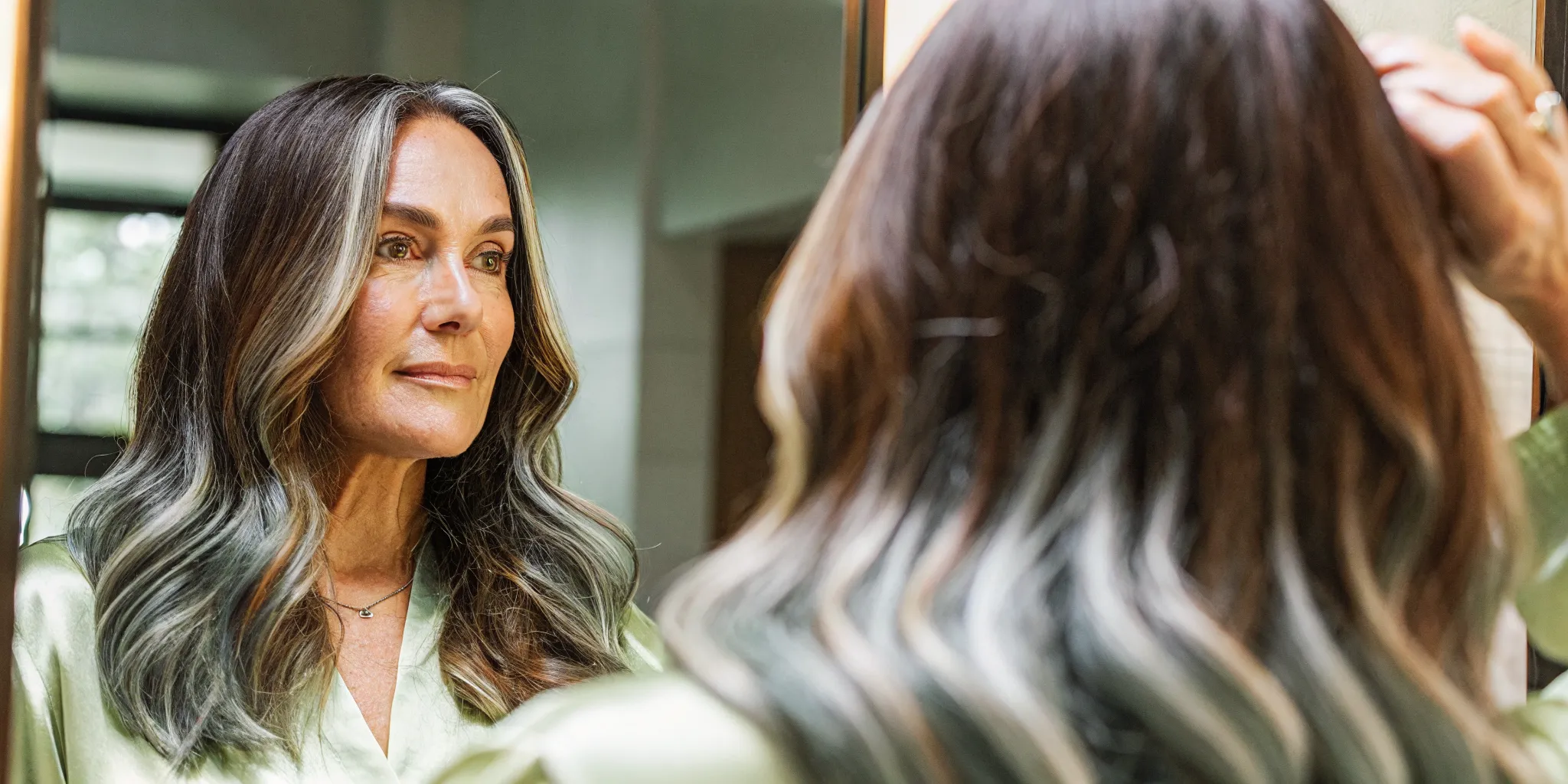
The visible signs of cumulative damage include:
- Dry, brittle ends that break easily and require frequent trims
- Dull, faded color between touch-ups that loses vibrancy faster
- Frizz that does not respond to standard conditioners or styling products
- Increased porosity that causes color to fade more quickly with each wash
- Loss of natural shine and elasticity, making hair feel straw-like
These symptoms are not just cosmetic. They indicate structural weakening of the cuticle, cortex, and the cell membrane complex that binds the hair layers together. The cell membrane complex is a lipid-rich matrix that acts as the glue holding the cuticle scales to the cortex beneath. When this layer degrades from repeated chemical exposure, the hair loses its ability to hold moisture and pigment. The result is a frustrating cycle: more frequent coloring to maintain coverage, leading to more damage, leading to even faster fading.
The solution is not to stop coloring. You can restore moisture balance after coloring with a dedicated porosity repair routine that addresses the structural changes caused by chemical processing. It is to interrupt the damage cycle with targeted repair at the structural level. This is where a post-color repair ritual becomes essential for anyone committed to long-term gray coverage. Read our complete damage prevention guide for long-term gray coverage health for a full maintenance strategy.
Summary: Eight to twelve chemical sessions per year progressively degrade the cuticle, cortex, and cell membrane complex. The visible result is dryness, brittleness, fading color, and a cycle of more frequent touch-ups.
Whole-Structure Repair: Beyond Single-Bond Treatments
Many hair repair products focus exclusively on disulfide bonds inside the cortex. While bond repair is valuable, it addresses only one dimension of the damage. The whole-structure repair mechanism used by Solanesse targets the cuticle, cortex, and cell membrane complex simultaneously for comprehensive repair. Hair is a three-layer structure: the cuticle (the outer protective layer of overlapping scales). The cortex (the structural core where pigment and protein bonds reside), and the cell membrane complex (the lipid-rich matrix that binds the layers together). Each layer contributes to the hair’s overall strength, elasticity, and appearance.
A whole-structure approach repairs all three layers simultaneously rather than targeting a single mechanism. Here is how each ingredient contributes to comprehensive repair:
- Hydrolyzed keratin: Small enough to penetrate the cortex where it fills gaps in the protein matrix. These science-backed ingredients that rebuild hair structure work at the cortical level to restore structural integrity from the inside out.
- Collagen: Forms a protective film on the hair surface while also penetrating the cuticle to reinforce the cortex. Collagen adds body and volume to fine or damaged strands.
- Plant-based peptides: These amino acid chains support the cell membrane complex, restoring the lipid barrier that keeps the cuticle sealed and the cortex protected. Peptides help the hair retain moisture and pigment longer.
- Sunflower oil: A lightweight botanical oil that seals the cuticle without weighing hair down. It locks in the restorative ingredients and smooths the surface for immediate shine and manageability.
| Layer | Bond-Only Treatment | Whole-Structure Repair |
|---|---|---|
| Cuticle | Not directly addressed | Sealed and smoothed with sunflower oil |
| Cortex | Disulfide bonds repaired only | Protein matrix rebuilt with keratin and collagen |
| Cell membrane complex | Not addressed | Lipid barrier restored with plant-based peptides |
| Color longevity | Moderate (bond repair helps texture) | High (sealed cuticle holds pigment longer) |
| Shine and manageability | Mild improvement | Immediate visible shine after one use |
Bond repair alone can restore some tensile strength, but it does not address the compromised cuticle that causes frizz, dullness, and color fading. Whole-structure repair creates lasting strength and shine that single-mechanism treatments cannot match. For women who color every four to six weeks, this comprehensive approach is the difference between managing damage and actually reversing it.
Summary: Bond-only treatments repair one layer of the hair. Whole-structure repair simultaneously targets the cuticle, cortex, and cell membrane complex for comprehensive restoration after chemical processing.
The Post-Color Repair Ritual: How Solanesse Supports Vibrant Gray Coverage
The most effective time to repair color-treated hair is immediately after the chemical process. The Solanesse Deep Conditioner Post-Color Revitalizer is designed to work during this critical window when the cuticle is still open, making it more receptive to restorative ingredients. This is where the Solanesse Deep Conditioner Post-Color Revitalizer fits into a sustainable gray coverage routine.
Applied as a single-step, at-home treatment for 10 to 15 minutes, it delivers hydrolyzed keratin, collagen, plant-based peptides, sunflower oil, bergamot, and vanilla directly into the opened cuticle. The formula is free from sulfates, parabens, silicones, phthalates, mineral oils, and GMOs, making it safe for weekly use between color sessions. The bergamot and vanilla provide a refined sensory experience that matches the luxury positioning of the brand, while the active ingredients do the structural work.
Ninety percent of women noticed visibly healthier hair after just one use. The treatment softens new growth, restores elasticity, and helps the hair hold pigment longer by maintaining the integrity of the cuticle layer. Used weekly between color sessions, it counteracts the cumulative damage of frequent touch-ups by continuously rebuilding the hair’s structural layers.
The Solanesse Deep Conditioner is priced at $65 for a 4-ounce tube and ships free on all U.S. orders. It is available as a one-time purchase or subscription at the same price, with a 30-day satisfaction guarantee for first-time buyers. International shipping is not currently available.
Summary: The Solanesse Deep Conditioner is a 10-to-15-minute weekly treatment that deposits keratin, collagen, and peptides into color-processed hair. Free from sulfates, parabens, and silicones. Ninety percent of women report visibly healthier hair after one use.
Building Your Gray Coverage Routine: From Color Day to Shine Days
An effective gray coverage routine balances two goals: achieving even color and maintaining hair health between touch-ups. Here is a practical framework designed around the post-color repair timing:
- Color day: Use a quality permanent or demi-permanent color formulated for gray coverage. Follow the manufacturer’s processing time exactly. Overprocessing by even a few minutes increases damage without improving coverage results, so set a timer and stick to it.
- Rinse and apply repair treatment: Immediately after rinsing out the color, apply the Solanesse Deep Conditioner. Leave it on for 10 to 15 minutes. The open cuticle absorbs restorative ingredients more effectively at this stage than at any other point in your color cycle.
- First 48 hours: Avoid washing the hair for at least 24 hours after coloring to allow the cuticle to fully close and seal in the pigment. When you do wash, use a sulfate-free shampoo that will not strip the fresh color or the repair treatment benefits.
- Weekly maintenance: Use the Deep Conditioner once per week between color sessions. This continuous repair cycle prevents cumulative damage from building up between touch-ups and keeps the hair structurally strong.
- Protect between touch-ups: Apply a heat protectant before any hot styling. Limit the temperature on flat irons and curling wands to below 350 degrees Fahrenheit. Sleep on a silk or satin pillowcase to reduce friction that accelerates cuticle wear and color fading.
Consistency is the key factor in this routine. A single deep conditioning session after color day provides immediate softness and shine, but it is the weekly repetition that prevents the cumulative damage of frequent coloring. Over three to four months, women who follow this protocol typically notice less breakage, longer-lasting color, and significantly improved hair texture.
Summary: Apply repair treatment immediately after rinsing color for maximum absorption. Wait 24 hours before washing. Use the Deep Conditioner weekly to counteract cumulative damage between touch-ups. Consistency over 3 to 4 months produces lasting improvements.
Frequently Asked Questions
Can I use the Solanesse Deep Conditioner the same day I color my hair?
Yes. In fact, the best time to apply the Deep Conditioner Post-Color Revitalizer is immediately after rinsing out your color. The cuticle is still open from the chemical process, allowing the keratin, collagen, and peptides to penetrate more effectively than at any other time. Apply the treatment for 10 to 15 minutes, then rinse thoroughly.
How often should I use the Deep Conditioner for gray coverage maintenance?
Once per week is ideal for most women who color every four to six weeks. If your hair feels particularly dry or brittle between color sessions, you can use it up to twice per week without overloading the hair. The formula is lightweight enough to layer with your regular conditioner.
Will whole-structure repair make my gray coverage last longer?
Yes. When the cuticle layer is healthy and properly sealed, it holds pigment molecules more effectively. Damaged or lifted cuticles allow color molecules to escape with every wash, leading to faster fading and more frequent touch-ups. Weekly repair treatments help the cuticle maintain its protective seal, keeping your gray coverage vibrant longer between salon visits.
Is whole-structure repair safe for color-treated and chemically processed hair?
Absolutely. The formula is specifically designed for color-treated hair and is free from sulfates, parabens, silicones, phthalates, mineral oils, and GMOs. It is safe for all hair types including fine, thick, curly, and chemically processed hair. The ingredients are gentle enough for weekly use and compatible with all standard hair color formulations.
Does free shipping apply to the Deep Conditioner, and is there a guarantee?
Yes. Shipping is free on all U.S. orders. International shipping is not currently available. The 30-day satisfaction guarantee applies to first-time buyers, so you can try the Deep Conditioner risk-free. If you are not satisfied, you can return it within 30 days of purchase.
Ready to Color Freely and Repair Fully?
Gray coverage does not have to come at the expense of your hair’s health. With a whole-structure repair approach, you can maintain vibrant, even color while keeping your strands strong, shiny, and resilient between touch-ups. The Solanesse Deep Conditioner Post-Color Revitalizer is designed specifically for this purpose: to repair the cumulative damage of frequent coloring and help your hair hold pigment longer.
The choice between covering grays and having healthy hair is a false one. With the right post-color ritual, you can do both. Color freely. Live boldly. Repair fully.


