


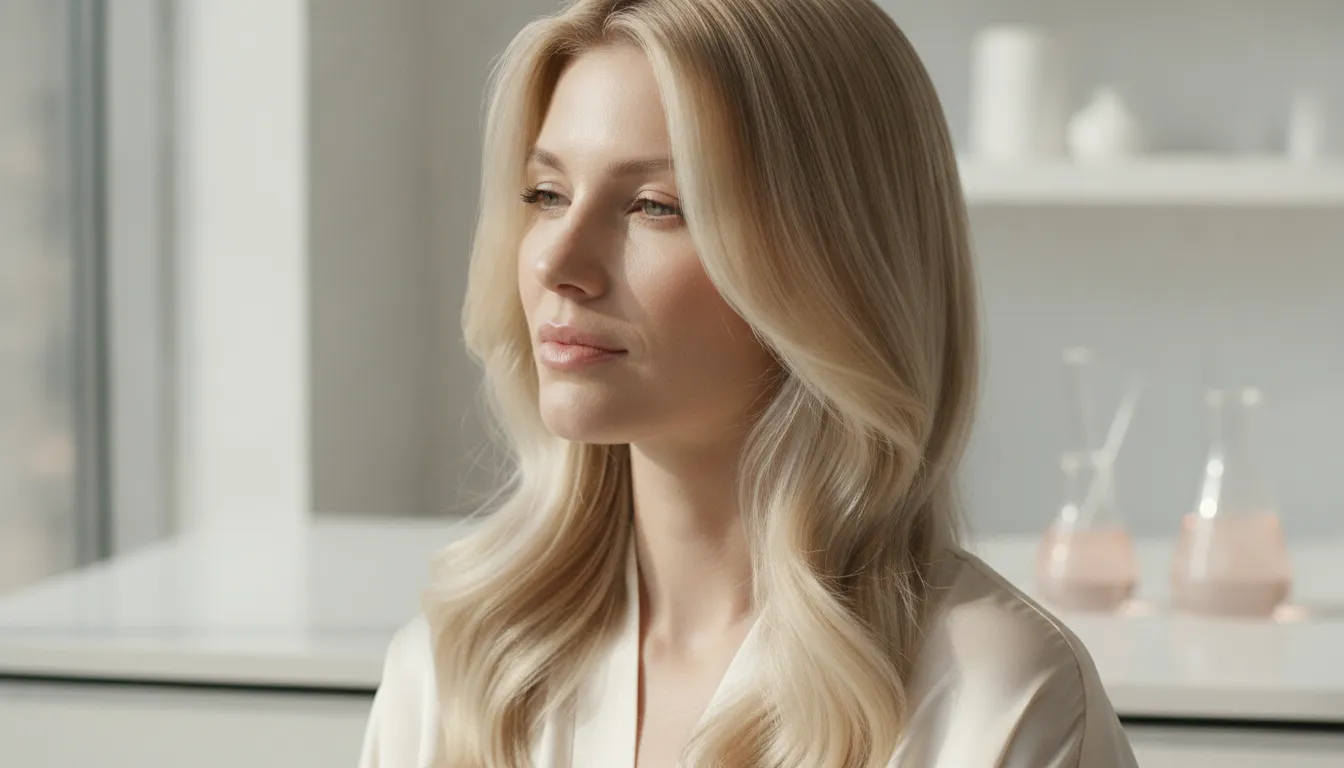
Bleached hair often feels dry for a deeper reason than simple lack of conditioner. The lightening process alters the hair structure, weakening fibers and increasing their risk of breakage (research published in PubMed).
The best deep conditioner for bleached hair should balance protein, moisture, and structural support. Protein can temporarily reinforce gaps in the cuticle, humectants help draw in water, and emollients help smooth the surface and retain hydration. For severely processed strands, ingredients that support the cortex matter too, not only the finish.
Try the Solanesse Deep Conditioner Post-Color Revitalizer
That balance is important because porous bleached hair can absorb moisture quickly, then lose it just as quickly. A thoughtful formula and consistent routine can improve manageability without leaving strands coated or limp. The first step is understanding why post-bleach hair responds differently to conditioning than untreated or lightly colored hair.
Why Bleached Hair Needs a Different Deep Conditioner
Bleached hair needs more than ordinary color care because lightening changes the fiber’s structure. A suitable treatment must restore hydration while supporting strength, elasticity, and cuticle control.
That is why the best deep conditioner for bleached hair addresses both moisture loss and chemical fragility, rather than relying on surface softness alone.
Bleach changes the hair fiber
Bleaching is a chemical process that alters the hair structure as it removes natural pigment. The fiber becomes weaker and more vulnerable to breakage after chemical treatment, according to research on dyeing, perming, and bleaching (F001).
The process also leaves the cuticle less compact. With the protective surface compromised, the strand becomes more porous and takes on water quickly. It can then lose that moisture just as quickly, creating a cycle of dryness, rough texture, and poor manageability (F008).
Porosity affects more than appearance. A porous strand has less consistent protection between the environment and its inner structure. Brushing, heat, friction, and repeated washing can therefore place more stress on already weakened fibers.
How bleached hair differs from routine color damage
General color-treated hair may need protection from dryness, fading, and gradual surface wear. Bleached hair faces those concerns plus deeper structural stress from the lightening process.
That distinction matters when choosing a conditioner. A standard color-care formula may improve slip and shine, but it may not provide enough intensive hydration or strengthening support for fragile, highly porous strands. Bleached hair requires extra care to maintain strength and elasticity (F024).
It also needs a balanced approach. Humectant and conditioning ingredients can help replenish water, while structural ingredients support the feel and resilience of damaged fibers. The goal is not to make the hair feel coated. The goal is to improve manageability without ignoring the underlying weakness.
Solanesse frames this recovery around more than the visible surface. Its structural repair approach considers the cuticle, cortex, and cell membrane complex together. That broader view is useful for hair that has been lightened repeatedly and now feels porous, fragile, or prone to snapping.
Choose a deep conditioner according to the level of chemical stress, not simply the fact that your hair is colored. If your strands feel rough immediately after washing, tangle easily, lose moisture quickly, or show increased breakage, they need a more restorative treatment than routine color maintenance alone. For broader breakage and elasticity guidance, see this treatment for brittle hair.
What Ingredients Should a Deep Conditioner Have for Bleached Hair?
The best deep conditioner for bleached hair should combine proteins, humectants, and emollients. Hydrolyzed keratin, hydrolyzed collagen, and amino acids help temporarily patch gaps in the cuticle. Glycerin and hyaluronic acid draw in and hold water. Plant oils and shea butter smooth and seal the cuticle. Together, these ingredient families address the structural weakness, rapid moisture loss, and rough texture that bleaching can create.
Proteins and amino acids reinforce weakened strands
Bleaching chemically alters the hair structure and leaves the fiber more vulnerable to breakage. Protein ingredients offer temporary structural support by filling uneven areas and patching gaps along the cuticle. Hydrolyzed keratin and hydrolyzed collagen are useful because their smaller fragments can coat damaged areas more evenly than larger, intact proteins.
Amino acids complement these proteins by supporting the damaged surface of the hair shaft. Look for ingredient names such as hydrolyzed keratin, hydrolyzed collagen, silk amino acids, arginine, or other amino acid complexes. The right combination can improve the feel and manageability of porous lengths without making the formula feel harsh.
For a closer look at this ingredient category, explore hydrolyzed keratin and collagen for damaged hair. Protein does not permanently rebuild every chemically altered bond. It provides targeted reinforcement while the rest of the formula restores flexibility and lubrication.
Humectants restore water balance
Porous bleached hair can absorb moisture quickly and lose it just as fast. Humectants help address that cycle by attracting water into the hair. Glycerin is a familiar example. Hyaluronic acid, also called hyaluronate, can provide a more targeted hydration approach when the molecule size is appropriate.
Research on overbleached hair found that low-molecular-weight hyaluronate, with an average molecular weight near 42 kDa, penetrated the cortex. It also improved the hair’s elastic modulus, a measure related to how the fiber responds to force. The researchers linked this improvement to stronger hydrogen-bond networks within keratin.
This finding matters because hydration is not only about making the surface feel soft. A carefully formulated humectant system can support the inner fiber while helping hair retain a more supple feel. Read the research on the benefits of keratin for damaged hair for additional context on structural care.
Emollients and barrier-supporting ingredients seal the cuticle
Humectants work best when the formula also contains ingredients that reduce moisture loss. Emollients, including plant oils and shea butter, smooth the cuticle and help seal in hydration. They also reduce friction, which can limit some of the mechanical stress placed on fragile strands during detangling and styling.
Ceramides can reinforce cohesion between cuticle cells. This supports a smoother surface and may help reduce the rough, lifted feeling common after bleaching. A formula that combines ceramides, emollients, proteins, and humectants is more balanced than one focused on a single ingredient category.
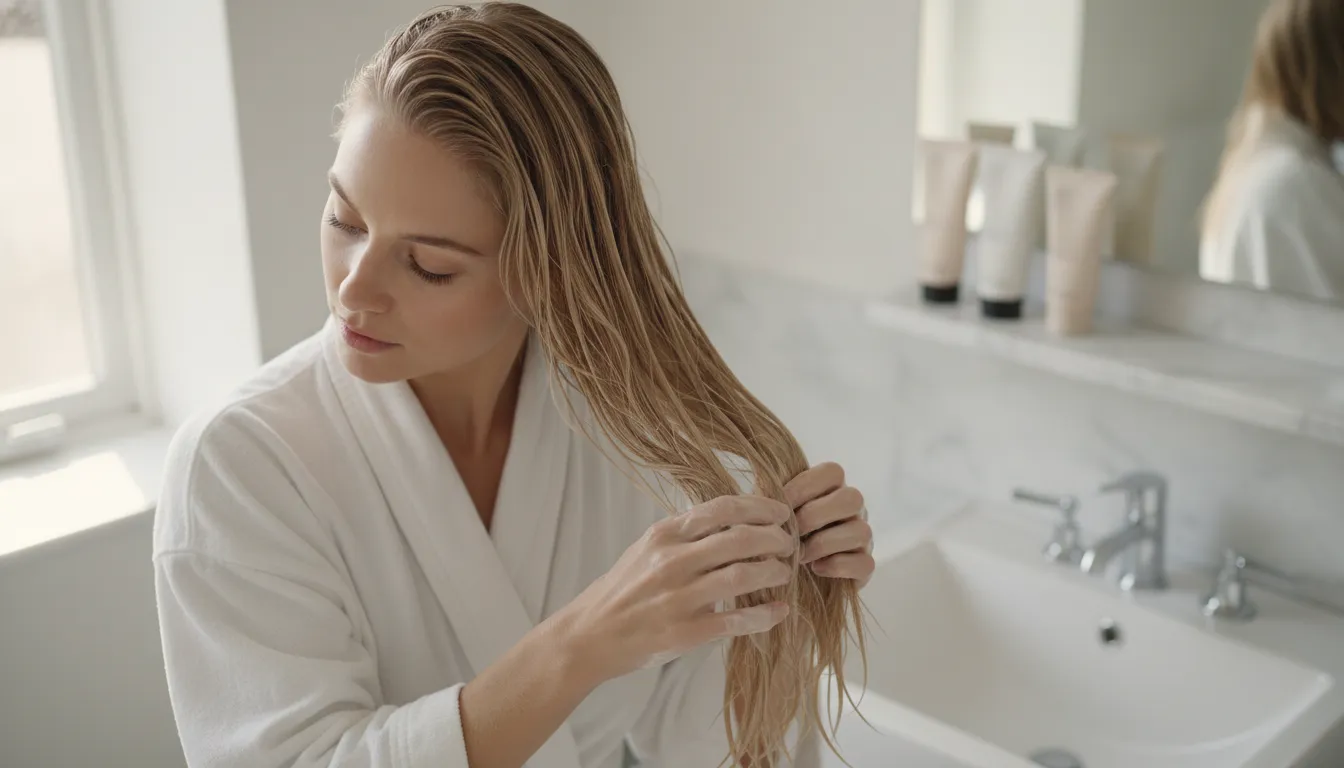
Conditioners can improve the appearance and feel of chemically treated hair, but results depend on consistent use and realistic expectations. Choose a deep conditioner with a complete system rather than chasing one hero ingredient. If hair feels stiff after repeated protein treatments, alternate with a more hydration-focused formula. If it feels limp and unstructured, a modest amount of protein may restore better balance.
Ingredient families at a glance
| Ingredient family | What it does for bleached hair | Common examples |
|---|---|---|
| Proteins and amino acids | Fill gaps in the cuticle and reinforce weak, fragile strands | Hydrolyzed keratin, hydrolyzed collagen, silk amino acids |
| Humectants | Draw water into the hair and help it retain moisture | Glycerin, hyaluronic acid, honey |
| Emollients | Smooth and seal the cuticle to reduce moisture loss and friction | Plant oils, shea butter, argan oil |
| Barrier and structural lipids | Reinforce cohesion between cuticle cells and support the inner fiber | Ceramides, low-molecular-weight hyaluronate |
No single family does all the work. A deep conditioner that pairs protein with humectants and emollients supports strength, hydration, and surface smoothness in the same treatment. That balance is what bleached, porous hair needs most.
Is Protein or Moisture Better for Bleached Hair?
Bleached hair needs both protein and moisture, not one or the other. Protein reinforces weakened areas, while moisture keeps the fiber flexible, smooth, and manageable.
Bleaching can weaken the hair fiber and increase breakage risk, so structural support matters. Hydrolyzed proteins can temporarily fill gaps in the cuticle and reinforce damaged strands (F007). However, frequent protein-heavy treatments may leave bleached hair stiff, brittle, or prone to snapping (F020).
Signs your hair needs more protein
Hair that feels unusually soft, weak, or stretchy when wet may need more structural support. It may also struggle to hold a shape or feel less resilient during detangling.
Choose a conditioner with a moderate protein component, then observe how your hair responds over the next few washes. You do not need a concentrated protein treatment every time. Alternating a protein-containing formula with a moisture-focused treatment can provide support without making the fiber rigid.
For a deeper look at how keratin can support color-damaged strands, read about the benefits of keratin for damaged hair.
Signs your hair needs more moisture
Dryness, rough texture, dullness, and increased tangling often point toward a moisture deficiency. High-porosity bleached hair absorbs water quickly, but it can also lose moisture just as fast.
Humectants such as glycerin and honey draw water into the hair shaft (F009). Emollients, including plant oils and shea butter, smooth the cuticle and help seal in that hydration (F010). Together, these ingredient groups can improve softness without ignoring the hair’s need for strength.
How to find the right balance
Start with the dominant symptom rather than choosing products by ingredient category alone. If your hair feels brittle and rigid, reduce protein frequency and prioritize hydration. If it feels overly soft and weak, add occasional structural support.
A useful conditioner should leave bleached hair supple, stronger, and easier to detangle. It should not feel waxy, rigid, or limp after rinsing. Track the result for several washes, because one application cannot diagnose every cause of damage.
The best deep conditioner for bleached hair combines balanced moisture with carefully chosen structural ingredients. Your ideal ratio may change after coloring, seasonal dryness, heat styling, or a trim.
Understanding the Best Deep Conditioner for Bleached Hair: A Structural Approach
The best deep conditioner for bleached hair supports the cuticle, cortex, and cell membrane complex rather than coating the surface alone. This layered approach addresses how chemical processing changes the fiber.
Bleaching chemically alters hair structure, weakening the fiber and increasing its risk of breakage. Hair fragility can have several causes, but chemical treatments and repeated care stress can worsen it. Research on overbleached hair shows why surface softness is not the whole answer. One study on damaged hair fibers found that low-molecular-weight hyaluronate could penetrate the cortex and improve elastic modulus. The researchers linked that improvement to stronger hydrogen-bond networks within keratin.
Three layers, three support needs
The cuticle is the outer protective layer. Bleaching can leave its overlapping scales rougher and less cohesive. A well-designed conditioner helps smooth this layer, reduce friction, and improve the feel of the strand.
The cortex makes up most of the hair fiber and provides much of its strength and elasticity. Ingredients that can reach beyond the surface have a different role from film-forming conditioners. Low-molecular-weight hyaluronate is notable because research has verified its movement into the cortex of overbleached hair. It may support mechanical performance through hydrogen-bond interactions with keratin (F002, F003).
The cell membrane complex, or CMC, helps connect the structural regions of the fiber. Chemical processing can compromise this internal interface. Supporting the CMC completes a more thoughtful repair strategy, because the hair needs cohesion between layers, not only a smoother exterior.
Why the Solanesse formula takes a full-structure view
Solanesse Deep Conditioner Post-Color Revitalizer is designed for this broader type of care. Its formula combines protein, collagen, and peptides to support damaged hair at more than one level. Protein can temporarily fill gaps in the cuticle and reinforce weakened strands (F007). Collagen and peptides complement that surface support within a conditioning system intended for post-color care.
The formula is sulfate-free, paraben-free, and silicone-free. That profile fits a routine focused on conditioning without relying on a silicone coating as the primary answer. Conditioners can also help manage the hair shaft and mitigate the effects of chemical procedures (F005).
This does not mean one treatment reverses every effect of bleaching. Hair is a nonliving fiber, so improvement means better manageability, cohesion, elasticity, and protection against additional mechanical stress. The goal is a strand that feels conditioned while receiving support where bleach has created weakness.
For a deeper explanation of structural care, explore this hair bond repair treatment guide. It places bond-focused language within a more complete cuticle, cortex, and CMC framework.
How Often Should You Deep Condition Bleached Hair?
Most bleached hair benefits from an intensive deep conditioning treatment about once a week. Start there, then adjust based on porosity, elasticity, and the amount of protein in your formula. Deep conditioning after bleaching can help replenish moisture, hydrate the hair, and soothe the scalp. Follow a post-bleach recovery ritual when your strands feel especially dry or sensitized.
A simple weekly cadence
Use a rich treatment once every seven days if your hair feels dry, rough, or difficult to detangle. Apply it after cleansing, focusing on the mid-lengths and ends. Follow the product directions for processing time, since a longer application does not always produce better results.
Highly porous hair may need consistent weekly conditioning because it absorbs moisture quickly and loses it just as quickly. Lower-porosity hair may prefer a lighter formula or less frequent intensive treatments. If your hair remains soft, flexible, and easy to manage, your current cadence is likely appropriate.
When to increase or reduce treatments
Check elasticity on damp hair by gently stretching one strand. Hair that stretches slightly and returns toward its original shape generally feels balanced. Hair that snaps with little tension may need more conditioning and gentler handling.
You can also use a simple stretch test after styling days. If strands feel rigid, rough, or unusually resistant to movement, focus on moisture and reduce strong protein treatments temporarily. Protein can support damaged structure, but too much may make bleached hair stiff and brittle.
If hair feels limp, coated, or unable to hold its usual shape, reduce the frequency or switch to a lighter conditioner. Product buildup can mimic dryness, so clarify only when your routine and scalp tolerate it. Avoid increasing treatment frequency automatically after every bleaching session. Assess how the hair responds over the following week.
Adjust for your formula
Read the ingredient list as part of your schedule. A protein-rich treatment may be best used less often, while a moisture-focused formula can suit a regular weekly ritual. The goal is not maximum conditioning. It is enough hydration and flexibility to support fragile strands without leaving them coated or brittle.
How to Deep Condition Bleached Hair at Home
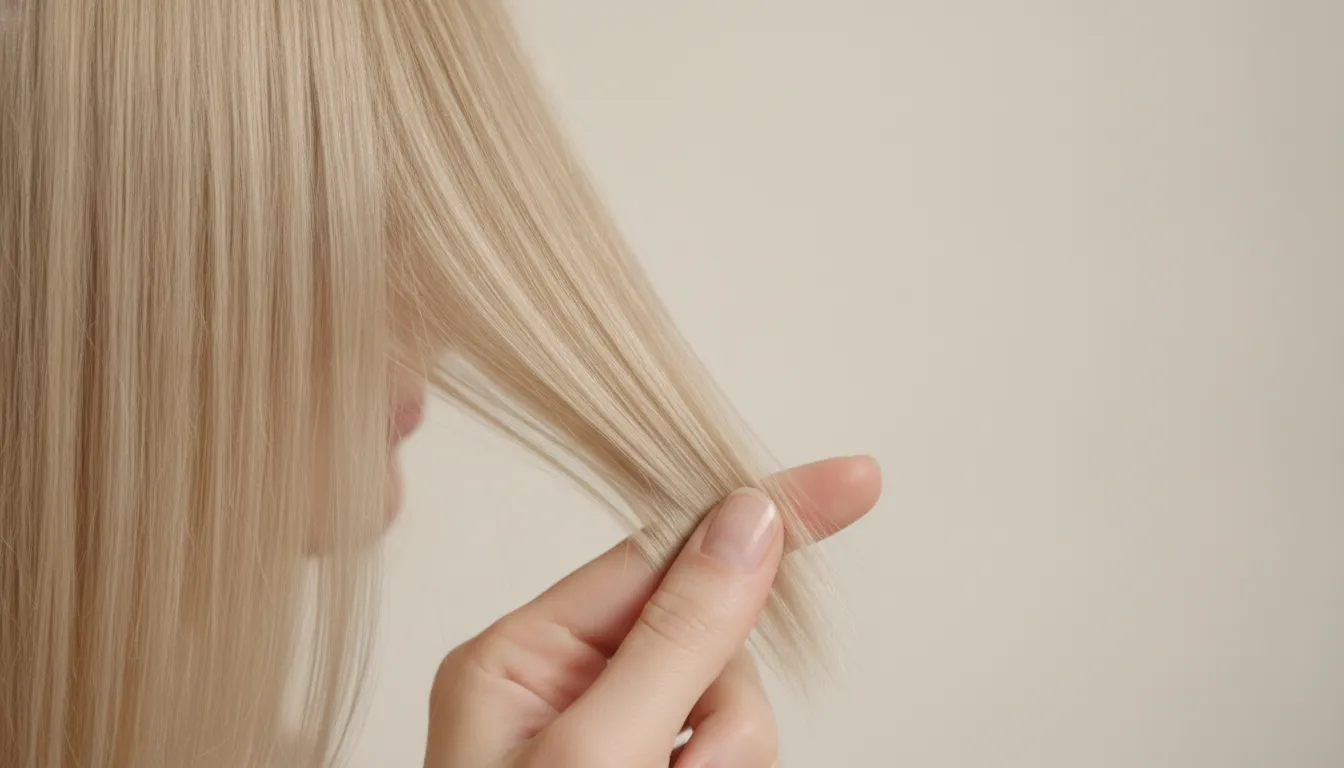
The best deep conditioner for bleached hair works best when you apply it to clean, damp hair and protect the fiber afterward. Follow this focused ritual once a week, adjusting the frequency if your hair feels coated or weighed down.
- Cleanse gently. Wash with a gentle, sulfate-free shampoo. Focus on the scalp, then let the lather rinse through the lengths. Avoid harsh cleansers that strip natural oils from already porous hair (F028).
- Remove excess water. Squeeze the lengths gently with your hands. Blot with a soft towel until your hair is damp, not dripping. This helps the conditioner spread evenly without becoming diluted.
- Apply from mid-lengths to ends. Distribute the deep conditioner through the most fragile areas. Concentrate on the ends, where bleach-related dryness and splitting usually become most visible. Use enough product to coat each section without saturating the scalp.
- Leave it on for 10 to 20 minutes. Gently smooth the product through the lengths with your fingers. Follow the product directions, and avoid aggressive rubbing. A consistent contact time gives conditioning ingredients an opportunity to soften and support the hair surface.
- Rinse with cool water. Rinse thoroughly until the hair feels conditioned but clean. Cool water can help seal the cuticle, improving smoothness and shine after treatment (F023).
- Handle the hair as fragile. Do not brush or comb bleached hair while it is wet. Wet, bleached strands are especially vulnerable to snapping (F022). Let the hair partially air-dry, then detangle gently from the ends upward with a suitable wide-tooth comb. Skip high-heat styling while the fiber feels weak, since heat can worsen structural damage and breakage (F013).
- Protect the results overnight. Once dry, avoid tight ponytails and buns that place tension on fragile fibers (F029). Sleep on a silk or satin pillowcase to reduce friction and help limit breakage (F027). Regular trims remove split ends before they travel farther up the shaft (F026).
Deep conditioning supports the routine, but it cannot offset repeated chemical stress indefinitely. Limit bleaching frequency whenever possible, since reducing bleaching sessions is the strongest way to prevent lasting structural damage (F012). For a broader care sequence, follow this post-bleach recovery ritual.
Add the Solanesse Deep Conditioner Post-Color Revitalizer to your weekly routine
Frequently Asked Questions
How often should you deep condition bleached hair?
Start with one deep-conditioning treatment each week. Bleached hair is more porous, so it can absorb moisture quickly and lose it just as quickly. Adjust the cadence if your hair feels coated, heavy, or limp. Deep conditioning after a bleaching service can also help replenish moisture and restore balance in the hair and scalp. Source.
What ingredients are best for bleached hair in a deep conditioner?
Look for a balanced formula with proteins, humectants, emollients, and structural lipids. Proteins can temporarily fill gaps in the cuticle, while glycerin and honey draw in water. Plant oils and shea butter help smooth the cuticle and retain moisture. Ceramides support cohesion between cuticle cells, and amino acids help condition the damaged surface. Ingredient guidance.
Is protein or moisture better for bleached hair?
Bleached hair generally needs both. Protein supports weakened structure, while humectants and emollients improve hydration and softness. Too much protein can leave hair stiff and brittle, so alternate strengthening with moisture-focused care when your strands feel hard or inflexible. Read the care guidance.
What is the best deep conditioner for bleached hair overall?
The strongest choice is not simply the richest mask. Choose a deep conditioner that addresses porosity, surface damage, and weakened internal structure with complementary ingredients. A formula combining protein, hydration, and structural support is better suited to repeatedly bleached hair than one focused on softness alone. Look for a routine you can use consistently without leaving the hair weighed down.
Get started with a restorative deep-conditioning routine
Bleached hair benefits from a deliberate balance of moisture, structural support, and gentle conditioning. Solanesse Deep Conditioner Post-Color Revitalizer is a considered fit for hair that feels dry, porous, or fragile after lightening. At $39, it brings a focused treatment step into your home routine without unnecessary complexity. Buy the Solanesse Deep Conditioner Post-Color Revitalizer to support softer, more manageable bleached hair.


