


Hair can feel dry, rough, or fragile after color, but softness alone does not tell you how strong the fiber is. Strength depends on what is happening inside the strand, how well its outer surface is protected, and how much friction it encounters during washing, brushing, and styling.
Shop the Solanesse Deep Conditioner Post-Color Revitalizer
In simple terms, what makes hair strong is a well-organized protein-rich fiber with enough flexibility, moisture balance, and surface protection to withstand everyday handling. Keratin structure and its bonds support the cortex, while a smoother cuticle can help reduce friction and make color-treated hair easier to manage. Conditioning can improve slip, shine, and feel, but it does not permanently recreate an undamaged fiber.
That distinction makes hair science more useful because it avoids treating every rough strand as the same problem. You can look at the layers and properties that influence strength, elasticity, and manageability.
What makes hair strong in the first place?
Hair strength is more than whether a strand feels soft between your fingers. It describes how well the fiber withstands tension and everyday handling without stretching too far, splitting, or breaking. Elasticity is related but distinct: it is the strand’s ability to extend and move, then recover its shape. Softness, shine, and smooth appearance are surface and sensory qualities. They can improve how hair feels without proving that its internal structure is strong.
At a structural level, hair is a composite fiber made of proteins, lipids, water, pigments, and other minor components. Protein makes up an estimated 65 to 95 percent of its weight. Keratin is the principal protein, and its sulfur-containing cysteine amino acids allow disulfide bonds to form between neighboring keratin chains. Hydrogen bonds also form between adjacent protein filaments. Together, these connections create a crosslinked keratin structure that contributes to the fiber’s shape, structure, and strength. Research on hair-fiber structure describes these relationships in detail.
The cortex is the mechanical core
A hair shaft has three main layers: the medulla, cortex, and outer cuticle. The cortex accounts for about 90 percent of the fiber’s weight and is primarily responsible for its mechanical properties. Its elongated cells contain keratin filaments aligned along the length of the shaft. Covalent disulfide bonds between adjacent filaments contribute to strength, while the helical shape of keratin chains contributes to elasticity. The cortex also stores moisture and holds the pigments that give hair its color.
That is why strength, elasticity, and appearance should be considered together, but not treated as synonyms. A strand may look glossy and feel conditioned while still needing gentler handling. For a broader explanation of the cuticle, cortex, and related structure, see how color affects hair structure.
How the cuticle protects the hair fiber
The cuticle is the hair fiber’s outer protective layer. Its overlapping cells help shield the cortex, while its surface lipids support lower friction, shine, and smoother handling. That surface condition is one part of what makes hair strong in everyday care, even though the cuticle itself cannot permanently rebuild once damaged.
Made of approximately six to ten flat cells that overlap toward the tip, the cuticle resembles a series of roof shingles. This arrangement creates the first physical barrier around the inner fiber. Beneath it, the cortex provides much of the hair’s mechanical strength, so a compromised surface can leave that inner structure more exposed to mechanical stress. The cuticle is not the source of all hair strength, but it helps preserve the conditions in which the fiber can be handled with less strain.
The outermost surface also includes a lipid layer called the F-layer. One important component is 18-methyleicosanoic acid, or 18-MEA, which is covalently linked to keratin. This layer creates a more hydrophobic surface and lowers friction between neighboring fibers. Lower friction can help strands slide over one another, making hair feel smoother and shinier and reducing resistance during combing. When surface lubrication is reduced, hair may tangle more readily and require more force to detangle.
Coloring and other chemical or thermal exposures can affect the fiber surface, so understanding how color affects hair structure helps put shine and manageability into context. A smoother feel does not prove that the underlying fiber has returned to its original state. Conditioning can temporarily improve slip and surface feel, but it cannot permanently rebuild the cuticle.
For a closer look at how surface condition relates to moisture behavior, explore hair porosity and the cuticle. Gentle detangling, reduced friction, and consistent conditioning all help protect the surface that makes daily handling easier.
Why lubrication and low friction matter for breakage
Strength is not only an internal property of the hair fiber. The surface also affects how easily strands move past one another during washing, drying, brushing, and styling. A well-conditioned surface provides slip, so everyday handling places less drag on the fiber.
The cuticle’s outer lipid layer, including 18-MEA, helps create a hydrophobic surface and lowers friction between neighboring fibers. Chemical processing and high heat can alter this surface lubrication. When that happens, strands may slide less easily, increasing friction and making the hair more vulnerable to fiber fracture.
That friction becomes especially noticeable during detangling. Higher friction is associated with greater combing resistance, more tangling, and a higher potential for mechanical damage, according to research in the peer-reviewed literature on hair friction and conditioning. In practical terms, a knot that requires repeated pulling can turn a manageable tangle into unnecessary stress at the cuticle and along the strand.
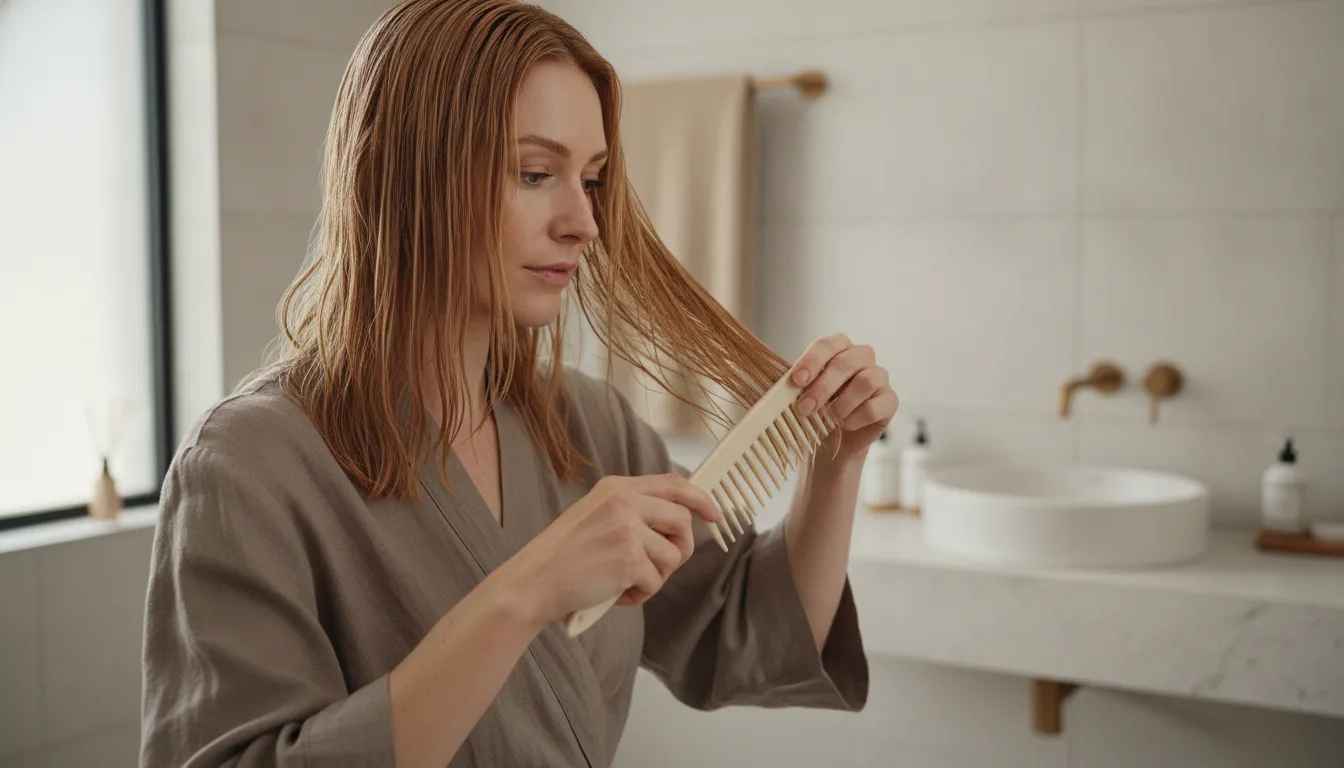
Wet hair deserves particular care because it is easier to stretch and deform while saturated. Apply conditioner where tangling is common, allow it time to create slip, and work from the ends upward with a gentle comb or your fingers. Avoid forcing a brush through a knot. Supporting lower-friction handling does not permanently rebuild a damaged fiber, but it can make routine care less abrasive and help hair feel softer and smoother.
For color-treated hair, a thoughtful conditioning routine may include hair oils for smoother strands when they suit your texture and styling needs. The goal is simple: reduce unnecessary drag, detangle patiently, and handle the fiber as gently as possible.
What changes when hair is color-treated?
Color-treated hair can still be strong, but repeated chemical processing may change the fiber’s surface, internal mechanics, and protein composition. In practical terms, this can affect how easily strands flex, slide past one another, retain moisture, and tolerate everyday handling. Color itself is not the same thing as damage, and choosing to color your hair does not require an alarmist care routine.
A 2024 study examining repeated dyeing found changes in hair-fiber morphology, mechanical properties, and protein composition. The researchers observed noticeable effects after one dyeing session, with more pronounced effects after three or more consecutive treatments. Cuticle-surface damage also increased as dyeing sessions accumulated, while mechanical and protein changes did not follow a simple linear pattern. These findings support a measured conclusion: cumulative exposure matters, but the effect is not identical for every head of hair or every coloring process (read the full dyeing study).
The cuticle may become less uniform
The cuticle is the strand’s outer protective layer. Its overlapping cells help shield the cortex beneath it and contribute to a smoother surface. Chemical processing can alter this morphology, which may make hair feel rougher, catch more easily during detangling, or appear less reflective. Those changes describe surface condition and handling, not a verdict on whether your color was a mistake.
Internal properties can change too
The cortex provides much of a fiber’s mechanical behavior, while its keratin-rich structure contributes to strength and elasticity. Repeated dyeing can affect the protein composition and mechanical properties of the fiber, so a strand may respond differently to tension, heat, brushing, or wet manipulation over time. This is why a supportive routine should address both the visible cuticle and the way hair is handled between color appointments.
Cosmetic care can improve slip, softness, shine, and manageability, helping reduce the friction and handling stress that make treated hair feel difficult. It does not recreate an undamaged fiber or biologically restore the hair shaft. For practical maintenance, explore this guide to care for hair after coloring, and focus on gentle detangling, conditioning, and observation rather than abandoning color you enjoy.
Can conditioning make weak hair feel stronger?
Yes, conditioning can make weak hair feel stronger, but that usually describes an improvement in surface condition and handling rather than permanent restoration of the fiber. Hair shafts are made of non-living cells, so they cannot biologically repair themselves. A conditioner can instead coat the strand, smooth uneven cuticle areas, and temporarily restore some of the physical properties that make hair feel softer and easier to manage.
That difference matters. A well-conditioned strand may have more slip, less tangling, greater softness, and more visible shine. Lower friction can also reduce resistance during combing, which may help limit avoidable mechanical stress. These changes can make fragile hair feel more resilient in daily care, but they do not recreate lost keratin bonds or return damaged hair to an undamaged state. The peer-reviewed research on hair conditioning supports this distinction between cosmetic surface effects and the deeper structure of the cortex.
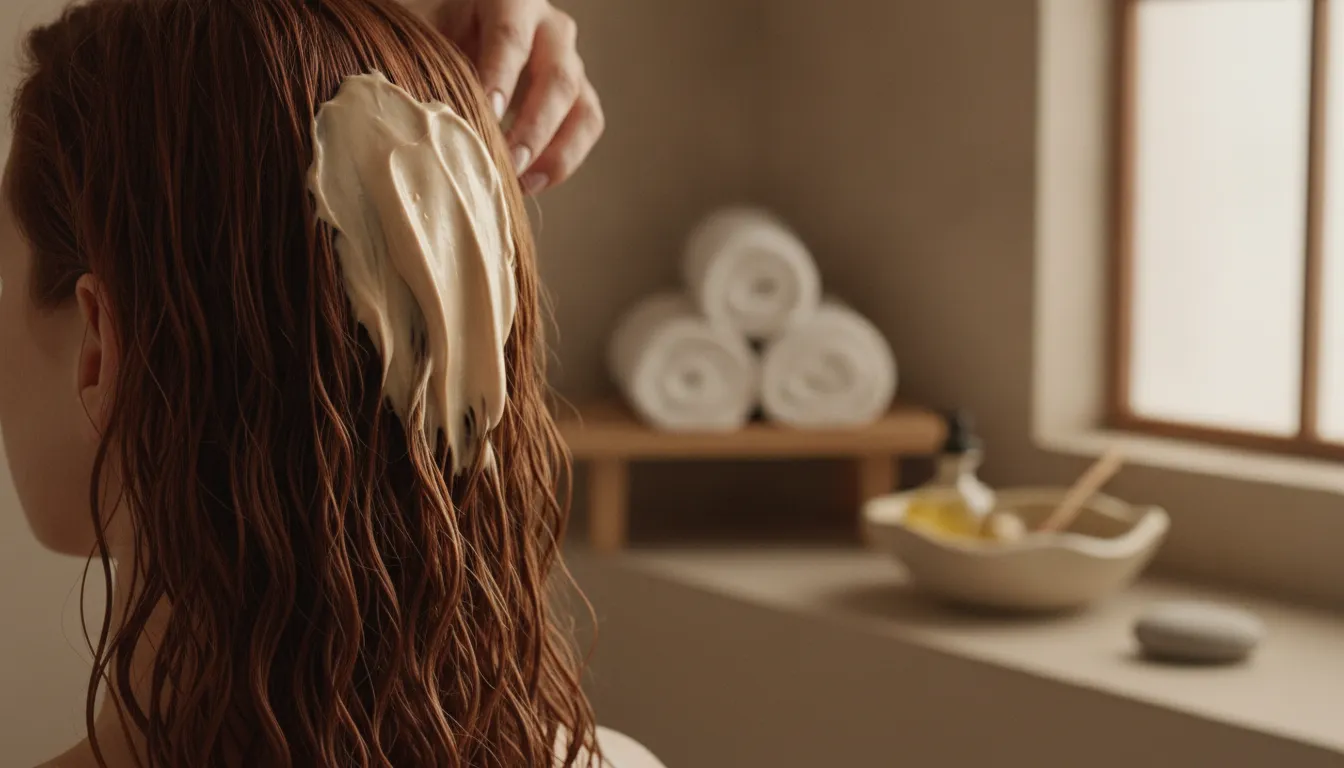
For color-treated hair, Solanesse positions its formula as a post-color deep conditioner, not a cure or clinically proven repair treatment. Its ingredient approach includes hydrolyzed keratin, collagen, plant-based peptides, and sunflower oil, and the product is designed to provide cosmetic conditioning. Used on warm, damp hair for 10 to 15 minutes before rinsing, it may support a smoother, softer feel after coloring. Explore conditioning color-treated hair for more context, while keeping expectations realistic: the goal is improved feel, slip, shine, and manageability, not a permanent structural reset.
How to support stronger-feeling color-treated hair
A consistent routine can help color-treated hair feel smoother, more manageable, and less stressed during everyday handling. The goal is not to permanently rebuild the hair fiber, but to reduce avoidable friction, support conditioning, and notice changes early.
- Wash gently. Use a mild cleansing approach that removes buildup without rough scrubbing. Let the lather move through the lengths as you rinse rather than repeatedly working the hair between your hands.
- Condition on warm, damp hair. After washing, apply conditioner while the hair is damp and warm. A post-color deep conditioner can provide slip and softness as part of a weekly or as-needed routine. Solanesse directions recommend leaving its treatment on for 10 to 15 minutes before rinsing.
- Detangle with patience. Work from the ends upward, using your fingers or a suitable wide-tooth comb. Hair with a compromised surface may have more friction and combing resistance, so avoid forcing through knots. Understanding hair porosity and the cuticle can also help you interpret differences in how your lengths absorb and retain conditioning.
- Be deliberate with heat. Limit unnecessary high-heat exposure and use a heat protectant appropriate for your routine. Thermal exposure may affect surface lubrication, which can make strands feel rougher and more difficult to handle.
- Reduce low-level friction. Blot rather than twist wet hair, avoid aggressive towel rubbing, and choose gentle styles that do not pull repeatedly on the same areas. These small choices can reduce mechanical stress over time.
- Space chemical services when practical. Repeated dyeing can affect the cuticle, physical structure, and protein composition of hair fibers. Giving the lengths time between services may help you condition and observe how they respond. For targeted education on protein support for color-treated hair, keep expectations cosmetic and individualized.
- Monitor changes. Track increasing tangling, roughness, snapping, or a marked change in manageability. Adjust handling and seek advice from a qualified stylist or clinician when concerns are persistent, sudden, or accompanied by scalp symptoms.
What should you look for in a post-color conditioner?
Look for care that matches the hair’s immediate need without promising to recreate an undamaged fiber. A useful post-color conditioner should improve slip, softness, and manageability while supporting gentler handling. Solanesse’s ingredient approach considers the cuticle, cortex, and cell membrane complex as distinct parts of the hair structure. But the practical test is how comfortably your hair behaves after rinsing and between washes.
| Care option | Care goal | What it may improve | Honest limit |
|---|---|---|---|
| Gentle conditioning | Support a smoother, more manageable surface. | Softness, shine, slip, and easier detangling. | It can improve feel and handling, but it does not permanently restore damaged fiber. |
| Protein-focused care | Condition hair with protein-derived ingredients. | A stronger-feeling, more resilient cosmetic finish for some hair. | Results depend on the formula and hair’s condition; more protein is not automatically better. |
| Lubrication and low-friction care | Reduce drag during combing and everyday handling. | More slip and potentially less tangling or mechanical stress. | It cannot eliminate breakage caused by every source of chemical, thermal, or mechanical stress. |
| Spacing chemical or heat exposure | Give the hair more time between demanding processes. | Less cumulative exposure and a calmer maintenance routine. | It is a scheduling choice, not a conditioner and not a repair treatment. |
For a targeted option, a post-color deep conditioner can fit into weekly or as-needed care. Choose based on how your hair feels, how it detangles, and whether the finish remains comfortable rather than chasing a promise of permanent strength.
Shop the Solanesse Deep Conditioner Post-Color Revitalizer for post-color conditioning support
Frequently Asked Questions
How do I make my hair stronger?
Support the fiber from both directions: use gentle handling, reduce unnecessary heat and friction, detangle with care, and condition regularly. Hair strength comes from its internal keratin structure, while a smoother cuticle can reduce combing resistance and tangling. These measures support stronger-feeling, more manageable hair, but they cannot permanently rebuild a damaged fiber. Research on hair friction and conditioning describes this relationship.
Why is my hair so weak and fragile?
Fragility can reflect several overlapping factors, including chemical processing, heat exposure, surface wear, friction, and rough handling. Color-treated hair deserves supportive care rather than blame. Repeated dyeing can affect hair-fiber morphology, physical structure, and protein composition, while a damaged cuticle may reduce resilience under mechanical stress. A study of repeated dyeing reports these effects.
Can conditioner make hair stronger?
Conditioner can make hair feel smoother, softer, and easier to comb by coating the fiber and improving surface lubrication. Intensive conditioning may temporarily replace some surface properties, but hair-shaft cells cannot biologically repair themselves. Think of conditioner as cosmetic support for feel, shine, manageability, and reduced mechanical stress, not permanent structural restoration. Hair-conditioning research explains these limits.
What vitamin are you lacking if your hair is falling out?
Hair shedding has many possible causes, so a symptom alone cannot identify a vitamin deficiency. Avoid self-prescribing high-dose supplements based on an online checklist. If shedding is persistent, sudden, or concerning, speak with a qualified clinician who can review your history and determine whether testing or treatment is appropriate.
What food will stop hair fall?
No single food can be promised to stop hair shedding. A varied, balanced diet supports general health, but ongoing or marked shedding may have causes that food alone cannot address. If you are worried about a change in shedding, ask a clinician for individualized guidance rather than relying on a restrictive diet or unverified supplement plan.
Get started with a post-color conditioning ritual
Consistent conditioning can help improve slip, manageability, and the feel of color-treated hair without promising to recreate an undamaged fiber. For a focused next step, shop the Solanesse Deep Conditioner Post-Color Revitalizer for your post-color conditioning ritual.


