


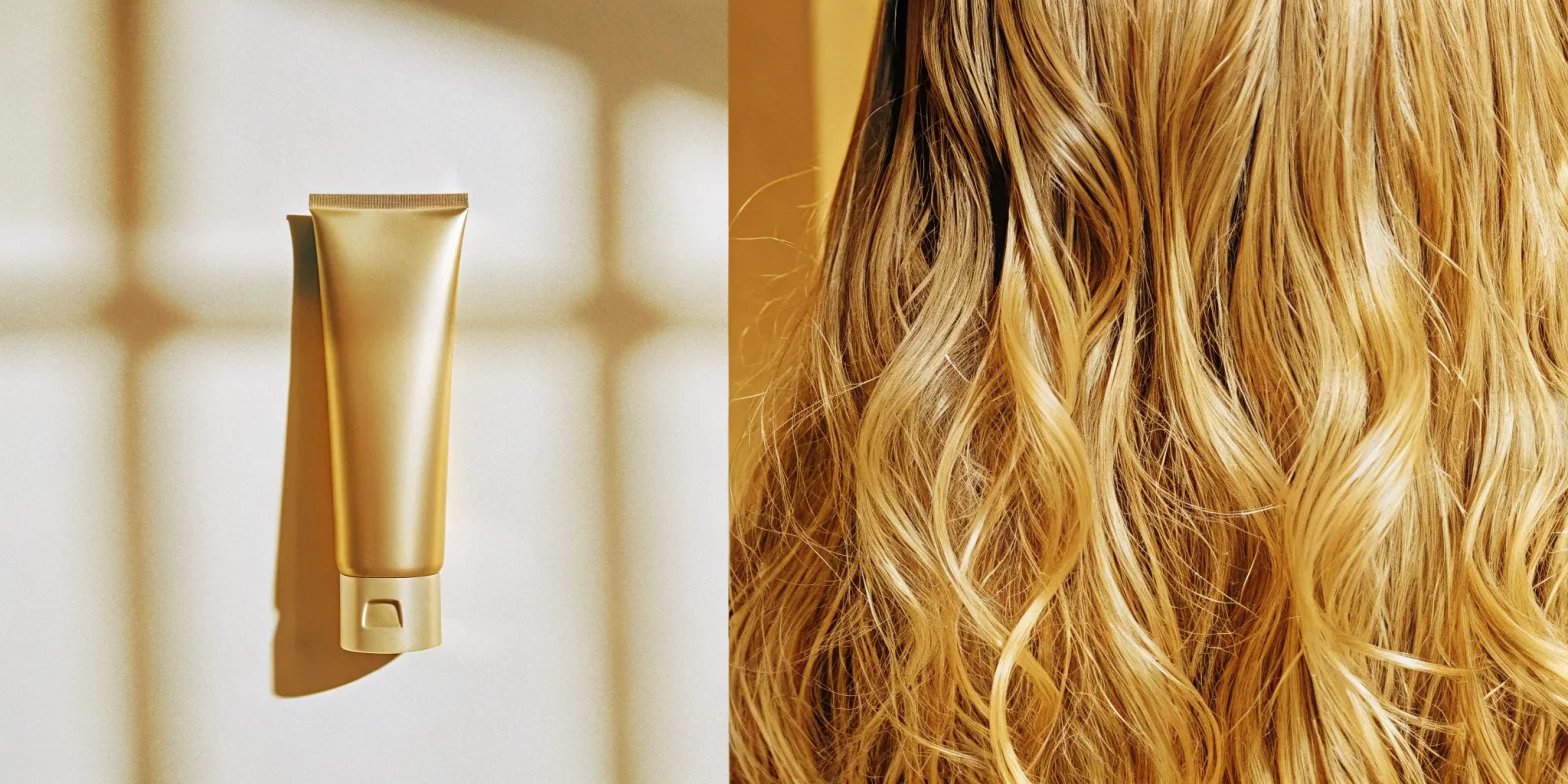
Coloring your hair every few weeks can preserve a look that feels distinctly yours, but repeated processing also changes how strands respond to cleansing, conditioning, and heat. The right conditioner should do more than leave the surface smooth. It should support the needs of colored hair without adding unnecessary weight or compromising the ritual you can maintain.
The best conditioner for color-treated hair is one that combines gentle, color-conscious ingredients with targeted conditioning for the damage your hair actually experiences. Look for a formula that supports softness, strength, and shine while avoiding ingredients that may be too harsh or unsuitable for your routine.
Shop the Solanesse Deep Conditioner Post-Color Revitalizer — a targeted rinse-out treatment formulated with hydrolyzed keratin, collagen, and plant-based peptides for color-treated hair. Buy now at Solanesse.com.
Conditioner categories are not interchangeable. Sulfate-free formulas can help make cleansing gentler, while silicone-free, protein-enriched, and bond-repair options address different concerns. Understanding those distinctions makes it easier to choose care that protects your color and supports healthier-looking hair.
What Makes a Conditioner Safe for Color-Treated Hair?
A safe conditioner for color-treated hair avoids harsh cleansing ingredients that roughen the cuticle and accelerate fading. The ideal formula pairs gentle conditioning agents with targeted support for the damage that repeated processing creates.
Key qualities to look for:
- Sulfate-free formulas that cleanse without stripping the protective lipid layer of the hair fiber.
- Silicone-free options that condition without buildup that can leave strands feeling coated rather than hydrated.
- Protein-enriched ingredients such as hydrolyzed keratin and collagen for structural support.
- pH-balanced formulations that help the cuticle lie flat for improved smoothness and shine.
Research published in the National Library of Medicine notes that higher-pH shampoos can increase friction and damage in the hair fiber. A balanced routine can help the cuticle lie flatter, improving smoothness and reducing the rough feel that often makes treated hair look less reflective.
Solanesse follows the same standard. The Deep Conditioner Post-Color Revitalizer is free from sulfates, parabens, silicones, phthalates, mineral oils, and GMOs. Explore the sulfate-free conditioner for color-treated hair guide for more detail on the formula.
Silicone-Free Formulas: Preventing Buildup on Color-Treated Strands
For color-treated hair, a conditioner should soften and protect without leaving behind a heavy film. Silicone-free formulas can be a thoughtful choice because they condition the strand without relying on ingredients that may accumulate with repeated use. That matters when your goal is to preserve a clean, receptive surface for moisture and future color care.
Silicones, including dimethicone, are often used to create immediate slip, shine, and a smoother feel. Those effects can be useful, but some silicone-based ingredients may build up on the hair over time. Particularly when they are not easily removed by a gentle cleansing routine. A coated strand can feel polished while still lacking the softness and flexibility associated with adequate hydration.
For women who refresh color regularly, persistent buildup can also complicate the next stage of care. A film on the cuticle may limit how readily water and conditioning ingredients reach the fiber, making it harder to address dryness beneath the surface. It may also leave color treatments working against a less receptive strand.
Look for formulas that use lightweight natural oils such as sunflower oil to provide softness and emollience without relying on silicone as the central smoothing mechanism. Solanesse is silicone-free and combines sunflower oil with hydrolyzed keratin, collagen, and plant-based peptides. You can review the complete formula on the Science and Ingredients page.
How Does Protein Help Hair Recover After Color Processing?
Protein-enriched conditioners help support the areas where the strand feels weakened by depositing conditioning proteins that improve the hair’s feel and manageability. They are not a substitute for gentle color care, but they can be a valuable part of a repair-focused routine.
Research published in PubMed found that adding conditioner agents to a blond-color emulsion decreased damage caused by the coloring process, particularly protein loss. That finding reinforces an important principle: conditioning support matters during and after chemical processing, not only once visible damage appears. Read the study on conditioner agents and color-related protein loss.
Protein and moisture perform different jobs, and color-treated hair generally needs both:
- Hydrolyzed proteins (such as keratin and collagen) can help hair feel stronger, smoother, and less porous.
- Moisturizing ingredients improve flexibility, softness, and slip.
- Plant-based peptides offer additional structural support without the stiffness that some protein treatments can cause.
Solanesse combines hydrolyzed keratin and collagen with plant-based peptides and conditioning oils, including sunflower oil, for a formula designed to support strength without overcorrecting. Explore the science and ingredients behind the formula.
Bond-Repair Treatments: Going Beyond Surface Care
Bond-repair treatments can help strengthen hair weakened by coloring, lightening, and other chemical services. Products such as Olaplex and K18 are designed to address damage associated with broken disulfide bonds within the hair cortex. They are valuable tools, but they represent one part of a complete repair strategy rather than the entire solution for color-treated hair.
Disulfide bonds help give the hair fiber its internal strength and shape. Chemical processing can disrupt these bonds, leaving strands more vulnerable to weakness, breakage, and changes in texture. Bond-focused treatments aim to support the damaged internal structure of the cortex.
A strand of hair can undergo significant structural stress during a single color session. When disulfide bonds are broken, the fiber loses tensile strength and becomes more prone to snapping during brushing, styling, or even gentle manipulation. Bond repair can help restore some of that lost resilience, especially in hair that has been lightened multiple times.
What Are the Limits of Bond-Only Treatments?
Bond-only care does not necessarily address every form of damage caused by coloring. It focuses primarily on internal bonds in the cortex, while the cuticle can still feel rough, lose its smooth alignment, and struggle to retain moisture. The cell membrane complex, which helps support communication and cohesion within the hair fiber, also deserves consideration.
Key considerations when evaluating bond-repair products:
- Cortex alone is not enough — a strand may have stronger internal support yet remain dry, dull, frizzy, or difficult to detangle if its outer structures are not conditioned.
- Cuticle care matters — smoothing the cuticle improves shine, reduces friction, and helps preserve color vibrancy between treatments.
- Cell membrane complex — a complete approach supports cohesion within the fiber, not only bond reinforcement.
That is why choosing the best conditioner for color-treated hair requires looking beyond bond repair alone. Solanesse takes a whole-structure approach, addressing the cuticle, cortex, and cell membrane complex rather than concentrating only on bonds. This broader framework pairs structural care with the softness, slip, and moisture support that color-treated hair needs to look polished and feel healthy.
How to Choose the Best Conditioner for Color-Treated Hair
The best conditioner for color-treated hair depends on what your strands need most: gentler cleansing support, less buildup, reinforcement after chemical processing, or deeper structural care. These categories can overlap, so use the table as a starting point rather than a strict set of rules.
| Conditioner type | Best for | Key benefit | Typical frequency | Solanesse alternative |
|---|---|---|---|---|
| Sulfate-free | Color that fades quickly or feels dry after washing. | A gentler approach that helps limit premature fading. | Every wash. | Use Solanesse for a sulfate-free post-color treatment when softness and restoration are priorities. |
| Silicone-free | Fine hair, product-sensitive hair, or strands prone to buildup. | A lighter finish without relying on silicone-based slip. | Every wash or as tolerated. | Choose Solanesse when you want a silicone-free rinse-out treatment with a more intensive conditioning focus. |
| Protein-enriched | Processed hair that feels weak, porous, or prone to breakage. | Helps support the feel of compromised strands after coloring. | Once weekly, adjusting for stiffness. | Solanesse combines hydrolyzed keratin, collagen, and plant-based peptides in a post-color ritual. |
| Bond-repair | Hair exposed to repeated lightening or chemical services. | Targets bond-focused repair concerns beyond basic surface conditioning. | One to three times weekly, per product directions. | Solanesse takes a whole-structure approach across the cuticle, cortex, and cell membrane complex. |
Prices vary by size and whether a product is sold alone or as part of a system. For context, Allure’s color-treated hair roundup lists options from an $18 drugstore set to premium systems priced above $100.
Ready for a complete post-color care routine? Try the Solanesse Deep Conditioner Post-Color Revitalizer — a single-step, at-home treatment that goes on in 10 to 15 minutes. Shop now at Solanesse.com.
Why a Targeted Rinse-Out Treatment Completes the Routine
Daily conditioner helps detangle, soften, and improve manageability between washes. A salon appointment can provide professional assessment and intensive care. Color-treated hair often needs a deliberate middle step as well, especially when repeated processing leaves strands feeling dry, porous, or less resilient. A targeted rinse-out treatment is designed for that moment.

Solanesse Deep Conditioner Post-Color Revitalizer is formulated as a deep conditioning treatment for color-treated hair. It is a single-step, at-home ritual that stays on for 10 to 15 minutes. Making it practical after a color service or whenever your hair needs more than everyday conditioning. This approach supports a consistent routine between salon visits while keeping the experience calm, precise, and easy to repeat.
Whole-structure repair makes the difference. Many bond-only treatments focus on one aspect of chemically stressed hair: reinforcing selected bonds within the fiber. Solanesse takes a broader approach, addressing the cuticle, cortex, and cell membrane complex. The formula combines hydrolyzed keratin, collagen, and plant-based peptides with sunflower oil, bergamot, and vanilla.
Solanesse reports that 90% of women noticed visibly healthier hair after just one use. That statement should be read with its specific qualification, not as a promise of identical results for every person or hair type.
The results speak to a broader principle: color-treated hair benefits from a complete approach that includes daily conditioning, periodic protein support, and a targeted post-color ritual. By layering these elements in a conscious routine, you can maintain the vibrancy of your color while addressing the cumulative effects of repeated chemical processing.
The formula is free from sulfates, parabens, silicones, phthalates, mineral oils, and GMOs. For a closer look at the formulation and the role of its featured ingredients, explore the science behind Solanesse.
Frequently Asked Questions
What makes a conditioner suitable for color-treated hair?
Look for a formula that supports moisture, softness, and strength without relying on harsh cleansing ingredients. Sulfate-free and color-conscious formulas are generally gentler on the cuticle, while protein, peptide, and conditioning ingredients can help hair feel more resilient after chemical processing.
Should I use a sulfate-free conditioner for colored hair?
Yes. A sulfate-free conditioner can be a sensible choice for color-treated hair because it avoids harsh sulfate cleansing agents that may roughen the cuticle and contribute to premature fading. Also consider using a sulfate-free shampoo for a complete gentle routine.
Does silicone-free conditioner make hair healthier?
Not automatically. Silicone-free formulas may provide a lighter feel and can be useful if your hair becomes weighed down by buildup. Healthier-feeling hair depends on the complete formula, including its moisturizing and strengthening ingredients, not on the absence of one ingredient category alone.
Is protein-enriched conditioner good for damaged color-treated hair?
It can be helpful when color processing has left the hair fragile or prone to breakage. Hydrolyzed proteins and peptides support a stronger, smoother feel, but protein should be balanced with moisture. If hair starts to feel stiff or dry, alternate with a more moisturizing conditioner rather than adding more protein.
How often should I use a bond-repair treatment on colored hair?
Follow the product’s directions and adjust based on your hair’s condition. Bond-repair products can complement regular conditioning, but they do not replace moisture, cuticle care, or a complete post-color routine. A targeted rinse-out treatment used consistently may provide more balanced support than relying on bond repair alone.
Restore softness and shine after every color treatment. The Solanesse Deep Conditioner Post-Color Revitalizer delivers targeted care for color-treated hair in a single 10-15 minute at-home step. Order yours from Solanesse.com. Free shipping on U.S. orders. First-time buyers are protected by a 30-day satisfaction guarantee.


