


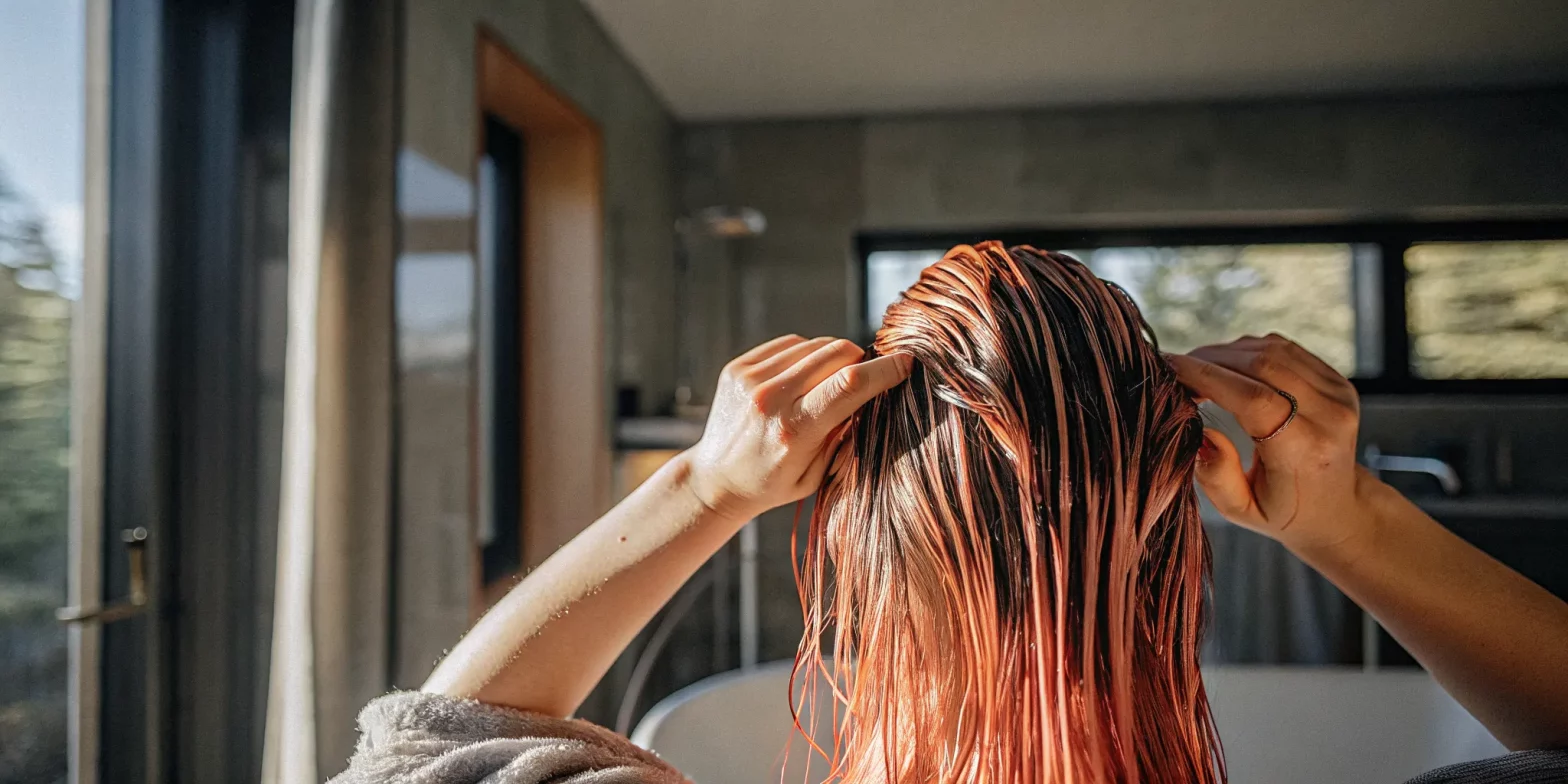
That brilliant salon tone begins to fade the moment you step under the shower head. Guarding your shade against hard water and heat takes more than basic shampoo.
A color depositing conditioner is a dual-action hair care treatment that merges daily moisture with temporary color pigments. This pigment-rich formula works by coating the hair cuticle with semi-permanent dye to refresh faded tones, tone down warm brass, or deepen existing shades. Because these pigments only sit on the outer layer and do not reach the inner cortex, they wash out slowly over several shampoos. You can use these tinted formulas between salon visits to keep your shade looking fresh and vibrant. This makes the product an easy, low-risk way to extend the life of your salon color while keeping strands soft and shiny. However, while these temporary tones keep your hair looking bright, they do not repair the deep structural damage caused by the coloring process itself.
Get the deep-repair step that protects your color between salon visits
If you want to keep your hair color looking vibrant, you must understand how these tinted products fit into your wash day. To guide your routine, it helps to start with a clear definition of what a color depositing conditioner actually is and what it can and cannot do for your hair.
What Is a Color Depositing Conditioner?
A color depositing conditioner is a dual-action hair product that blends deep moisture with short-term color pigments to refresh your shade with each use. The semi-permanent pigments coat the outer cuticle layer of the hair without changing the inner structure beneath. This easy, low-risk step helps you maintain a vibrant, salon-fresh look between salon visits.
How temporary pigments work
Standard dyes use harsh agents like ammonia to open the hair shaft. In contrast, a color depositing conditioner works on the surface. Research on hair cosmetics and dyes shows that these tint pigments do not fully sink into the hair cortex. Instead, they diffuse through the cuticle scale edges to coat the outer shaft. This means you can add tone without causing deep chemical wear or structural harm.
These tinted products wash out slowly over time. Because the color only clings to the outside of each strand, it will fade with each wash. Most mixes last through about five to ten shampoos. This slow fade makes them highly handy. You can test new shades or tone down brass with no lasting change to your hair.
Refresh your shade without bleach
You do not need to use bleach to see results from these products. In fact, these conditioners work best when you want to refresh a tone that is already there. They add a soft layer of pigment over your hair, which works best on light or pre-lightened strands. Darker hair will not show a major shift, but it can gain a rich shine.
Because they are built on a conditioning base, these products also help soften hair. They smooth the outer cuticle scales, which helps reflect light and creates a high-shine finish. This dual action lets you maintain a bright shade and a silky feel in one quick shower step.
An easy routine for lasting tone
Using these products often helps you stretch the time between salon visits. By adding a small amount of tone each week, you prevent the fade that always happens from water and sun. This simple method keeps your hair looking rich and glossed with little effort. To get the best results from your formula, keep these points in mind:
- Apply the product well from roots to ends on damp hair.
- Leave it on for three to five minutes for a light refresh.
- Rinse with cool water to help seal the cuticle and lock in the tone.
Color Depositing Conditioner vs Regular Deep Conditioner
Many people think they must choose between toning their hair and keeping it strong. But finding the best conditioner for color-treated hair depends on what your strands need. A toning product adds pigment to refresh your shade. A deep treatment heals structural damage. These formulas work together, they do not replace each other. You need both to keep your shade bright and your hair healthy.
The role of temporary pigment
A color depositing conditioner coats your strands with a light wash of dye. The pigments in these formulas wash out after a few shampoos. This light tint masks brassy tones without the use of harsh chemicals. But these products do not fix the deep harm caused by dye. They only change how the hair looks on the surface. They do not rebuild the inner bonds of the hair shaft.
The amount of color you get depends on how long you leave the product on your hair. A quick three-minute soak yields a light tint. Leaving the cream on for fifteen to twenty minutes provides a much deeper deposit. This choice lets you control your tone easily between salon visits.
| Feature | Color Depositing Conditioner | Regular Deep Conditioner |
|---|---|---|
| Primary job | Refreshes hair tone and tint. | Restores deep moisture and strength. |
| Pigment type | Contains semi-permanent dye. | No pigment or dyes added. |
| Leave-on time | Three to twenty minutes. | Ten to fifteen minutes. |
| Best for | Fading hair color between salon trips. | Dry, brittle, or weak strands. |
The mechanics of structural hair repair
In contrast, a deep treatment focuses on hair strength and health. Chemical dyes open the outer hair cuticle to place color inside the core. This process can cause deep shaft damage secondary to cosmetic treatments. A true repair treatment goes deep to fix these broken bonds. It fills the gaps in your hair layers with rich lipids and proteins. This restores strength, elasticity, and shine to dry strands. It does not add any color, but it keeps your hair from breaking.
True repair works on three layers of the hair. It rebuilds the outer cuticle, the inner cortex, and the cell membrane complex. When these layers are whole, they lock in moisture and color. Without this structural repair, your new color will wash out much faster. That is why toning alone cannot keep color-treated hair healthy.
How to choose the right treatment
To keep your hair healthy, you should use both treatments. A color depositing conditioner keeps your shade bright and fresh. But you must also use deep conditioning for color-treated hair to keep your hair strong. Use the toning formula once a week to boost your shade. Use the repair formula to mend the inner hair structure and lock in moisture. This double path gives you bright color and soft, healthy hair.
Which Hair Colors Benefit Most From a Color Depositing Conditioner
Almost all hair colors can use a color depositing conditioner to refresh their shade. But blondes, redheads, brunettes, and people with gray hair see the best results. Each shade uses specific pigment to either tone down brass or boost rich color. According to a review of hair cosmetics, these temporary dyes stick to the outer cuticle layer of the hair shaft. Because they do not go deep into the hair, the final look depends on your starting hair color.
Toning for blonde and gray shades
Blonde and gray hair tend to lose their cool tones fast. Over time, sunlight, hard water, and heat styling turn light shades brassy or yellow. To fix this, cool-toned pigments are used to cancel out these warm colors. Purple sits across from yellow on the color wheel. This means purple pigment stops brass to keep blondes cool and bright. For silver and gray hair, violet-toned conditioners keep the shade clean and prevent yellowing.
Vibrancy for red and brunette hair
Warm shades like red and copper fade faster than any other hair color. This is because red dye molecules are very large and wash out easily. Using a color depositing conditioner for red hair helps replace these lost pigments. The product leaves fresh red or copper tones on the hair to keep it bold and bright. For brunettes, chocolate and brown conditioners add deep richness and shine. These dark tones do not change your base color, but they hide dull areas and make hair look fresh.
Effect of base hair level
These products do not contain bleach, so they cannot lighten your hair. This means a color depositing conditioner works best on light or pre-lightened hair. On dark brown or black hair, a pastel or light dye will not show up at all. For these darker shades, you might want to look into demi-permanent hair color options to change your tone. But deep brown or black shades can still help dark hair look richer and shinier. The final result always depends on how light your hair is when you start.
How Long Does Color Depositing Conditioner Last?
Color depositing conditioner lasts through two to six washes, with the pigment fading each time you use shampoo. How long the tone stays depends on your hair porosity and how long you leave the formula on. Since these pigments are semi-permanent, they coat the outside of each strand with no long-term commitment.
The Impact of Hair Porosity
How your hair holds pigment is driven by porosity, or how open the outer cuticle is. A study on hair porosity measurement shows that damaged hair has a more open cuticle structure. While porous hair takes in color fast, it also sheds the pigment quickly when you wash your hair. On the other hand, healthy hair with tight cuticles takes longer to absorb the pigment but keeps the color locked in for more washes.
If you have high porosity hair, you may want to apply the formula more often to maintain your shade. Healthy hair needs less care because tight cuticles keep the pigments inside. So, your normal wash cadence will guide how often you need to reapply.
How Leave-In Time Affects Depth
How long you leave the conditioner on your hair changes the depth of the shade. If you leave the formula on for only three to five minutes, you will get a light, sheer tint. This quick refresh is perfect for a fast weekly touch-up. For a deeper deposit, you should leave the product on your hair for fifteen to twenty minutes.
Using the product longer lets the pigments sink deeper into the cuticle, making the color last through more washes. But remember that these products do not offer permanent repair. While a color depositing conditioner refreshes your tone, it does not rebuild the hair’s damaged inner bonds. To keep your colored hair strong and healthy, you must combine color toning with deep structural care.
How to Use a Color Depositing Conditioner in Your Post-Color Routine
You can use a color depositing conditioner to refresh your shade and make hair color last longer. To get the best results, you must weave this step into a healthy post-color hair routine. You apply the cream to clean, damp hair, let it sit for a few minutes, and then rinse it out. This method keeps your color bright but does not repair deep dye damage.
Steps for tonal balance
Using these steps will help you get an even tone without staining your hands or bathroom. You should follow a clear path to make sure the pigment bonds well to your hair.
- Select your shade and test: Choose a color that matches your hair tone. Do a quick strand test on a small, hidden piece of lightened hair to check the final shade before you apply it to your whole head.
- Apply to damp hair: Wash your hair first, then squeeze out the extra water. Put on gloves to prevent stains, and spread the product from your roots to your ends using a wide-tooth comb.
- Let the pigment process: Leave the product on your hair for three to five minutes for a light refresh. If you want a deeper shade, you can let it sit for ten to fifteen minutes.
- Rinse with cold water: Flush your hair with cool water until the water runs clear. Cold water helps seal the hair cuticle to lock in the new pigment and boost shine.
Structural repair for color-treated hair
Chemical dyes split the outer layers of your hair to deposit pigment. A study from the National Institutes of Health shows that hair dyes damage the hair cuticle and cortex. This process leaves your hair weak, dry, and prone to breaking.
While a color depositing conditioner maintains your tone, it does not repair this structural damage. To restore hair health, you should pair your toner with a separate deep-repair step. Massage Solanesse Deep Conditioner Post-Color Revitalizer into damp hair, leave it for ten to fifteen minutes, and then rinse it out.
Why Tone Refresh Isn’t Enough: Add the Repair Step
A color depositing conditioner works well to refresh your shade, but it does not fix structural damage from dye. While it tones the hair, it cannot rebuild broken bonds or repair deep hair layers. To keep hair healthy, you must combine tone maintenance with deep structural repair.
The Limits of Pigment Maintenance
When you color your hair, chemical dyes open the protective outer cuticle to let color in. A color depositing conditioner works by coating the hair with thin pigments. As shown in a study on semi-permanent hair dye, these pigments only sit on outer cuticle edges. While this tint keeps your shade bright, it does not heal deeper structural damage.
Dyeing hair strips away natural lipids and weakens the inner structure. Standard toning products can condition the hair surface, but they do not rebuild the protein bonds that keep strands strong. Because they lack true repair active ingredients, they leave the hair prone to split ends and breakage. To prevent this, your hair care routine needs a dedicated step that works on structural repair.
Deep Hair Layer Repair
This is where the Deep Conditioner Post-Color Revitalizer becomes needed in your routine. Instead of just adding surface shine, this treatment works to repair the hair from the inside out. It targets the three hair layers damaged by dye: the outer cuticle, the inner cortex, and the cell membrane complex. By healing each layer, it restores the natural strength and bounce that chemical treatments take away.
The science behind this formula is what sets it apart. You can read more about how it works on our Science & Ingredients page. It is free from sulfates, parabens, silicones, and phthalates, so it will not weigh down your hair or leave a heavy buildup. Clean, plant-based molecules mimic the hair’s natural lipids to seal moisture in and keep color looking vibrant for weeks.
The Post-Color Ritual
Using this treatment is simple and fits easily into your weekly routine. Right after you color your hair, or whenever you need deep repair, massage the formula into clean, damp hair. Focus on the mid-lengths to the ends where damage is most severe. Let it sit for ten to fifteen minutes to allow the active nutrients to penetrate, then rinse fully with cool water.
You do not have to choose between keeping your shade bright and keeping your hair strong. On some wash days, you can use your favorite color-depositing product to refresh your tone. On other days, use our deep repair treatment to rebuild the structural strength of your strands. By combining these two steps, you get the best of both worlds: rich, lasting color and healthy, resilient hair.
Talk to our team about building a complete post-color care routine
Frequently Asked Questions
Do you need to bleach your hair to use a color depositing conditioner?
No, you do not need to bleach your hair to use a color depositing conditioner. These formulas are designed to refresh color that is already there or to tone blonde shades. However, because they do not contain bleach, they cannot make dark hair lighter. According to the Manic Panic guide, the color will show up best on hair that has been lightened first.
Does color depositing conditioner wash out completely?
According to a hair study in the National Institutes of Health database, semi-permanent dye does not enter the hair core fully. Instead, the color sticks to the outer cuticle edges and washes out slowly over a few weeks. Because these products only coat the outer hair surface, they will wash out fully without causing any permanent change.
Does color depositing conditioner work on dark hair?
Yes, but the results on dark hair are very quiet. A color depositing conditioner does not have bleach to lighten your strands. Instead, it can only add a soft tint or shine to dark brown hair, such as a deep copper or warm red tone. According to guides from Zuvi Life, the dye only coats the outer hair and will not show on black hair.
How does a color depositing conditioner differ from purple shampoo?
Purple shampoo is built to wash your hair while toning down brassy colors. In contrast, a color depositing conditioner is a rich treatment. It adds a wide range of colors, like red, brown, or pink, while making strands soft. As shown in the Byrdie guide, these conditioners focus on adding moisture alongside color, while shampoos focus on washing.
Build a Complete Post-Color Care Routine
Your hair does its best work when tone maintenance and structural repair work together. A color-depositing conditioner keeps your shade looking freshly done between salon visits. While a deep repair step like Solanesse Deep Conditioner Post-Color Revitalizer restores the cuticle, cortex, and cell membrane complex that coloring can strain.
Every head of hair is different, and your perfect routine depends on your shade, your salon schedule, and how your hair responds. Talk with our team about pairing a color-depositing conditioner with a repair ritual that fits your color goals. Schedule a consultation and get a personalized post-color care plan built around your hair.


