


Fresh color should look luminous, not leave hair feeling like straw. A paraben free hair mask gives color-treated hair concentrated conditioning support. It can help improve softness, shine, manageability, and strength after chemical processing.
Shop the Deep Conditioner Post-Color Revitalizer
A paraben free hair mask provides intensive conditioning without parabens. Parabens are preservatives used in some cosmetics. For processed hair, look for a considered ingredient profile and targeted conditioning.
A post-color routine supports moisture and manageability between appointments. Understanding preservatives makes it easier to read a label and choose a paraben free hair mask for processed hair.
What Are Parabens and Why Are They in Hair Care?
Parabens are preservatives used in some cosmetics. They help prevent the growth of potentially harmful bacteria and mold. In a hair mask, preservation helps keep a water-based formula stable. Paraben-free means the formula omits this category. It does not mean the product is preservative-free or automatically better for every person.
Why are more shoppers choosing paraben-free formulas?
Paraben-free care reflects a shopper preference, not a verdict on every preserved formula. Many shoppers want a shorter, more transparent ingredient list for a gentle color-care routine.
Parabens are preservatives, not cleansers or conditioning proteins. Removing them does not automatically make a mask more nourishing. A high-quality mask still needs effective preservation and conditioning agents for processed hair.
Why Color-Treated Hair Is More Vulnerable to Harsh Ingredients
Coloring and chemical services can change the hair shaft. The cuticle, cortex, and cell membrane complex may handle moisture, friction, and heat differently afterward. Focused conditioning supports how processed hair feels between appointments.
For a related guide, see fix damaged hair after coloring.
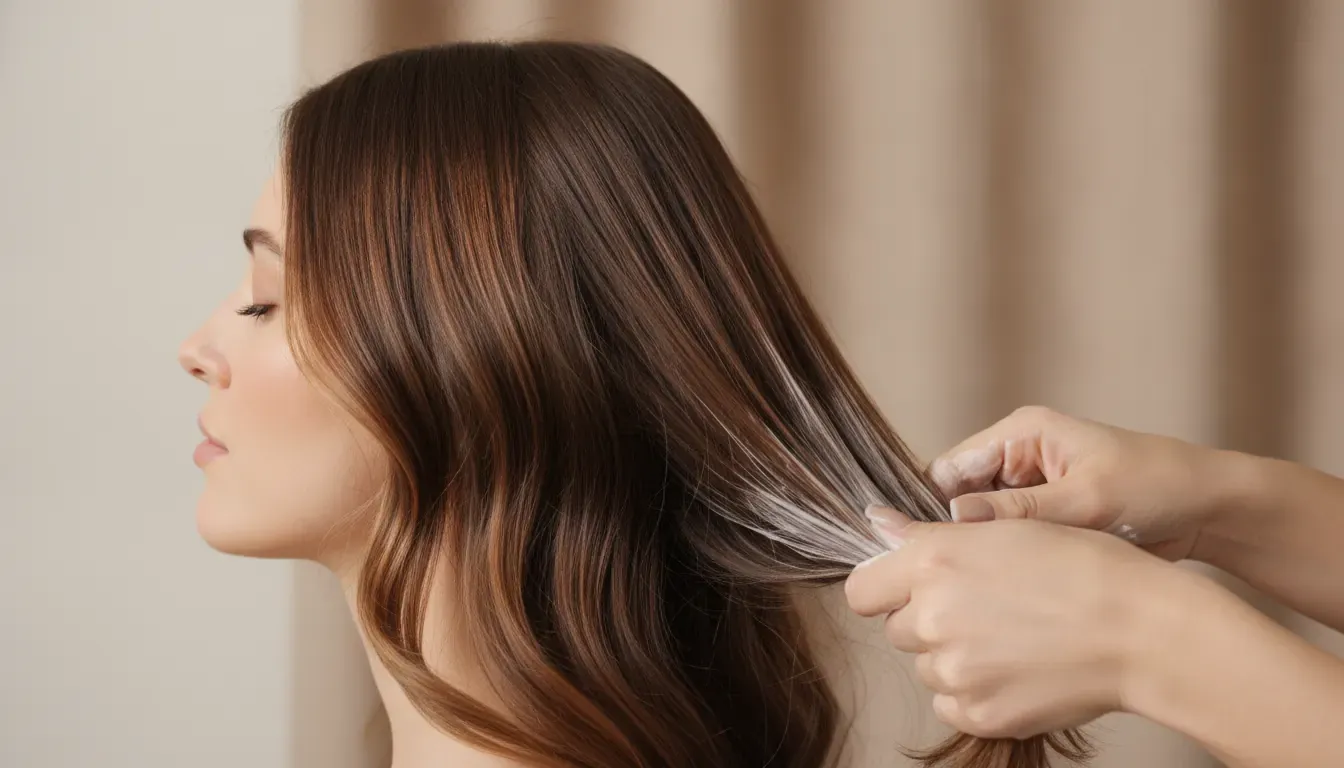
The cuticle is the first line of defense
The cuticle is the hair shaft’s outer layer. Coloring can change its surface and reduce the uniform protection it provides. Hair may then feel rougher or tangle more easily. It may also respond more strongly to heat and brushing.
Color processing reaches beyond the surface
Below the cuticle is the cortex. It gives hair much of its strength and resilience. Chemical processing can disturb the cortex and the cell membrane complex. The complex helps bind adjacent cells. Treating these structures together gives a fuller view of post-color care.
Why a gentler formula matters
A paraben free hair mask makes a conditioning routine more intentional. It does not reverse chemical processing. It cannot guarantee that every ingredient suits every person. Its role is to avoid one preservative category while supporting moisture and manageability.
What a Paraben Free Hair Mask Does for Color-Treated Hair
A paraben free hair mask combines a free-from preference with intensive conditioning. Its practical job is to add slip, softness, and manageability to processed lengths. It may support a polished cosmetic finish. The label alone does not promise color retention, repair, or suitability for every scalp.
The most useful way to judge a mask is by the experience it creates after rinsing. Hair should feel conditioned and flexible without a heavy film that makes the next wash difficult. If the lengths still feel rough, review the application amount, water temperature, cleansing step, and frequency before assuming the formula needs to stay on longer.
For a related guide, see deep conditioning treatment for color-treated hair.
Deep conditioning supports moisture and manageability
Deep conditioning does not reverse every effect of chemical color. It supports the hair with moisture, lubrication, and conditioning agents. These can improve how the fiber feels and behaves. The goal is manageable hair with a smoother cosmetic finish.
Why the paraben-free choice matters for color care
Parabens are preservatives used in cosmetics to help prevent bacterial and mold growth. A paraben-free label describes what the formula does not use. It does not prove that the product preserves color longer. It does not establish that it suits every scalp.
How Solanesse approaches post-color conditioning
The Solanesse Deep Conditioner Post-Color Revitalizer is designed for post-color nourishment. Its positioning considers the cuticle, cortex, and cell membrane complex. Used as directed, a paraben-free mask can support soft, manageable, polished-feeling hair between appointments.
Parabens vs Sulfates vs Silicones: What Clean Care Really Means
Parabens, sulfates, and silicones are different ingredient categories. Parabens are preservatives. Sulfates are cleansing agents. Silicones are conditioning or coating agents. Evaluate each claim separately, then choose a formula that matches your hair and scalp.
| Ingredient category | What it is | Why it appears in hair care | Clean-care trade-off |
|---|---|---|---|
| Parabens | Preservatives | Help protect water-based formulas. Support product stability by limiting microbial growth. | Some shoppers prefer to avoid synthetic preservatives. A paraben-free formula must still use an appropriate preservation system. |
| Sulfates | Detergents and cleansers | Lift oil, residue, and styling buildup during washing. | Strong cleansing may not suit every color-treated or dry hair routine. The best choice depends on cleansing needs and formula balance. |
| Silicones | Coatings and conditioning agents | Improve slip, smoothness, and the feel of the hair surface. | Some consumers prefer silicone-free care to avoid coating ingredients. Others value the immediate cosmetic feel they can provide. |
Solanesse describes its formula as free from parabens, sulfates, silicones, and phthalates. This is a clean-care standard, not a claim that every category affects hair the same way. For a gentler wash-and-condition step, see this guide to sulfate-free conditioner for color-treated hair. If your hair is prone to buildup, compare a silicone-free conditioner for color-treated hair.
How to Read Labels to Confirm a Paraben Free Hair Mask
To confirm a paraben free hair mask, read the complete INCI list instead of relying only on front-label language. Search for ingredient names ending in -paraben. Then assess the formula for conditioning agents and known sensitivities. A free-from claim answers one question, not every hair-care question.
Also check whether the ingredient list and product directions are current. Formulas can change, and front-label language does not explain concentration, preservation, fragrance, or conditioning performance. A careful label review keeps the paraben-free preference in proportion to the broader job of caring for chemically processed hair.
For a related guide, see ingredients for color-treated hair.
Why parabens appear on hair-care labels
Hair masks contain water and other ingredients that can require preservation. The U.S. Food and Drug Administration explains that cosmetics may contain parabens. Learn more about parabens in cosmetics from the FDA. Paraben-free does not mean preservative-free. It identifies one class of preservatives the formula does not use.
What “free-from” and “unscented” actually tell you
A paraben-free statement is a specific claim about parabens. It should be supported by the ingredient list. It does not mean the mask is free from every synthetic ingredient or potential irritant. Unscented is a separate claim. Keep fragrance-free, sulfate-free, and silicone-free distinct because each names a different category.
A practical label check for color-treated hair
Start with the ingredient list. Then confirm the product suits your hair’s needs. Color services alter the hair shaft, so processed hair benefits from specialized conditioning. For another post-color option, compare Solanesse’s collagen hair mask for color-treated hair.
How to adjust the routine to your hair
Fine hair may need a lighter application through the ends and less frequent masking if it loses volume or feels coated. Thick, porous, or highly processed hair may tolerate a richer application, but more product is not always more effective. Start with the smallest amount that distributes evenly.
Pay attention to the difference between softness and buildup. Soft, flexible hair usually feels easier to detangle and style. Hair that feels waxy, limp, or difficult to rinse may need less product or more space between treatments. A consistent routine should make hair easier to manage, not create a new source of residue.
If your scalp becomes uncomfortable after using a product, rinse thoroughly and stop using it. Review the full ingredient list and speak with a qualified clinician about persistent irritation. A paraben-free label addresses one preservative category, so it should not replace attention to your individual scalp response.
A Simple Weekly Routine With a Paraben Free Hair Mask
A simple weekly routine pairs gentle cleansing with a measured application of a paraben free hair mask through the lengths. Consistency matters more than leaving a rinse-out treatment on longer than directed. Adjust frequency for fine hair, buildup, or dryness. Follow the product label.
Use the routine below once a week, adjusting frequency if your hair is especially dry, fine, or prone to buildup. Follow the product label for the exact processing time.
- Cleanse with a color-safe shampoo. Start by removing oil, styling residue, and environmental debris with a shampoo intended for color-treated hair. Concentrate the lather at the scalp and rinse thoroughly so the mask can contact clean strands.
- Towel-dry without roughing up the cuticle. Press and squeeze the hair gently with a soft towel or microfiber wrap. Aim for damp hair, not dripping hair, so the formula distributes evenly.
- Apply the mask from mid-length to ends. Work in sections if your hair is dense. Begin below the roots and focus on areas that feel rough or difficult to detangle. Use enough product to coat the lengths evenly without saturating the scalp.
- Leave it on for the directed time. Five to ten minutes is a practical example for a rinse-out treatment, but the product instructions take priority. Processing longer does not automatically improve results.
- Rinse with cool to lukewarm water. Rinse until the water runs clear and the hair feels conditioned but not coated. Very hot water can feel harsh on a dry scalp and may leave processed lengths less comfortable.
- Seal in manageability with leave-in care. Apply a small amount of leave-in conditioner to damp mid-lengths and ends, following the product directions. Detangle from the ends upward, then style with as little tension as practical.
Try the Deep Conditioner Post-Color Revitalizer
Frequently Asked Questions
What are the benefits of a paraben free hair mask for color-treated hair?
A paraben-free formula helps you avoid parabens, a family of preservatives used in cosmetics to help prevent bacterial and mold growth. For color-treated hair, the larger priority is a conditioning system that supports moisture, manageability, and a gentle post-color routine. Hair dye can alter the structure of the hair shaft, so a deep conditioner may be a useful part of ongoing care. The FDA explains the preservative role of parabens.
How do you know if your hair mask is paraben free?
Check the ingredient list rather than relying only on the front label. Look for the words paraben-free on the package, then scan the INCI list for common names ending in “-paraben,” such as methylparaben, propylparaben, or butylparaben. If the label is unclear, consult the manufacturer before applying the product.
Is paraben free the same as sulfate free?
No. Parabens are preservatives, while sulfates are cleansing agents that help remove oil, buildup, and residue. A product can be free of parabens but still contain sulfates, or it can be free of both. Check each claim separately and choose based on your hair’s condition, scalp needs, and color-care routine.
Are paraben free hair masks suitable for chemically processed hair?
They can be, but “paraben-free” alone does not determine whether a mask is suitable. Chemically treated hair benefits from specialized conditioning because dyeing and perming alter the hair shaft. Look for a well-formulated treatment designed for post-color care, use it as directed, and monitor how your hair responds. Solanesse’s Deep Conditioner Post-Color Revitalizer is designed to nourish and protect hair after color treatment.
Get Started With a Gentler Post-Color Routine
Color-treated hair benefits from thoughtful conditioning that supports softness, manageability, and a polished finish. Solanesse Deep Conditioner Post-Color Revitalizer pairs a paraben-free, clean formula with intensive conditioning for chemically processed hair. Adding a weekly conditioning step keeps color-treated hair soft, resilient, and easy to manage between appointments. For more on keeping hair vibrant visit the guide to best conditioner for color-treated hair or learn how to make hair color last longer.


