


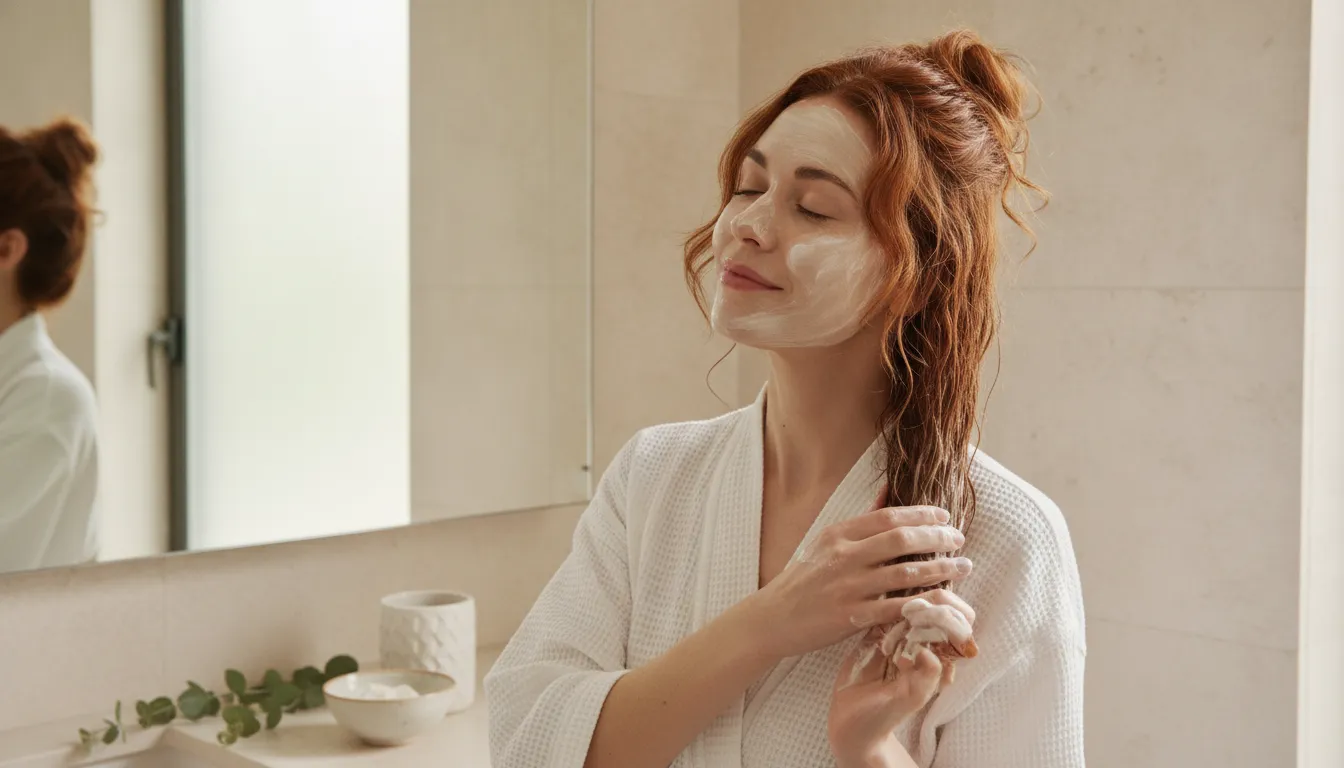
Hair that absorbs water and products quickly can still feel dry soon after washing. That pattern is common with high porosity hair, especially when coloring, bleaching, or repeated heat styling has left the cuticle less compact. Choose conditioning features that make hair feel softer, smoother, and easier to detangle without weighing down the texture.
Explore the Solanesse Deep Conditioner – Post Color Revitalizer.
The best hair mask for high porosity hair supports moisture retention, provides enough slip to reduce tugging, and leaves a comfortable finish suited to your strand thickness and processing history. Look for a formula that combines conditioning agents with emollient ingredients, then judge it by how your hair feels after rinsing and the following day.
Before comparing formulas, it helps to understand why high porosity hair can take in moisture readily yet lose that softness just as quickly.
What makes high porosity hair different?
Porosity describes how readily hair absorbs and retains moisture. Each strand has an outer cuticle layer surrounding the cortex and medulla. The cuticle helps regulate what enters the fiber, including water, products, and chemicals. When those cuticles are more open or widely spaced, moisture can move in easily but may leave just as quickly. That is the central difference between absorption and retention in high porosity hair, not simply how thirsty the hair feels. Healthline explains the relationship between porosity and moisture in more detail.
In practical terms, a highly porous strand may take in water and conditioning products quickly, then still feel dry after washing. Common signs can include persistent dryness, frizz, tangling, breakage, quick air-drying, rapid product absorption, and less visible shine. These signs are useful clues, but they are not a diagnosis on their own. Hair texture, weather, buildup, styling habits, and the formula you use can create similar experiences.
High porosity can be part of your natural hair characteristics, or it can develop after repeated styling and processing. Bleaching, straightening, blow-drying, and other chemical applications may lift or separate the cuticle, creating more gaps in the surface. That history matters when choosing the best hair mask for high porosity hair because a mask needs to support a smoother, more conditioned feel without assuming it can permanently change the fiber.
A glass-of-water float test can be a conversation starter, but it should not be treated as definitive. The result can be affected by product residue, strand condition, and how the test is performed. A better evaluation combines several observations: how quickly your hair absorbs water, how long softness lasts, whether detangling creates less tugging, and how the hair feels the next day. This approach helps you select conditioning support based on your actual needs rather than a single label.
How does chemical processing affect porosity and friction?
Chemical processing can change how the outer surface of a hair fiber behaves. Bleaching and other applications may lift, separate, or wear the cuticle scales that normally help regulate contact with water, products, and the inner layers of the strand. That can leave the surface less uniform, so hair may absorb conditioning products readily while still feeling dry soon after washing.
The mechanism is not limited to the cuticle. In a study comparing untreated and bleached hair, microscopy showed brittle, torn cuticle scales and a rough appearance in the bleached samples. The researchers also observed separation between the cuticle and cortex, with more extensive bleaching associated with loss of the cuticle layer and exposure of the cortex. Read the study on excessive bleaching and hair-fiber structure for the full findings.
Peroxide processing can also reach beyond the surface. A study by Grosvenor and colleagues in the International Journal of Cosmetic Science found that protein loss through peroxide bleaching increased with treatment severity and included proteins from both the cuticle and cortex. Read the PubMed study on peroxide bleaching, protein loss, and hair-fiber damage. These findings help explain why chemically processed hair can feel fragile, rough, or less resilient. The extent of change depends on the treatment, timing, hair history, and starting condition.
Roughness matters because adjacent strands do not glide past one another as easily. More surface irregularity can increase drag during washing, brushing, and detangling. The result may be more snagging, tangling, frizz, and mechanical tugging, especially when the hair is wet. A conditioner or mask can improve the cosmetic feel of that surface by adding lubrication and softness. Conditioner research describes surface deposition and improved smoothness, while separate microscopy work has examined how conditioning ingredients affect surface roughness and friction. That is a reason to evaluate a formula by slip, rinse feel, and manageability.
A mask should be viewed as a conditioning step, not a way to rebuild or reverse structural damage. If processing has made the fiber vulnerable, gentle detangling, lower friction during drying, and a formula that leaves the hair comfortable can support easier handling. For more practical selection guidance, compare these considerations with a hair mask for color-damaged hair.
What should you look for in the best hair mask for high porosity hair?
Choose a mask by how it leaves the fiber feeling and behaving, not by a single hero ingredient. High-porosity hair may absorb water and products readily yet lose moisture quickly. So the most useful formula usually combines moisture support with a conditioning finish that improves softness, slip, and manageability. Heavier emollients can also be helpful for some highly porous hair; oils and butters are commonly used for this purpose.
Look for a formula that distributes easily through the lengths, reduces tugging during detangling, and rinses cleanly without leaving a brittle or coated feel. Conditioner research describes softness and smoothness as outcomes of moisturizing the hair fiber, while polymeric conditioners may deposit mainly at the surface rather than penetrating the cortex. That surface effect still matters: it can make the cuticle feel smoother and reduce friction during handling. Research on conditioner deposition and hair-fiber softness helps explain why a mask can improve feel without claiming to reverse structural damage.
| Feature | Why it matters | What to look for |
|---|---|---|
| Moisture support | Absorption without retention can leave lengths dry again soon after washing. | A rich, well-balanced conditioning base that leaves hair supple rather than merely wet. |
| Oils or butters | Emollients can help soften a rough-feeling surface and support a less stripped finish. | Oil- or butter-based richness suited to your density, porosity, and styling preference. |
| Conditioning deposition | Surface conditioning can improve softness and smoothness where the cuticle feels uneven. | Conditioning agents that leave slip without a waxy or heavy coating. |
| Slip and friction | More slip can make wet detangling gentler and reduce unnecessary pulling. | Easy spread, low tugging, and a smoother feel from roots through ends. |
| Protein balance | Processed hair may benefit from a strengthening-focused formula, but too much can feel stiff on some textures. | Consider protein alongside your hair’s response, alternating with moisture if strands feel rigid. |
| Rinse feel | A mask should condition without leaving residue that dulls movement or volume. | Soft, clean, flexible hair after rinsing, with no greasy film or rough rebound. |
| Texture fit | Fine hair and dense, coily hair may need different levels of richness and application. | Use less on fine lengths, more on dry ends, and adjust based on manageability. |
Ingredient preferences can narrow the search, but they should not replace a wear test. A guide to paraben-free mask considerations can help you assess that specific preference without treating it as a guarantee of performance. Likewise, collagen masks for color-treated hair may be worth comparing when elasticity, fullness, or a stronger-feeling finish is part of your goal. Judge the result after drying and again the next day: the best formula is the one that leaves your hair soft, flexible, smooth, and manageable without buildup.
How do you test whether a mask is working for your hair?
Evaluate a mask by observing how your hair behaves over several consistent uses, not by relying on one dramatic rinse-day impression. A useful test focuses on feel, manageability, and moisture retention. It should help you refine your routine, not diagnose a hair condition.
- Establish a baseline. Before the first use, note how your hair feels when wet and dry. Pay attention to tangling, tugging, roughness, shine, drying time, and whether the ends feel dry again soon after styling. Keep your shampoo, styling products, and drying method as consistent as possible so the mask is the main variable.
- Apply it consistently. Use the same approximate amount and distribute it through the lengths and ends according to the product directions. Give the formula enough contact time to assess it fairly. Avoid changing your shampoo, leave-in, oil, and styling routine during the first few trials.
- Assess detangling and friction. While the mask is on and after rinsing, notice whether your fingers or comb move through the hair with less resistance. Reduced tugging, better slip, and a smoother surface are practical signs of improved conditioning. Stop if the product causes scalp discomfort or irritation.
- Observe drying and the next day. Once dry, check softness, movement, frizz, and shine. The next morning, ask whether the lengths still feel conditioned or whether they have quickly returned to a dry, rough state. High porosity hair may absorb products readily without retaining moisture well, so next-day feel matters as much as the immediate rinse.
- Adjust one variable. If hair feels coated or limp, try less product or use it less often. If it still feels rough and tangles easily, consider whether you used enough, rinsed too quickly, or need a formula with more conditioning support. A float test can offer only a rough clue about porosity; it is not a definitive diagnosis. For routine context, compare a mask versus deep conditioner and choose based on how your hair responds.
Is a post-color deep conditioner a good fit for high porosity hair?
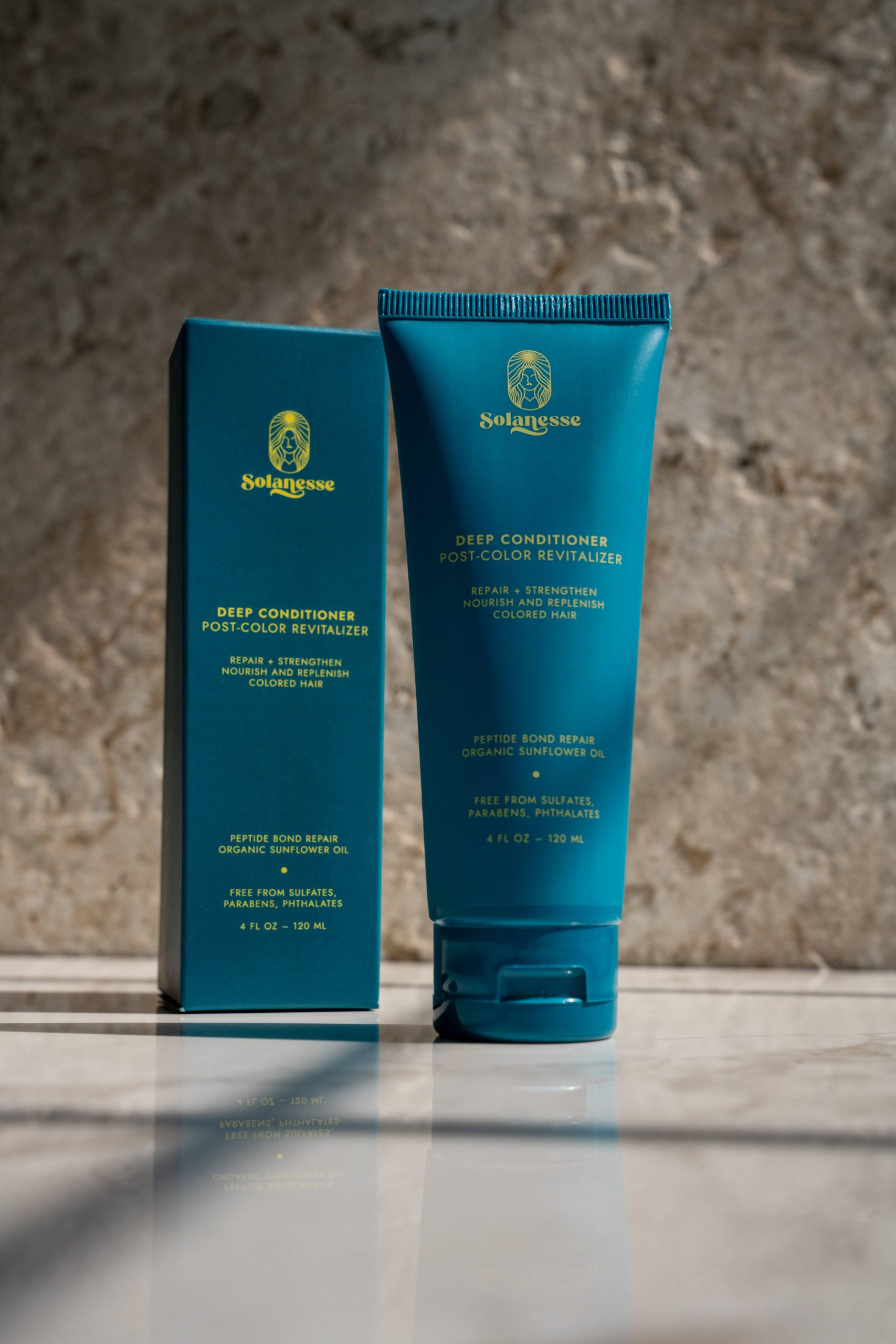
It can be a sensible conditioning option when high porosity is paired with color-treated, bleached, or otherwise chemically processed hair. Solanesse Deep Conditioner – Post Color Revitalizer is positioned for post-color care and is stated to suit all hair types and textures, including fine-to-thick and straight-to-coily hair. That makes it worth evaluating by how your hair feels and behaves after conditioning, rather than by porosity alone.
The formula lists hydrolyzed keratin, collagen, plant-based peptides, and sunflower oil. These are product-listed ingredients, not evidence of a porosity-specific treatment. In the brand’s cosmetic framing, hydrolyzed keratin is associated with smoothness and resilience, collagen with elasticity and fullness, plant-based peptides with strength, and sunflower oil with hydration. Sunflower oil is also described as helping lock in hydration. For a strand that feels rough, dry, or difficult to manage after chemical processing, these formulation goals may align with the practical qualities you want from a deep conditioner: more softness, smoother-feeling lengths, improved shine, and less visible frizz or flyaways.
Explore the Solanesse Post Color Revitalizer if you want a focused conditioning step for color-processed hair.
Use it as directed on warm, damp hair after color treatment. Massage from root to tip, leave it on for 10 to 15 minutes, then rinse thoroughly. The stated routine is weekly or as needed, so you can adjust based on softness, weight, and how long the conditioned feel lasts between washes. If your hair is fine, start with a modest amount and keep the application focused on areas that need the most conditioning. If it is coarse or especially dry, a more generous application may feel appropriate, but the rinse and next-day feel should guide you.
For a closer look at how the brand discusses hair structure and ingredients, review the supporting ingredient information before deciding whether the formula fits your routine. Keep the evidence boundary clear: Solanesse does not have porosity-specific clinical testing documented for this product. The conditioner is not a cure or a guaranteed reversal of chemical damage. It may support cosmetic outcomes such as softness, smoothness, shine, and frizz management, while the underlying porosity and any irreversible fiber changes remain separate concerns.
How often should you use a hair mask for high porosity hair?
There is no universal schedule for high porosity hair. Start with the product directions, then adjust based on how your hair feels after conditioning and between wash days. Solanesse directions describe using the Deep Conditioner – Post Color Revitalizer weekly or as needed, with a 10-15 minute treatment followed by a thorough rinse. That gives you a practical starting point without treating frequency as a fixed rule for every texture or processing history.
Use a mask when your strands feel unusually dry, rough, tangled, or difficult to manage, especially after coloring or other chemical processing. On other wash days, a regular conditioner may provide enough slip and softness. If your hair feels coated, heavy, limp, or harder to style after repeated intensive treatments, extend the interval or use less product. If dryness returns quickly, reassess the amount, application technique, and whether your everyday routine is creating friction.
Reduce moisture loss and friction between treatments
A conditioning treatment works within a broader routine. Rinse thoroughly rather than leaving more product on the hair than directed. Use moderate heat when drying and avoid repeatedly directing high heat at already fragile areas. Blot or wrap wet hair with a soft towel instead of rough towel drying, which can increase tugging and surface friction. Detangle gradually from the ends upward, using enough conditioner or leave-in product to create slip. These habits can help reduce mechanical stress without making unsupported promises about changing porosity.
After two or three uses, compare the feel of your hair while wet, after drying, and the following day. Look for practical signs such as easier detangling, softer ends, smoother handling, and less need to reapply product. If the result is not comfortable, change one variable at a time: frequency, amount, contact time, or styling heat. The best hair mask for high porosity hair is one that supports your hair’s current needs without leaving it weighed down or under-conditioned.
Frequently Asked Questions
Which product is best for high porosity hair?
The best hair mask for high porosity hair is one that improves slip, softness, and moisture retention without leaving your strands coated or weighed down. Look for a formula that suits your texture and processing history, with conditioning agents and emollient ingredients that help reduce friction during detangling. Treat the formula as a starting point, then judge it by how your hair feels after rinsing, drying, and the following day.
How often should you use a hair mask on high porosity hair?
Start with once-weekly use, then adjust according to dryness, tangling, and buildup. Chemically processed hair may need more consistent conditioning, while fine hair may need less product or a shorter contact time. Apply the mask mainly where the hair feels dry or rough, rinse thoroughly, and reassess rather than increasing frequency automatically.
Can a hair mask repair damage from bleaching or coloring?
A mask can improve the cosmetic feel of processed hair by adding softness, smoothness, and slip, but it cannot permanently restore hair that has been structurally damaged. Research on bleached hair has observed rough, brittle cuticle changes, so keep expectations realistic and combine conditioning with gentle detangling, lower friction, and careful heat use. Read the supporting study.
Is a post-color deep conditioner suitable for high porosity hair?
It can be a practical option when your main concerns are dryness, frizz, roughness, or fragile-feeling strands after coloring or bleaching. The Solanesse Deep Conditioner – Post Color Revitalizer is directed for warm, damp hair, a 10-15 minute application, thorough rinsing, and weekly or as-needed use. It is positioned for post-color conditioning, not as a clinical treatment that changes porosity.
Get started with a conditioning ritual that fits your hair
High porosity, chemically processed hair often benefits from a mask that supports softness, moisture retention, and easier detangling without making the routine feel heavy. If you are comparing options, the Solanesse Deep Conditioner – Post Color Revitalizer is designed as a conditioning step for post-color care. Explore the post-color deep conditioner and decide whether its conditioning approach fits your hair’s texture and routine.


