


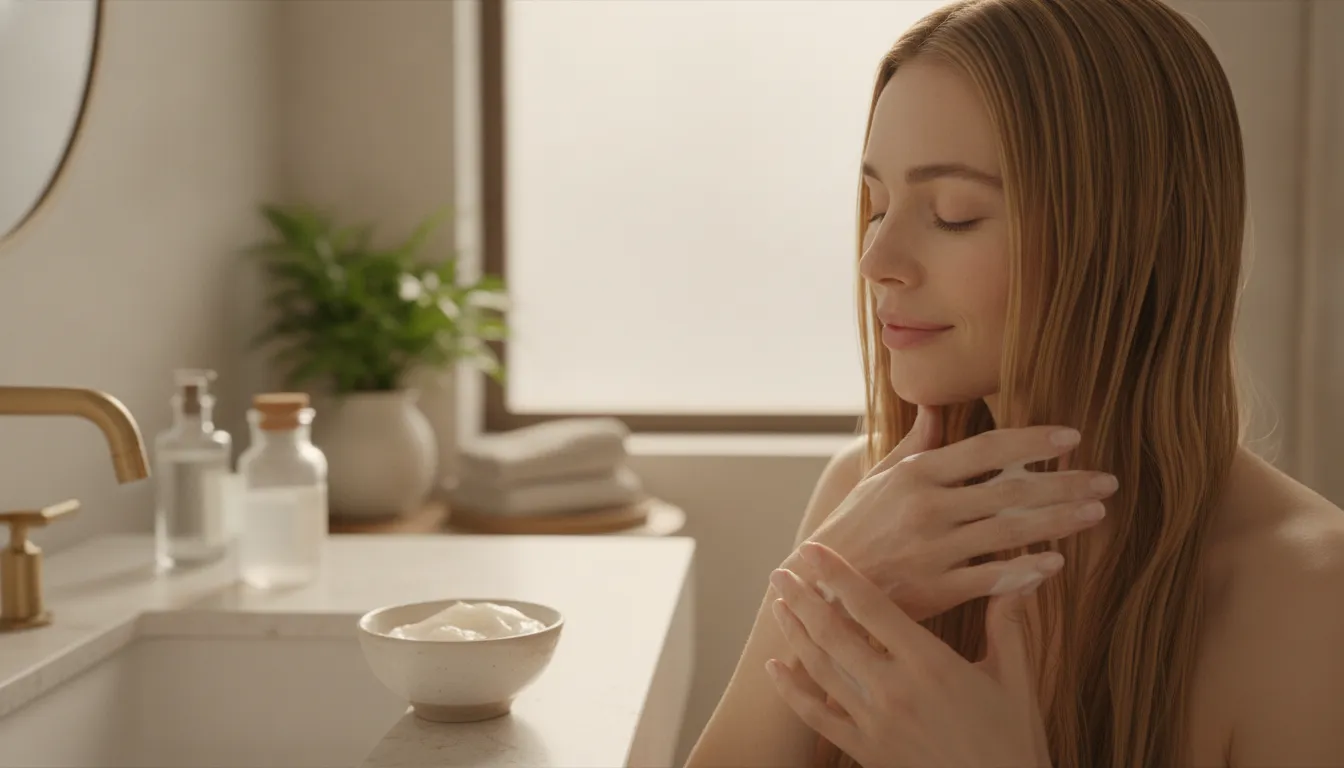
Color can leave hair looking polished while quietly changing how it feels. After repeated coloring or lightening, strands may become drier, rougher, less elastic, and harder to style, especially when the cuticle no longer lies smoothly over the fiber.
Shop the Solanesse Post-Color Revitalizer
The best hair mask for color damaged hair depends on what your strands need most: moisture for dryness, conditioning support for roughness. Targeted protein or peptides for a fragile feel, and a lighter application when low porosity or fine hair becomes weighed down. A mask can improve softness, shine, and manageability, but it cannot reconnect hair that has already broken away.
Choosing well starts with understanding why color-treated hair can feel weak in the first place. Once you know what bleaching and chemical processing can do to the cuticle and cortex, the right ingredients and application routine become much easier to judge.
Why Color-Treated Hair Often Feels Dry, Rough, or Weak
Color-treated hair can feel dry, rough, dull, or weak because coloring and especially bleaching alter the fiber’s protective surface and internal structure. A conditioning mask can smooth the cuticle, improve softness, and make strands easier to manage. But it supports the hair that remains; it cannot restore pieces that have already broken away.
The cuticle loses its smooth, protective surface
The cuticle is the outer layer of overlapping scales that helps hair feel sleek and reflect light. Chemical processing can disturb those scales. In a study of excessively bleached hair, researchers observed brittle, torn cuticle scales and a rough appearance. Unlike the relatively clean surface and intact scales seen in untreated hair. That uneven surface can catch against neighboring strands, creating more friction during washing, brushing, and styling. It also helps explain why hair may look less glossy even when its color is still fresh.
Bleaching affects more than visible pigment
Bleach is designed to remove melanin, but the chemistry does not act only on color. Peroxide treatments can reach the cortex, the inner region that contributes to the fiber’s strength and elasticity. The same research found oxidative damage across the fiber in addition to melanin loss. A separate PubMed-indexed study reported substantial damage to both the cuticle and cortex, with protein loss increasing as bleaching severity increased: read the bleaching and protein-loss research.
That loss of structural material can leave a strand feeling less resilient. Hair may seem softer in one area and straw-like in another, particularly where repeated lightening has accumulated. Porosity can also increase as the cuticle becomes more compromised, so the fiber may absorb water quickly yet struggle to retain a consistently smooth feel.
Why softness and shine need ongoing care
A color-safe mask works mainly by conditioning and smoothing the existing fiber. This can improve the way hair feels and looks between appointments, while regular, gentle care helps maintain that result. If your main concern is a lack of gloss rather than severe fragility, our guide explains how to make color-treated hair shiny without treating every concern as a need for stronger processing. The right next step is to match the mask’s conditioning and strengthening approach to your hair’s texture, porosity, and visible signs of damage.
How to Choose a Hair Mask for Color Damaged Hair
The right mask depends on what your hair is asking for now, not simply whether it has been colored. Look at the combination of dryness, breakage, porosity, and dullness, then choose a treatment that supports the most noticeable concern without adding unnecessary weight.
Start with the condition of the fiber
Dry, rough lengths usually need conditioning and moisture support. If strands feel weak, snap during detangling, or show increased breakage after lightening, look for a formula that also supports the feel of structural resilience. Bleaching can affect both the cuticle and cortex, and research has linked more severe bleaching with greater protein loss in the hair fiber. A mask can improve softness, manageability, and appearance, but it cannot restore hair that has already broken away.
Porosity offers another useful clue. Hair that absorbs water quickly and dries quickly may feel porous, rough, or difficult to keep smooth. Fine or low-porosity hair may need less product and careful rinsing so the treatment does not leave a coated or heavy feel. Adjust the amount to your density and concentrate richer application on the most processed lengths.
Match the treatment to the concern
| What you notice | Look for | What it can support |
|---|---|---|
| Dry, rough, or frizzy lengths | Moisturizing and conditioning ingredients | Softer feel, smoother surface, and improved manageability |
| Weak-feeling strands or breakage | Protein, keratin, peptides, or a repair-focused blend | Strands that feel more supported and resilient |
| Dullness or unwanted warmth | A toning or color-depositing product when appropriate | Refreshment of tone, not replacement of repair care |
| Fine or easily weighed-down hair | A lighter application and thorough rinsing | Conditioning without sacrificing movement |
Repair, moisture, or toning?
Repair and moisture are related but not identical. Hair that feels stiff or fragile may benefit from a balanced approach rather than repeated protein-heavy treatments. Hair that feels soft but dry may need more conditioning and moisture support. For a clearer comparison, read this guide to protein versus moisture treatment.
A toning mask serves a different purpose: it refreshes unwanted warmth or shade, particularly when blonde or highlighted hair needs color maintenance. It should not be treated as a substitute for a mask selected to address dryness or breakage. If you need both, alternate the products according to their labels and your hair’s response. For heavily lightened strands, this guide to the deep conditioner for bleached hair can help you evaluate the balance of moisture and structural support.
Which Ingredients Matter for Porosity, Breakage, and Shine?
The most useful ingredient list is one that matches what your hair is asking for. High porosity often shows up as strands that absorb water quickly but lose moisture just as fast. Breakage can signal that color or chemical processing has left the fiber feeling fragile. Dullness and frizz often point to an uneven, rough-feeling cuticle surface. A thoughtful mask supports these concerns together, rather than treating shine as proof that the hair has been structurally restored.
Protein and peptides for a more resilient feel
Bleaching can damage both the cuticle and cortex, and research has linked greater bleaching severity with greater protein loss from the hair fiber. That makes protein-based ingredients relevant when treated hair feels weak, limp, or overly stretchy. Hydrolyzed proteins are broken into smaller components for use in cosmetic formulas, where they may help improve the temporary feel, smoothness, and manageability of the strand. They cannot replace hair that has already broken away, but they can be part of a maintenance routine for the hair that remains.
Peptides belong in the same conversation, with a different emphasis in how brands describe them. Solanesse highlights plant-based peptides alongside hydrolyzed keratin. To understand the brand’s approach in more depth, see this guide to peptide hair treatment for repair. The right frequency still depends on your hair’s response. If strands begin to feel stiff or coated, use less product or space out intensive treatments.
Conditioning oils for softness and surface comfort
Oils and other conditioning ingredients help create slip, reduce the rough sensation that makes detangling difficult, and support a softer finish. They are especially useful when the cuticle feels dry or friction-prone. Solanesse identifies sunflower oil as a formula highlight and describes it in connection with antioxidant protection and hydration. Those are product-positioning claims, not a promise that one oil can reverse every effect of color processing. For a broader look at the formula, visit the science and ingredients behind the treatment.
Humectant and smoothing support for porosity and shine
Humectant ingredients are selected for their relationship with moisture, while surface-smoothing conditioners help hair reflect light more evenly. Together, these categories can improve softness, manageability, and visible shine without confusing a polished surface with permanent repair. Fine or low-porosity hair may need less product and careful rinsing to avoid heaviness. Start with a modest amount, distribute it evenly, and judge the finish after the hair is fully dry. That simple adjustment lets the formula support softness and shine without overwhelming the strand.
How to Apply a Hair Mask After Coloring
The most effective way to use a hair mask for color damaged hair is to apply it after shampooing while the hair is warm and damp. Then give it enough contact time before rinsing thoroughly. The goal is even coverage without weighing down the lengths or leaving product concentrated in one area.
A simple post-color application routine
- Shampoo first. Cleanse your hair according to your normal routine, focusing shampoo on the scalp and allowing the lather to pass through the lengths. Squeeze out excess water so the mask is not diluted.
- Start with warm, damp hair. Hair should be wet enough to spread the treatment, but not dripping. Warm, damp strands make it easier to distribute a richer formula evenly from one section to the next.
- Use a measured amount. Begin with less than you think you need, especially if your hair is fine, short, or low porosity. Add a little more only where the hair still feels uncovered. Too much product can leave fine hair flat or heavy.
- Place it where the damage is. For many color-treated routines, that means concentrating on the mid-lengths and ends. If the product directions call for root-to-tip application, follow them. Solanesse directions recommend massaging the deep conditioner for bleached hair from root to tip.
- Distribute, then pause. Work in sections with your fingers, gently smoothing the mask through the hair so each strand is coated. For the Solanesse Deep Conditioner – Post Color Revitalizer, leave the treatment on for 10 to 15 minutes. Follow the label for any other formula rather than assuming a longer wait is better.
- Rinse thoroughly. Use warm water and keep rinsing until the hair feels conditioned but not coated. Careful rinsing matters most for fine or low-porosity hair, which can become weighed down by leftover product.
How often should you use a mask?
Use the Solanesse treatment weekly or as needed, alongside your regular conditioner rather than automatically replacing every conditioning step. Hair that feels dry after repeated color services may benefit from a consistent weekly ritual. If your strands are fine, easily flattened, or slow to absorb water. Reduce the amount first and adjust frequency based on how your hair feels after rinsing and drying. A mask can improve softness, manageability, and shine, but it cannot restore hair that has already broken away.
What Results Can You Realistically Expect?
Direct answer: A well-chosen mask can make color-treated hair feel smoother, softer, and easier to manage after one use. It may also improve surface shine and help reduce the look of frizz and flyaways. Those are cosmetic and conditioning benefits, not a permanent reversal of every structural change caused by coloring or bleaching.
What you may notice after one treatment
Immediately after rinsing and drying, the most noticeable change is often sensory: less roughness, easier detangling, and a more supple feel through the lengths. When the cuticle surface lies more smoothly, light can reflect more evenly, so hair may look shinier. Solanesse describes its Deep Conditioner – Post Color Revitalizer as supporting softness, shine, reduced frizz, and stronger-feeling strands with less breakage. These are product claims and possible outcomes, not universal guarantees. See the paraben-free hair mask guide for more about fitting a clean conditioning option into a post-color routine.
Results also depend on the starting point. Hair that is dry or porous may feel more conditioned, while fine or low-porosity hair may need less product and thorough rinsing to avoid a heavy finish. A mask can improve manageability without making every strand look identical.
What requires ongoing maintenance
Color care is cumulative. A mask works best as one repeatable part of a routine, alongside appropriate cleansing, conditioning, gentle detangling, and sensible heat and color practices. Solanesse recommends using its treatment weekly or as needed, following the label directions. Consistency may help hair continue to feel conditioned between color services, but it cannot restore hair that has already broken away. Split ends may look temporarily smoother, yet the separated fiber itself still requires trimming.
Explore the Deep Conditioner – Post Color Revitalizer
Frequently Asked Questions
What is the best hair mask for color damaged hair?
Start by identifying the primary need. Choose a repair-focused mask when your hair feels dry, rough, porous, or fragile after coloring or bleaching. Choose a toning mask when the main concern is unwanted yellow or orange tones in blonde hair. These treatments serve different purposes, so a toning formula is not automatically the best choice for weakened lengths.
How often should I use a deep conditioning treatment?
Once a week is a practical starting point for most color-treated hair. Very dry hair may tolerate twice-weekly use for a short period, but reduce frequency if the hair feels coated, limp, or difficult to style. Solanesse recommends weekly use or use as needed, depending on how your hair responds.
Can a hair mask replace my regular conditioner?
Usually, no. A mask is a deeper treatment designed for less frequent use, while conditioner supports routine wash days with lighter, faster conditioning. Use your regular conditioner as directed, then add a mask when your lengths need more softness, manageability, or moisture support.
How long should I leave a hair mask on?
Follow the product label rather than assuming longer is better. For the Solanesse Deep Conditioner – Post Color Revitalizer, apply it to warm, damp hair. Massage from root to tip, leave it on for 10 to 15 minutes, and rinse thoroughly. Rinsing before the stated time may reduce the treatment’s performance.
Will a color-safe hair mask affect my color?
A mask made for colored hair should be selected to condition without stripping or intentionally shifting the pigment. Still, patch-test unfamiliar products and follow the label, especially when your color is fresh, highly toned, or fashion-colored. A repair mask improves the hair’s feel and appearance, but it does not replace professional color maintenance.
Choose a More Thoughtful Post-Color Ritual
If your hair feels dry, rough, or less resilient after coloring, choose a treatment that addresses conditioning and ongoing care rather than relying on a single dramatic promise. Solanesse’s Deep Conditioner – Post Color Revitalizer is designed for color-treated and chemically processed hair, with a 10 to 15 minute at-home application.
Explore the Solanesse Deep Conditioner – Post Color Revitalizer


