


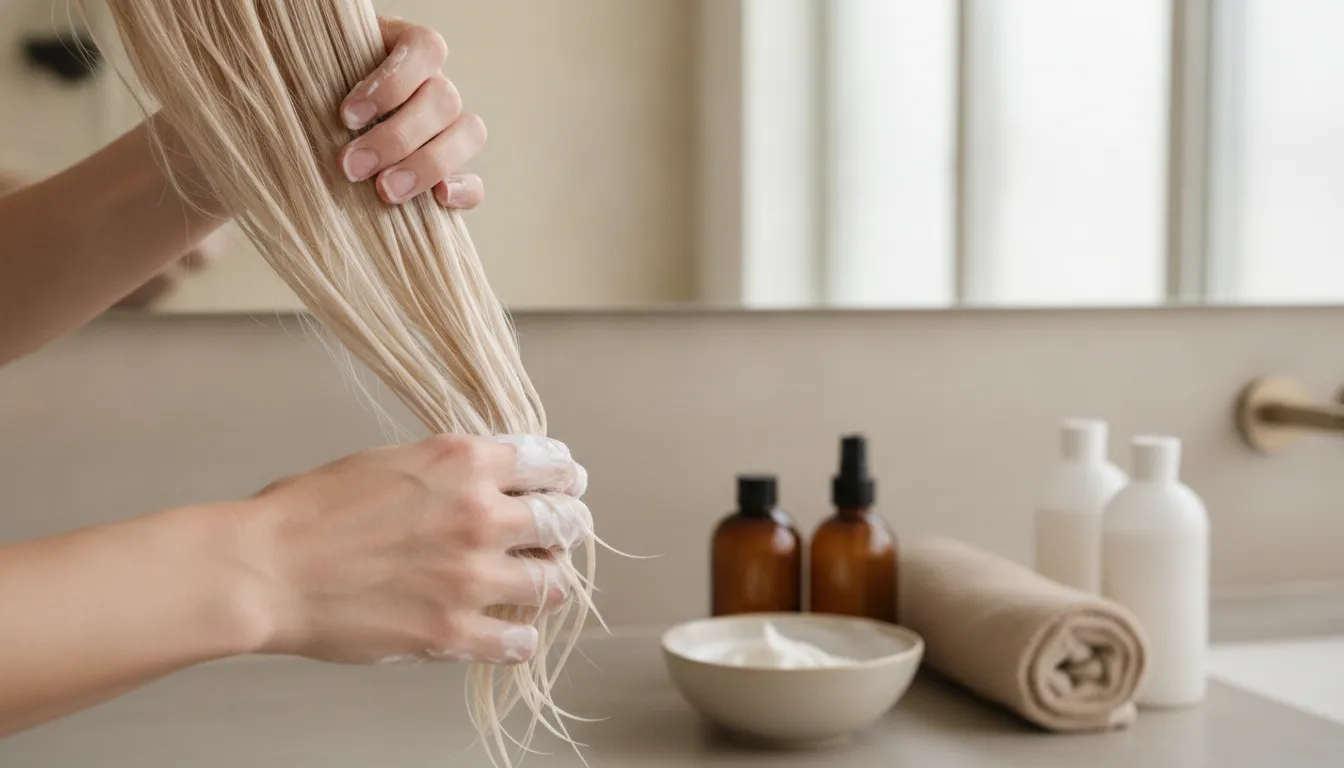
Bleached hair rarely needs one blanket solution. It may need targeted protein support after chemical processing, moisture when the fiber feels dry, or broader conditioning when softness and manageability are the priority. The right choice depends on how your hair behaves between washes, not simply on whether it has been lightened.
Explore post-color conditioning support
The best protein treatment for bleached hair supports weakened strands without leaving them stiff, coarse, or less flexible. Bleaching can cause protein loss in both the cuticle and cortex. The extent is linked to bleaching severity (research published in the International Journal of Cosmetic Science). Protein can be useful, but it works best as part of a balanced routine rather than a replacement for moisture or conditioning.
Start by matching care to the signs you notice: brittle hair may call for strengthening support, while rough or dry-feeling lengths may benefit from more conditioning. Understanding what a protein treatment can and cannot do makes that decision more precise.
What Makes the Best Protein Treatment for Bleached Hair?
The best protein treatment for bleached hair is not necessarily the strongest formula or the one with the most prominent repair claim. It gives compromised strands useful structural support without leaving them stiff, coarse, or difficult to manage. Bleaching can cause protein loss that increases with treatment severity. The effects can reach both the cuticle and cortex. Peroxide may also oxidize proteins within the fiber. Bleached hair often needs a considered routine rather than a single ingredient used repeatedly. Research on peroxide bleaching describes protein loss and oxidative damage across the hair fiber.
Look for support, not a promise of permanent repair
Protein-focused products typically use hydrolyzed proteins or peptides. Their smaller components can deposit on or interact with the hair surface, helping improve the feel of weakened strands and supporting a smoother, more resilient finish. That support can be valuable after chemical processing, but it does not permanently rebuild every altered structure inside an already bleached fiber. New growth and existing lengths also have different needs, and the condition of the hair can change from one section to another.
A useful standard is whether the treatment improves manageability while preserving softness. One study evaluated bleached and colored swatches treated with integral silk proteins and vegetable-derived polysaccharides. Researchers used tensile testing, surface analysis, and luster measurements. Treated bleached swatches showed increased resistance and reduced structural damage under the study conditions. Treated colored swatches showed improvements in resistance and luster after washing. These findings support protective conditioning. They do not establish that every protein treatment will produce the same result at home. Read the study details before treating laboratory results as a personal guarantee.
Pay attention to your hair’s response. Hair that feels fragile or overly stretchy may benefit from measured protein support. Hair that feels dry, rough, or rigid may need more conditioning and moisture. Hair conditioners can help restore a smoother appearance after mechanical and thermal stress, so balance matters. A comprehensive option such as Deep Conditioner – Post Color Revitalizer is designed for hair affected by coloring, bleaching, and chemical processing. Its care is directed across the cuticle, cortex, and cell membrane complex. It is not limited to protein support alone.
Protein, Moisture, or Conditioning: What Does Bleached Hair Need?
There is no universal winner. Bleached hair may benefit from protein support when it feels weak or overly elastic. It may need moisture support when it feels dry. Broader conditioning can help when the main problem is friction, roughness, or loss of smoothness. The right emphasis depends on how the hair behaves after washing and styling.
Bleaching can affect both the cuticle and cortex, and protein loss increases with bleaching severity, according to research published in the International Journal of Cosmetic Science. That helps explain why a strengthening step can be useful, but it does not mean every damaged strand needs more protein at every wash.
| Care focus | Best fit when hair feels | What it supports |
|---|---|---|
| Protein support | Weak, overly stretchy, or less resilient | Temporary reinforcement and a stronger-feeling fiber |
| Moisture support | Dry, rough, dull, or difficult to soften | Comfortable softness, flexibility, and hydration retention |
| Broad conditioning | Frizzy, tangled, high-friction, or lacking shine | Smoother feel, easier detangling, and surface comfort |
Protein-focused products can support the feel of strength, but they should sit within a balanced routine. If hair begins to feel stiff, coarse, or less flexible after repeated strengthening treatments, reduce that emphasis and restore conditioning. A dry-feeling strand may need softness and hydration retention more than another intensive protein step.
Broader conditioning addresses the daily experience of processed hair. Hair conditioners can help minimize the loss of shine and smooth appearance associated with mechanical and thermal stress, as described in this review of hair conditioners. Solanesse describes its post-color treatment as comprehensive care, with hydrolyzed keratin, collagen, plant-based peptides, and sunflower oil positioned to support smoothness, resilience, elasticity, strength, and hydration retention. See the brand’s ingredients and hair-repair science for its ingredient explanations.
In practice, the best protein treatment for bleached hair is not necessarily the strongest formula or the most frequent one. Choose protein support when the hair’s behavior points to it, then pair it with conditioning that preserves softness and manageability.
How Can You Tell If Your Hair Needs More Protein or Moisture?
Start with how your hair behaves when it is clean, dry, and free of styling products. No single symptom proves that you need protein or moisture, especially after bleaching. Peroxide treatments can damage both the cuticle and cortex and contribute to protein loss. So the same head of hair may feel weak in one area and dry in another. Research on bleaching-related protein loss helps explain why a balanced routine is usually more useful than choosing one category permanently.
When does protein support make sense?
Hair that feels unusually stretchy when wet, lacks resilience, or snaps easily with gentle handling may benefit from a carefully chosen strengthening step. A limp, fragile feeling can also suggest that the fiber needs more structural support, but it is not a diagnosis by touch alone. Hydrolyzed proteins such as keratin can support smoothness and resilience, while collagen is positioned to support elasticity and fullness. These ingredients are part of the broader ingredients and hair-repair science behind post-color care.
Brittle hair needs more caution. If strands feel hard, rough, or straw-like rather than elastic, adding more protein immediately may not improve the experience. Friction, heat, porosity, buildup, and insufficient conditioning can all contribute to roughness. A conditioning treatment that improves slip and softness may be the better first adjustment.
What does moisture-related dryness feel like?
Dry-feeling hair often seems rough, dull, frizzy, or difficult to detangle. It may feel stiff before styling, then become puffy as it loses moisture. Hair conditioners can help restore a smoother surface and reduce the loss of shine associated with mechanical and thermal stressors, according to a review in hair-care science literature. Moisture support is especially relevant when the dominant complaint is lack of softness rather than excessive stretch.
Could you be using too much protein?
Watch for a pattern of increasing stiffness, coarse texture, tangling, or reduced softness after repeated strengthening products. These signs can overlap with damage, so pause before adding another active treatment. Use one variable at a time: change either the protein frequency or the conditioning step, then observe the hair through several wash days. Keep notes on wet stretch, dry texture, breakage, and detangling rather than judging one isolated result.
The best protein treatment for bleached hair is therefore conditional, not universal. If weakness and stretch dominate, measured protein support may help. If roughness, dryness, or stiffness dominates, prioritize moisture and broad conditioning first. Many bleached routines need both, introduced gradually and adjusted to the fiber’s response.
How Often Should You Use a Protein Treatment After Bleaching?
After bleaching, frequency should follow how your hair responds, not a rigid strengthening schedule. Bleached hair can feel fragile, dry, stretchy, rough, or stiff, and each pattern points toward a different balance of conditioning and protein support. For many people, a weekly treatment is a measured starting point. If your hair feels comfortable and manageable, there is no need to increase the frequency simply because it has been bleached.
For a practical wash-day method, use the product directions as the baseline and assess the result between treatments:
- Start with warm, damp hair. After cleansing, remove excess water so the treatment can distribute through the hair without being diluted immediately. Solanesse directs users to apply its treatment to warm, damp hair after color treatment.
- Work through the hair from root to tip. Massage the treatment through the lengths and ends, paying attention to areas that feel rough or fragile. A thorough, even application is more useful than repeatedly adding product to one section.
- Allow 10 to 15 minutes. Leave the treatment on for the stated time rather than extending the session in hopes of forcing a stronger result. Solanesse recommends 10 to 15 minutes before rinsing.
- Rinse thoroughly and observe the finish. Notice whether the hair feels softer and more manageable, or unusually rigid, coarse, or dry. Those changes help determine whether your next wash day should emphasize conditioning and moisture rather than more protein-focused care.
- Repeat weekly or as needed. Solanesse recommends weekly or as-needed use, with reapplication for intensive repair. Start there, then adjust based on feel, styling behavior, and your wider routine. Avoid stacking several strengthening products at every wash.
This approach also leaves room for flexibility after a fresh bleach service. Hair that feels especially dry may benefit from conditioning support between treatments, while hair that feels overly stiff may need less emphasis on protein. The Deep Conditioner – Post Color Revitalizer is positioned for hair affected by coloring, bleaching, and chemical processing, with a broader conditioning profile rather than a one-note strengthening schedule.
A Balanced Post-Bleach Routine That Protects Softness and Strength
A useful weekly routine does not treat every wash day as a strengthening session. Bleached hair can benefit from protein support, but it also faces friction, heat, and repeated handling that affect smoothness and shine. Hair conditioners help minimize these visible effects by improving the feel and surface condition of the fiber, while a protein-focused product can support a different set of needs. The most effective plan gives both roles a place without making either one do all the work.
Build the week around your hair’s response
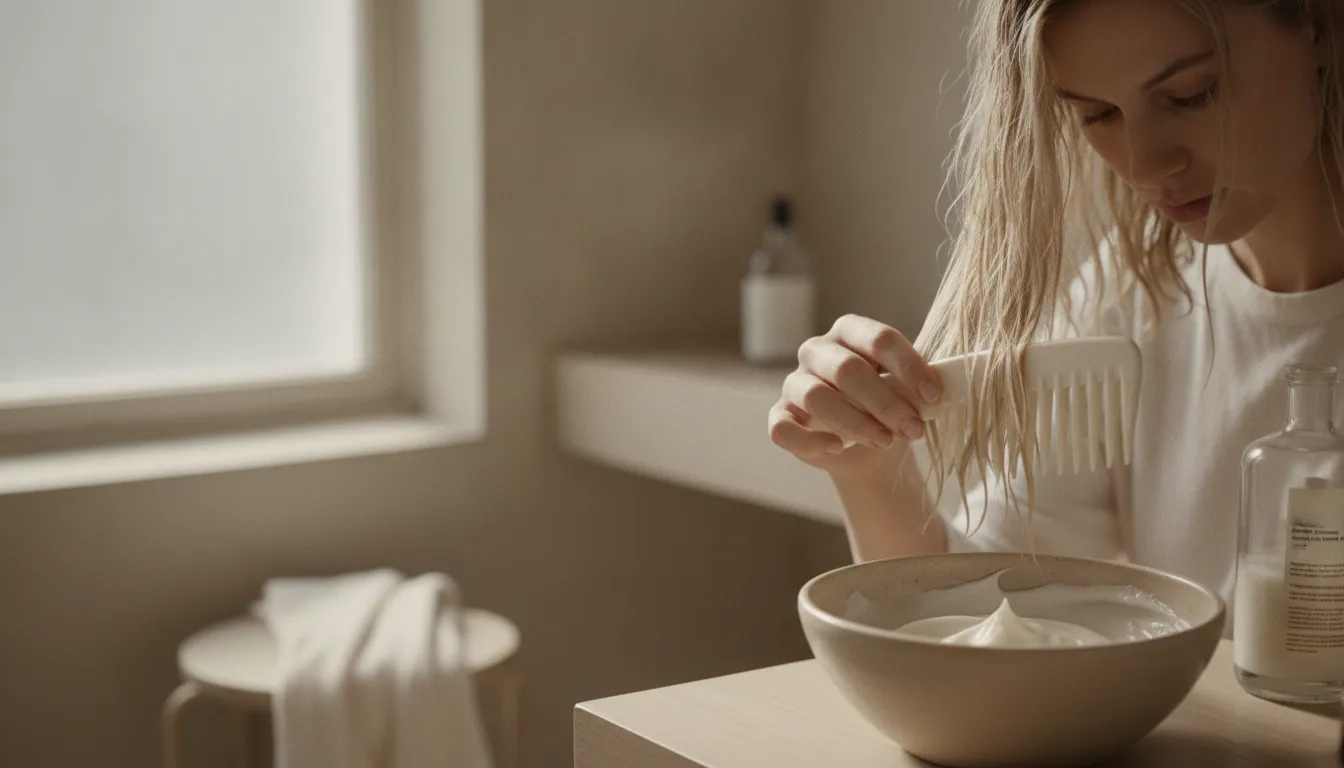
Start with a gentle cleanse and conditioner on regular wash days. If the lengths feel weak, overly stretchy when wet, or prone to snapping. Schedule a protein treatment according to its directions rather than applying it every time you wash. If the hair instead feels stiff, coarse, or less flexible after strengthening care, reduce the protein-focused sessions and emphasize conditioning and careful detangling. These changes are practical adjustments, not signs that you need to abandon one category permanently.
On the treatment day, work with warm, damp hair and distribute the product through the lengths. Solanesse directs users to massage its treatment from root to tip, leave it on for 10 to 15 minutes, and rinse thoroughly. The recommended use is weekly or as needed, so begin with that cadence and reassess how the hair feels before increasing it. A short, consistent session is more useful than stacking several intensive products at once. See the post-bleach recovery ritual for broader context, but keep this routine focused on balance rather than duplicating a full recovery plan.
Protect the result between treatments
Gentle handling is part of the routine. Detangle from the ends upward, avoid pulling through knots, and limit unnecessary heat styling when the hair is already fragile. Mechanical and thermal stress can contribute to loss of shine and a smooth appearance, so reducing friction helps preserve the softness created by conditioning. If dryness is your main concern, a deep conditioner for bleached hair may be more relevant on that wash day than another protein treatment.
Think of the best protein treatment for bleached hair as one component in a responsive schedule. Pair strength-focused care with moisture and conditioning support, then let softness, flexibility, and breakage guide the next adjustment. For ingredient roles behind this approach, review the brand’s ingredients and hair-repair science.
Where a Whole-Structure Conditioner Fits
A protein-focused product can be useful when bleached hair feels weak, overly stretchy, or prone to breakage. It is not the only form of care the fiber needs. Bleaching can affect the cuticle and cortex, so a practical routine should address both structural support and the way the hair feels, moves, and holds moisture.
Solanesse Deep Conditioner – Post Color Revitalizer is positioned as a broader post-color conditioner for hair affected by bleaching, coloring, and chemical processing. Its stated scope includes the cuticle, cortex, and cell membrane complex, rather than limiting the formula to surface conditioning or bond-focused care. That makes it a useful option when your goal is to combine strengthening ingredients with softness and manageability.
How the formula supports a balanced routine
The formula highlights hydrolyzed keratin, collagen, plant-based peptides, and sunflower oil. Solanesse describes hydrolyzed keratin as supporting smoothness and resilience. It describes collagen as supporting elasticity and fullness, plant-based peptides as supporting cellular-level strength, and sunflower oil as supporting antioxidant protection and hydration retention. These roles complement one another, but they should be understood as supportive functions, not a guarantee of permanent repair.
For a closer look at the ingredient roles, read the guide to ingredients and hair-repair science. To see how the treatment is positioned for bleached and color-treated hair, visit Deep Conditioner – Post Color Revitalizer.
Use it as one layer in a responsive routine. Apply to warm, damp hair after color treatment, massage from root to tip, leave on for 10 to 15 minutes, and rinse thoroughly. Weekly or as-needed use can be adjusted according to how your hair responds, while moisture-focused care and gentle handling remain important between treatments.
Explore the Deep Conditioner – Post Color Revitalizer
Frequently Asked Questions
What should I use first if bleached hair feels brittle and dry?
Start with the need your hair is showing, then build balance. Brittle or weak-feeling strands may benefit from protein support, while dry, rough, or inflexible hair often needs more moisture and conditioning. Using both thoughtfully is generally more useful than treating every post-bleach concern with a strengthening product.
How can I tell if I am using too much protein?
If your hair begins to feel stiff, coarse, rough, or less flexible after repeated strengthening treatments, pause the protein-focused products and emphasize gentle conditioning and moisture. Adjust gradually rather than adding another intensive treatment immediately. Texture and response matter more than following a fixed schedule for every head of hair.
How often should I apply a post-bleach treatment?
Follow the product directions and your hair’s response. Solanesse recommends applying its Deep Conditioner – Post Color Revitalizer to warm, damp hair. Work from root to tip, leave it on for 10 to 15 minutes, and rinse thoroughly. It is intended for weekly or as-needed use. See the full application guidance.
Can a conditioner replace a protein treatment after bleaching?
Not always. A broad conditioner can improve softness, manageability, and surface smoothness, while protein-focused care targets a different part of the routine. A comprehensive post-color conditioner may combine several forms of support, but the best choice depends on whether your priority is strength, softness, elasticity, or overall manageability.
Should I use protein and moisture on the same wash day?
You can, provided the products are compatible and your hair does not feel overloaded. A practical approach is to alternate emphasis across wash days, using strengthening care when strands feel weak and moisture-rich conditioning when they feel dry or rigid. Reduce frequency if hair loses softness or flexibility.
Ready to Support Your Post-Color Routine?
If your bleached hair needs a balanced approach rather than constant protein, a whole-structure conditioner can help bring moisture, softness, and conditioning into the same routine. Explore the Deep Conditioner – Post Color Revitalizer to see whether it fits your post-color care plan. When you are ready to get started, review the product details and choose the routine that best matches your hair’s current feel.


