


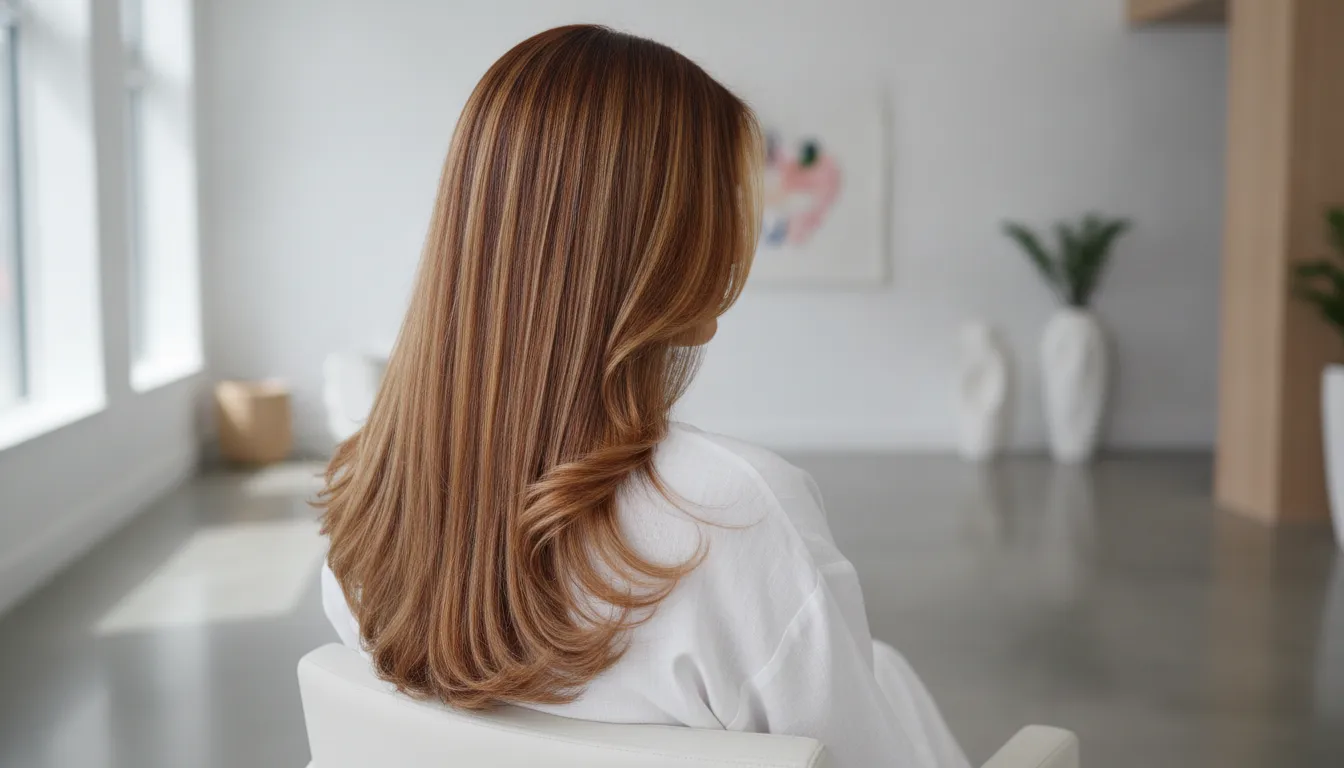
Freshly colored hair can look warmer, duller, or less even than expected, especially after lightening. The change is often about tone, not a complete change in color. That is why the right terminology matters before choosing an at-home product or booking a corrective service.
Shop the Solanesse Deep Conditioner – Post Color Revitalizer
A hair toner is a low- or no-ammonia color product that adjusts the tone of existing hair color. It can refine unwanted yellow, orange, or red undertones, refresh the appearance of a fading shade, add a subtle finish, or enhance a tone, but it cannot lighten hair or repair structural damage. Because toner gradually washes out, the result depends on the starting shade, formulation, hair condition, and maintenance routine.
Understanding how toner works makes it easier to separate a temporary surface adjustment from permanent color, demi-permanent color, and conditioning care. Start with the basic definition, then consider why brassiness appears and when professional color guidance is the safer choice.
What Is a Hair Toner?
What is a hair toner? It is a color service or product that adjusts the tone already present in the hair. Rather than changing the underlying color, toner fine-tunes the visible result by softening, neutralizing, enhancing, or adding a selected tonal quality. A colorist may use it after lightening, highlighting, or coloring to make the finished shade look more balanced from roots to ends.
Toner is commonly associated with demi-permanent or semi-permanent color because many toner formulas contain little or no ammonia. The exact formula, application method, and longevity vary. “Toner” describes a purpose as much as a single product category. In practice, the goal is usually controlled deposit or tonal adjustment, not a dramatic shift in depth.
Toner adjusts tone instead of lifting color
Hair color has both a level, meaning how light or dark it appears, and a tone. Tone is the visible quality of that color, such as warm, cool, golden, beige, or neutral. Toner works primarily on the second part. It can refine a blonde after bleaching, soften an unwanted warm cast, or add a more intentional tone to an existing shade. It cannot make the hair lighter in the way a lightener can.
This distinction matters when expectations are high. If the underlying hair is too dark, unevenly lightened, or significantly damaged, toner alone cannot correct every concern. A qualified colorist can assess the starting level, porosity, previous chemical services, and desired result before choosing a formulation. The right toner depends on what the hair can support and which tonal direction is appropriate.
How toner differs from permanent color
Permanent color is designed for a longer-lasting color change and can involve a different chemical process from a toner. Toner generally produces a more temporary adjustment and gradually washes away rather than behaving like permanent color. This makes it useful for fine-tuning a color result, but it also means the appearance will change with washing and ongoing exposure to the elements.
For a broader explanation of deposit-focused color and how it differs from other services, read about demi-permanent hair color. Whatever the format, toner changes appearance. It does not replace conditioning care for hair affected by coloring or lightening.
Why Does Hair Look Brassy After Coloring or Lightening?
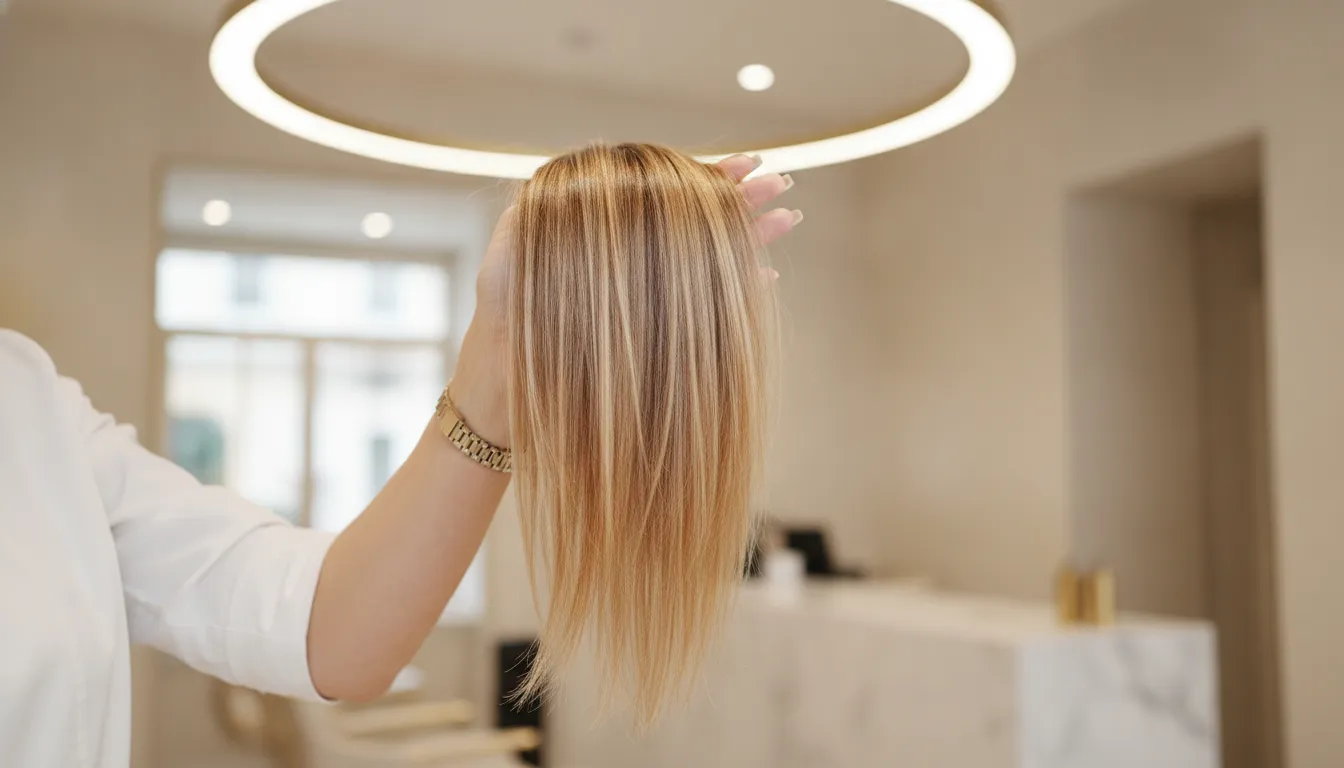
Brassiness is usually a sign that warm underlying pigment has become more visible. Hair contains eumelanin, which contributes brown to black pigment, and pheomelanin, which contributes yellow, orange, and light-red pigment. When hair is lightened, darker pigment is reduced, while warmer pigment can remain visible. The result may look yellow in very light blonde hair, orange in darker blonde or light brown hair, or red in deeper brown shades. The more levels a dark starting shade is lifted, the more likely these warm undertones are to show.
This is not necessarily a sign that the color service failed. Lightening reveals the pigment already present in the hair, and the final result depends on the starting level, the amount of lift, the hair’s condition, and the color formula selected by the professional. A colorist assesses the exposed background before choosing the next step. Hair that has not reached the appropriate base may need a different lightening plan rather than a stronger toner.
How opposing colors balance visible warmth
Toner relies on color-wheel principles. An opposing color can visually balance an unwanted tone, making the overall shade appear more neutral. Purple is commonly used to counter yellow, blue can help balance orange or brassy warmth, and green is used for red tones.
These are not interchangeable solutions. The correct choice depends on the warmth present and the level of the hair. A purple product may help pale yellow blonde but prove insufficient for distinctly orange hair. Evergreen Beauty College describes toner as using purple-blue tint to neutralize brassy yellow and orange tones. Professional color education also emphasizes matching the formulation to the individual starting point.
The effect is a surface-level adjustment, not a reversal of the lightening process. Toner does not remove the underlying pigment or permanently change the hair’s base. It also gradually fades with washing and exposure, so warmth can become visible again over time. A thoughtful color-care routine can help prevent brassy hair, but persistent or uneven warmth is best assessed by a qualified colorist rather than corrected through repeated, unsupervised applications.
What Can Hair Toner Do, and What Can It Not Do?
A hair toner can refine the tone of existing color, soften unwanted yellow, orange, or red undertones, and make the overall result look more balanced. It cannot lighten the hair, remove every type of brassiness from an unsuitable base, or repair structural damage. In other words, toner changes how color appears; it does not replace lightener or a conditioning treatment.
The most useful way to understand toner is as a controlled deposit of tone. Hair that has been lightened may reveal warm undertones, and a colorist can select an opposing tone to visually balance them. Results depend on the starting shade, porosity, formulation, and application. A toner is best chosen by a qualified colorist rather than treated as a universal fix.
| Goal | What toner can do | What toner cannot do |
|---|---|---|
| Tone | Deposit or adjust visible tone, such as making a result cooler, warmer, or more neutral. | Change the underlying color permanently or correct every mismatch in one application. |
| Brassiness | Balance selected yellow, orange, or red undertones when the hair is at a suitable base. | Lift the hair or guarantee that brassiness will disappear when the base is too dark or uneven. |
| Lightening | Refine the tone after lightening has created the desired level. | Lift hair. Toner is not bleach or a lightener. |
| Shine | A clear toner or gloss may smooth the surface and enhance shine without a visible color shift. | Restore weakened internal structure simply by making hair look glossier. |
| Structural repair | Improve the cosmetic appearance of conditioned hair in some formulas. | Replace a conditioning or repair treatment for hair affected by coloring, bleaching, or chemical processing. |
| Permanence | Offer a temporary refresh that gradually fades with washing. | Behave like permanent color. One published guide gives two to six weeks as a general range, not a guarantee. |
That distinction matters after color services. A toner may make the surface color look more polished, but it does not rebuild hair that feels dry, fragile, or rough. For that concern, use a dedicated post-color conditioning and repair treatment separately. Toner and treatment can support different goals, and neither should be substituted for the other.
Toner vs. Permanent and Demi-Permanent Color
The word toner describes a purpose more than one universal formula. In a salon, it may refer to a professional gloss or another color service used to refine an existing shade. On a product label, it may describe a deposit-only color, a pigmented conditioner, or a formula intended to neutralize unwanted warmth. That overlap is why terminology can vary by salon, brand, and product line.
Most toners adjust the appearance of hair that has already been lightened or colored. They are used to deposit or balance tone, not to create the same degree of transformation as permanent color. Many are grouped with demi-permanent or semi-permanent color because they generally use little or no ammonia. But the label alone does not tell you exactly how a product behaves. Always follow the specific product instructions and ask a qualified colorist when the distinction matters.
| Color type | Primary action | Typical purpose | Longevity |
|---|---|---|---|
| Toner | Deposits or balances tone on an existing color base. It does not lift the hair. | Refines undertones, softens unwanted warmth, refreshes a fading appearance, or adds a gloss-like finish. | Gradually fades with washing. The effect varies with hair condition, washing frequency, heat, sun, and pool exposure. |
| Demi-permanent color | Deposits color with limited ability to alter the existing appearance, depending on the formula and starting hair. | Refreshes, deepens, blends, or shifts tone without being treated as a permanent color change. | Designed to fade progressively, although the result and amount of residual color vary by formula and hair. |
| Permanent color | Can deposit color and, with an appropriate formulation, lift some existing pigment. | Creates a more lasting color change, including certain gray-coverage or shade-change services. | New growth remains, while the treated lengths can also change through fading and environmental wear. |
The practical takeaway is simple: toner is usually a fine-tuning step, while permanent color is a larger color-change service. Demi-permanent color sits between those categories in many salon conversations, but it is not interchangeable with every product called a toner. For a closer look at how that category is defined, read about demi-permanent hair color.
If you are deciding between a toner and a more substantial color service, consider your starting shade, desired result, prior chemical history, and whether you need lift or only tone adjustment. A colorist can assess the underlying base and select a compatible formula. No toner can lift hair, and none should be expected to repair structural damage caused by processing.
How Long Does Toner Last, and How Is It Maintained?
Toner is a temporary tone adjustment, so its effect softens gradually rather than remaining unchanged. A general guide places toner longevity at about two to six weeks, but that range is not a guarantee. Washing frequency, hair type, porosity, and overall condition can change how quickly the result fades. Heat styling, direct sun, and pool exposure may also reduce its staying power.
Maintenance is less about forcing a precise timeline and more about reducing avoidable stress on the color. If your hair feels dry or porous after lightening, it may not hold the appearance of a toner in the same way as healthier hair. Ask your colorist when to refresh the tone, especially if the underlying shade has changed or the hair needs additional lightening rather than tone adjustment.
- Plan the first wash carefully. Follow your colorist’s timing and product guidance after the service. This first wash after coloring can set the tone for a gentler maintenance routine.
- Wash only as often as your hair requires. Since repeated washing can shorten the visible life of toner, use a schedule that keeps the scalp comfortable without adding unnecessary washes. Rinse thoroughly and avoid very hot water if it leaves the hair feeling dry.
- Manage heat and sunlight. Use heat tools thoughtfully, apply appropriate thermal protection, and limit prolonged direct sun when practical. These habits support the broader goal to make hair color last longer, although they cannot preserve toner indefinitely.
- Account for pool exposure. Wet the hair with fresh water before swimming, and rinse it afterward. A cap can add another layer of protection. Pool exposure is one of several environmental factors that may affect toner durability.
- Consider your water quality. If your hair looks dull or feels coated despite a consistent routine, explore how hard water and hair color may interact. Mineral-heavy water can contribute to unwanted changes in appearance.
- Refresh only when the hair and shade call for it. A professional can assess whether a toner refresh is appropriate. Conditioning care can improve feel and manageability, but it does not replace a toner or correct pigment on its own.
When the tone fades, that does not necessarily mean the hair needs a stronger color service. The right next step depends on the current base, the desired result, and the condition of the strands.
Is Toner the Same as a Color-Depositing Conditioner?
Not exactly. Toner and a color-depositing conditioner can overlap in format, but they are not interchangeable terms. Toners may be sold as glosses, shampoos, conditioners, masks, or foams, while a color-depositing conditioner is primarily a conditioning product that leaves temporary pigment on the hair. The formula and intended result matter more than the container.
A toner is used to fine-tune the appearance of existing color. Depending on its formulation, it may neutralize an unwanted undertone, enhance a shade, or add a subtle tonal adjustment. Professional colorists select the pigment and processing approach according to the hair’s starting level, porosity, and desired result. Because toner gradually fades, it may be part of a color-maintenance plan rather than a permanent change.
A color-depositing conditioner is generally designed for temporary, at-home maintenance between color services. Its pigment can help refresh tone between visits, but it should not be treated as a substitute for a professional toner when the underlying color needs correction. It also cannot lift hair or reliably create a new shade from an unsuitable base. Follow the product directions, and ask a qualified colorist when brassiness is pronounced or the color is uneven.
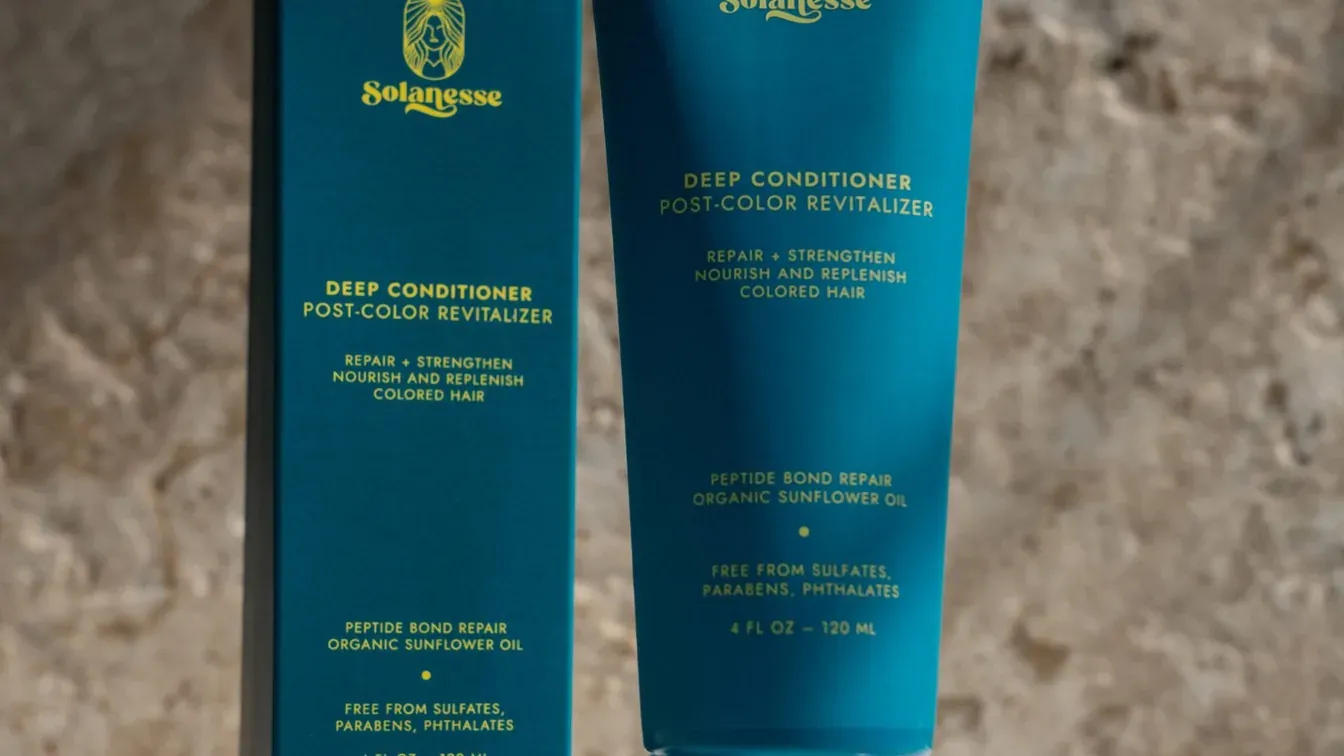
Conditioning performance is a separate question from pigment deposit. Solanesse’s Deep Conditioner – Post Color Revitalizer is a post-color conditioning treatment for hair affected by coloring, bleaching, and chemical processing. It is intended to support softness, manageability, and repair care, not to deposit pigment, correct tone, or function as a toner. Learn more about the brand’s science and ingredients to understand that distinction.
In short, a toner addresses cosmetic tone, a color-depositing conditioner supports temporary pigment maintenance, and a conditioning treatment focuses on the feel and condition of processed hair. One product may not replace another simply because both can come in a bottle labeled conditioner.
Shop the Solanesse Deep Conditioner – Post Color Revitalizer for post-color care
Frequently Asked Questions
Is a toner the same as a hair dye?
Not exactly. Toner is a color product used to fine-tune existing color, neutralize unwanted undertones, or add a subtle tone. It is commonly grouped with demi-permanent or semi-permanent dyes because it contains little or no ammonia, and it generally fades rather than behaving like permanent color. The exact result depends on the formula and the starting shade.
Does toner make your hair darker or lighter?
Toner can make hair appear cooler, warmer, richer, softer, or more even, but it cannot lighten the underlying hair. It deposits or adjusts tone on a suitable base. If the hair needs to be lifted several levels, that requires a lightening service before toning. A colorist can assess whether your current level is ready for the desired result.
What is a hair toner for bleached hair?
For bleached hair, toner is often used to refine the exposed warmth after lightening. Depending on the unwanted undertone, a colorist may select a complementary tone to balance yellow, orange, or red. Toner works best when the hair has been lightened to an appropriate shade, so the formula should match both the starting level and the intended finish.
How long does a hair toner last?
Results are temporary and commonly last about two to six weeks, according to one published toner guide. Washing frequency, heat styling, sun, pool exposure, hair type, and hair condition can affect how quickly the effect fades. Gentle color-maintenance habits can help preserve the appearance, but they cannot make a toner permanent.
Is hair toner necessary after every color service?
No. Toner is useful when the color needs tonal refinement, neutralization, or a refreshed finish, but it is not required for every service. The decision depends on the lightened level, the desired shade, and how the color looks after processing. Ask a qualified colorist whether toning is appropriate rather than treating it as an automatic step.
Get started with post-color conditioning
After coloring or lightening, consistent conditioning can help hair feel softer and more cared for while you maintain your preferred tone. For post-color conditioning and repair care, shop the Solanesse Deep Conditioner – Post Color Revitalizer. Use it as part of a thoughtful after-color routine, while relying on a qualified colorist for toner, color correction, or other service decisions.


