


Curly hair rarely needs the same treatment from root to tip. A curl pattern describes shape, but it does not tell you how quickly hair absorbs water. How long it holds moisture, or how chemical color has changed the fiber. Those differences matter when a conditioner leaves curls soft and defined, or coated, limp, and still dry.
SHOP DEEP CONDITIONER POST COLOR REVITALIZER
The best deep conditioner for curly hair matches your hair’s observed needs: porosity, dryness, density, and chemical color history. Look for enough slip to reduce friction, moisture to improve flexibility, and targeted strength support when processing has affected the cuticle. Choose based on how your hair responds, not on a curl label alone.
Start by separating moisture needs from strength needs, then consider how your hair’s porosity and processing history affect product performance. That foundation makes it easier to evaluate what an effective deep conditioner should actually do for curly hair.
What Makes a Deep Conditioner Effective for Curly Hair?
An effective deep conditioner does more than make curls feel soft for a few hours. It should improve wet-combing slip, help the hair fiber hold onto moisture, and leave curls flexible rather than coated or weighed down. The right formula supports the hair’s current condition, including dryness, density, porosity, and any history of coloring or chemical processing.
Slip is useful because curly and coily hair can be harder to detangle without friction. A conditioning treatment that helps strands glide past one another can make wash day gentler and reduce unnecessary pulling. However, slip alone does not show that a product is addressing moisture balance. Surface softness may fade quickly if the hair still loses moisture rapidly or if buildup prevents water and conditioner from working evenly.
Look beyond curl pattern
Curl pattern is only one part of the selection process. Two people with similarly shaped curls may need very different treatment textures because their hair differs in density, porosity, dryness, or processing history. Low-porosity hair may resist rapid wetting, while buildup can create a dry, coated feeling. Higher-porosity hair may lose moisture more quickly, particularly after chemical processing or repeated wear. These responses are more useful than a curl label alone when choosing a treatment.
Color history matters as well. Coloring and bleaching can change cuticle behavior and moisture retention, so chemically processed curls may need conditioning that supports softness without making permanent-repair promises. If your main concern is how porosity affects product weight and buildup, review this guide to low-porosity product selection.
What to assess after rinsing
Judge the result after the hair is rinsed and styled, not only while the product is in the shower. Look for easier detangling, supple curls, reduced roughness, and enough definition to suit your routine. If the hair feels coated, flat, sticky, or dry again soon after styling, the formula or frequency may not match its needs. An effective deep conditioner should make the next stage of care easier without masking the underlying response of the hair.
How Do You Choose the Best Deep Conditioner for Curly Hair?
Curl pattern and porosity describe different aspects of the hair fiber. Pattern refers to the shape the hair naturally forms, from waves to curls and coils. Porosity describes how readily the fiber takes in and holds water and conditioning ingredients. Two people with the same curl pattern can therefore need very different treatment textures and routines.
Low-porosity hair often resists rapid wetting. Product may sit on the surface instead of spreading through the fiber, and buildup can make hair feel dry even when it has received plenty of conditioner. In this case, a lighter application, thorough saturation, and careful rinsing may be more useful than adding a rich layer repeatedly. If this sounds familiar, review the guide to low-porosity product selection for more context on weight and buildup.
High-porosity hair can lose moisture quickly. The condition may reflect chemical processing, repeated heat, mechanical wear, or naturally raised cuticle behavior. Hair may feel soft immediately after conditioning but become rough, frizzy, or dry again soon afterward. A more conditioning treatment can help improve softness and manageability, but the right choice still depends on how the hair responds. Its density, and whether it needs moisture, slip, or strength support.
Let your hair’s response guide the label
Porosity labels are useful starting points, not permanent diagnoses. Notice what happens during and after treatment. Does the hair become easier to detangle without losing definition? Does it feel coated, heavy, or limp? Does softness last through the next wash, or does dryness return quickly? These observations are more actionable than choosing a product solely because it is marketed for a particular curl type.
Color and bleach history also matter. Chemical processing can change cuticle behavior and moisture retention, so a previously low-porosity curl pattern may respond differently after coloring. For a closer look at that interaction, see porosity and hair color. The best deep conditioner for curly hair is the one that matches the fiber’s observed needs while respecting its processing history. Rather than the one attached to the most familiar curl label.
What Should Color-Treated Curls Look For?
Color-treated curls often need more than a product chosen by curl pattern alone. Chemical processing can change how the cuticle behaves and how readily the fiber holds moisture. The result may be roughness, reduced slip, increased tangling, or a dry feel that shows up most clearly in the bends and ends of the curl. These signs do not mean that every colored curl needs the same formula. They indicate that color history should be considered alongside density, porosity, dryness, and how the hair responds after washing.
Look for moisture support without ignoring fiber condition
A useful deep conditioner should make the hair easier to detangle and leave curls feeling supple without coating them so heavily that they lose movement. Pay attention to the response after rinsing and drying. If the hair feels soft but still catches during detangling, it may need more slip or a different application approach. If it feels coated, limp, or difficult to refresh, the formula or amount may be too much for its density or porosity. Buildup can also mimic dryness, particularly when low-porosity hair resists rapid wetting. Our guide to low-porosity product selection covers that distinction in more detail.
Use color-safe handling as part of the routine
For chemically colored curls, gentle handling matters as much as the treatment itself. Work conditioner through fully wet hair, focus on the lengths and ends, and detangle with care rather than pulling through resistant areas. Rinse according to the product directions and observe whether the hair remains soft without feeling weighed down. The Solanesse Deep Conditioner Post Color Revitalizer is positioned for chemically processed hair and has a stated 10- to 15-minute use window. That is a conditioning treatment interval, not a promise of permanent repair.
This focus is different from choosing a treatment specifically for bleached hair. Bleach-related dryness and fragility deserve their own selection criteria, so see our guide to the best deep conditioner for bleached hair when lightening is the main concern. For broader color-safe conditioner considerations, the best conditioner for color-treated hair guide is the more direct companion. In this guide, the goal is to match post-color care to the way your curls actually feel, behave, and retain moisture.
Should You Prioritize Moisture or Strength?
Neither moisture nor strength support is universally better for curly hair. Prioritize moisture when the hair feels dry, rough, or difficult to detangle; prioritize strength support when it feels weak, overly elastic, or prone to snapping. The most useful choice reflects the hair’s current response, density, processing history, and styling habits, not its curl label alone.
Moisture-focused formulas are designed to improve softness, flexibility, and slip. Strength-support formulas typically focus on helping the fiber feel more resilient during handling. These goals can overlap, but they are not interchangeable. A conditioner can make hair feel smoother without permanently repairing structural damage, so use the table below as a selection guide rather than a diagnosis.
| Signal | Likely priority | Practical selection cue |
|---|---|---|
| Hair feels rough, dry, or tangles quickly | Moisture | Choose a conditioning treatment that improves softness and slip without leaving the curls coated or limp. |
| Hair feels weak, stretches unusually, or breaks during detangling | Strength support | Look for a formula positioned around resilience and handle gently while the hair is wet. |
| Hair has been colored, lightened, heat-styled, or chemically processed | Balanced support | Favor a treatment that addresses manageability and conditioning while accounting for the hair’s processing history. |
| Hair feels coated, dull, or heavy after conditioning | Reassess the formula | Use less product, distribute it through sections, and consider whether buildup is being mistaken for dryness. |
Chemical services and repeated heat or mechanical exposure can affect the hair’s mechanical and surface properties. Which is why processed curls may need more than one type of support. Research on color-treated hair has evaluated outcomes such as protein loss, combability, and breaking strength. Reinforcing the value of judging a treatment by observable performance rather than marketing language alone in controlled testing. Reassess after several washes: the best deep conditioner for curly hair is the one that leaves your strands manageable, defined, and appropriately conditioned without creating new heaviness.
How Do You Use Deep Conditioner Without Flattening Curls?
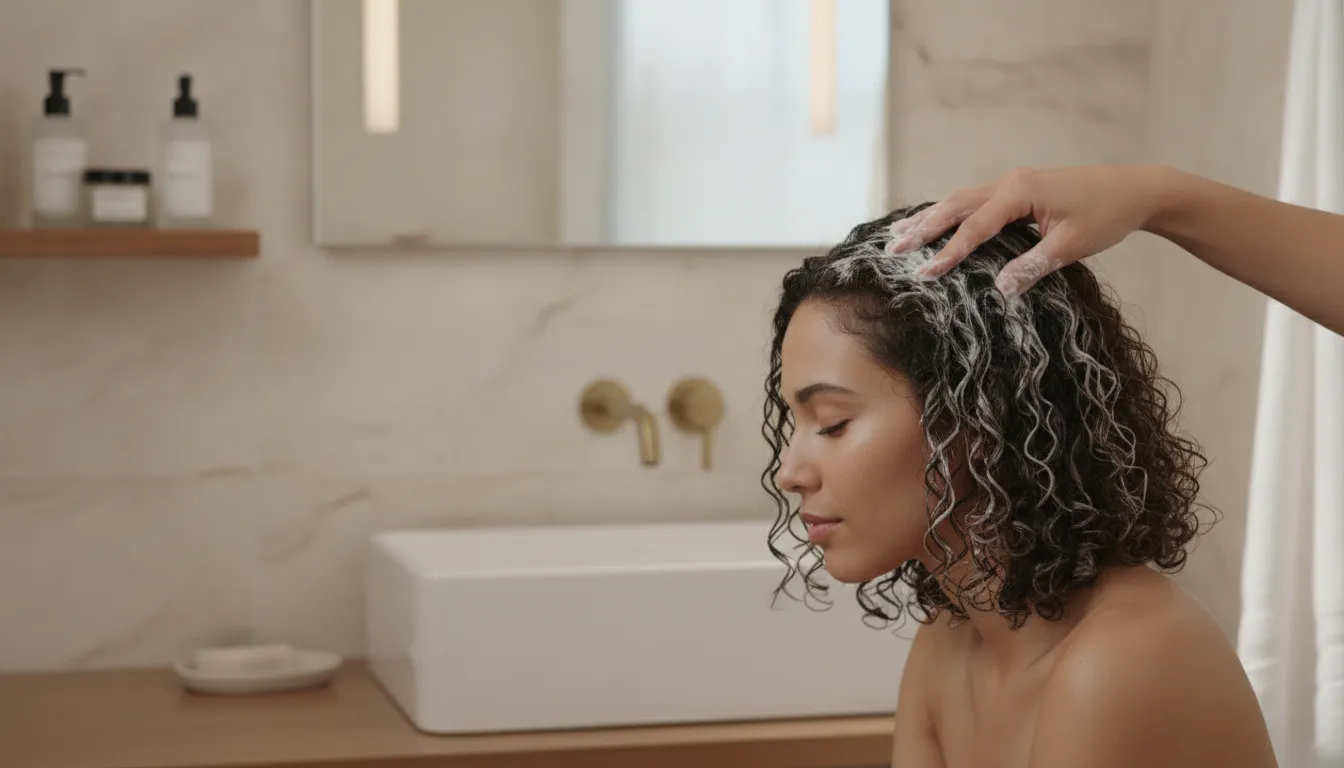
A deep conditioner works best when it is distributed through the hair without leaving more product on the curls than they can support. Use this routine to improve slip and softness while preserving the shape that appears when your hair dries.
- Cleanse according to your hair’s needs. Start with clean hair, but do not assume every wash requires an aggressive cleanser. If your curls are dry or color-treated, choose a cleansing approach that removes residue without leaving the fiber uncomfortable or rough. Build-up can make hair feel dry even when it needs less product, not more.
- Apply to thoroughly wet hair. Squeeze out only enough water to prevent excessive dripping, then divide your hair into manageable sections. Wet hair helps the conditioner spread more evenly and reduces the temptation to apply a heavy layer to compensate for poor distribution.
- Work from lengths to ends. Smooth the conditioner through each section with your fingers, concentrating on areas that feel dry or tangle easily. Use your hands to encourage curl groups to form rather than repeatedly pulling the hair straight. If you need more slip, add a small amount of water before adding more conditioner.
- Use the smallest effective amount. Fine or low-density curls may need considerably less than dense or coarse hair. Start with a modest amount, distribute it, and assess the feel. If the hair feels coated, limp, or difficult to rinse, reduce the quantity next time. For additional guidance, see our article on low-porosity product selection.
- Follow the stated processing window. Leave the product on for the time directed on its packaging. Solanesse’s Deep Conditioner Post Color Revitalizer, for example, gives a 10-15 minute instruction. That is a product-specific example, not a universal rule for every deep conditioner.
- Rinse thoroughly, then evaluate when dry. Remove the treatment with lukewarm water, keeping enough conditioning feel for manageability without leaving visible residue. Judge the result after your curls have dried. If the pattern looks soft and defined, repeat the same amount and timing. If it looks flat or coated, use less product, shorten the treatment, or reassess whether your hair needs moisture, strength support, or a lighter conditioner. To compare treatment formats, read hair mask versus deep conditioner for colored hair.
How Often Should Curly Hair Be Deep Conditioned?
There is no universal deep-conditioning schedule for curly hair. Start with how your hair behaves, then adjust based on wash frequency, density, porosity, dryness, and chemical processing. A practical starting point is every one to two weeks for hair that feels dry or is regularly washed. Hair that is fine, easily weighed down, or washed less often may need a shorter treatment less frequently. Dense, coarse, highly porous, or chemically processed curls may respond better to consistent weekly conditioning.
Porosity can change the pattern. Low-porosity hair may resist water at first, and buildup can make it feel dry even when it is coated with product. If that sounds familiar, review low-porosity product selection before adding more treatment. High-porosity hair may lose moisture quickly and often needs closer observation after washing. Color and bleach can also affect cuticle behavior and moisture retention, so processed curls may need more regular conditioning than untreated hair. For broader guidance, see this post-color care routine.
Signs you need more or less conditioning
- Consider conditioning more often when curls feel rough, tangle easily, look dull, or lose definition soon after washing.
- Pull back when hair feels coated, limp, greasy, unusually soft, or difficult to style. These signs can indicate buildup or too much product weight rather than a need for another treatment.
Use a simple adjustment loop: keep the same formula for two or three wash cycles, note softness, slip, definition, and volume, then change one variable. Increase frequency if dryness persists. Reduce frequency or use less product if curls flatten. If hair feels both brittle and overly soft, alternate a moisture-focused treatment with a formula designed for strength support instead of layering multiple masks at once.
SHOP DEEP CONDITIONER POST COLOR REVITALIZER
Frequently Asked Questions
How do I choose a deep conditioner for my curl pattern?
Use your curl pattern as a starting point, not the only criterion. Consider strand density, thickness, dryness, porosity, and how your hair responds after conditioning. Fine or easily weighed-down curls may prefer a lighter formula and careful application, while dense, coarse, or very dry curls may need richer conditioning and more thorough sectioning.
Is porosity more important than curl type when choosing a treatment?
They describe different aspects of the hair. Curl pattern describes shape, while porosity helps indicate how readily the fiber takes in and loses moisture. If hair resists wetting or develops buildup quickly, use less product and rinse thoroughly. If it feels dry again soon after conditioning, look for a treatment that provides sustained softness and slip rather than choosing by curl label alone.
Can I use a deep conditioner on color-treated curly hair?
Yes, but choose a treatment intended to support chemically processed hair and follow its directions. Color and bleach can change cuticle behavior and moisture retention, so prioritize softness, manageability, and reduced friction without promising permanent repair. A color-conscious routine should also avoid unnecessary washing and aggressive handling, since dye can fade through dissolution in water.
How long should I leave a deep conditioner on curly hair?
Follow the product instructions rather than assuming a longer treatment is better. For a treatment designed for post-color care, Solanesse recommends a 10-15 minute use window. Apply evenly through sections, focus on the lengths and ends, and rinse thoroughly so the hair receives conditioning without excessive residue or weight.
Ready to support color-treated curls?
If your curls need deeper conditioning after chemical color, a treatment designed for post-color care can provide focused moisture and slip without relying on curl pattern alone. Choose a routine based on how your hair responds, including its dryness, porosity, and processing history. Shop the Solanesse Deep Conditioner Post Color Revitalizer for color-treated curls.


