


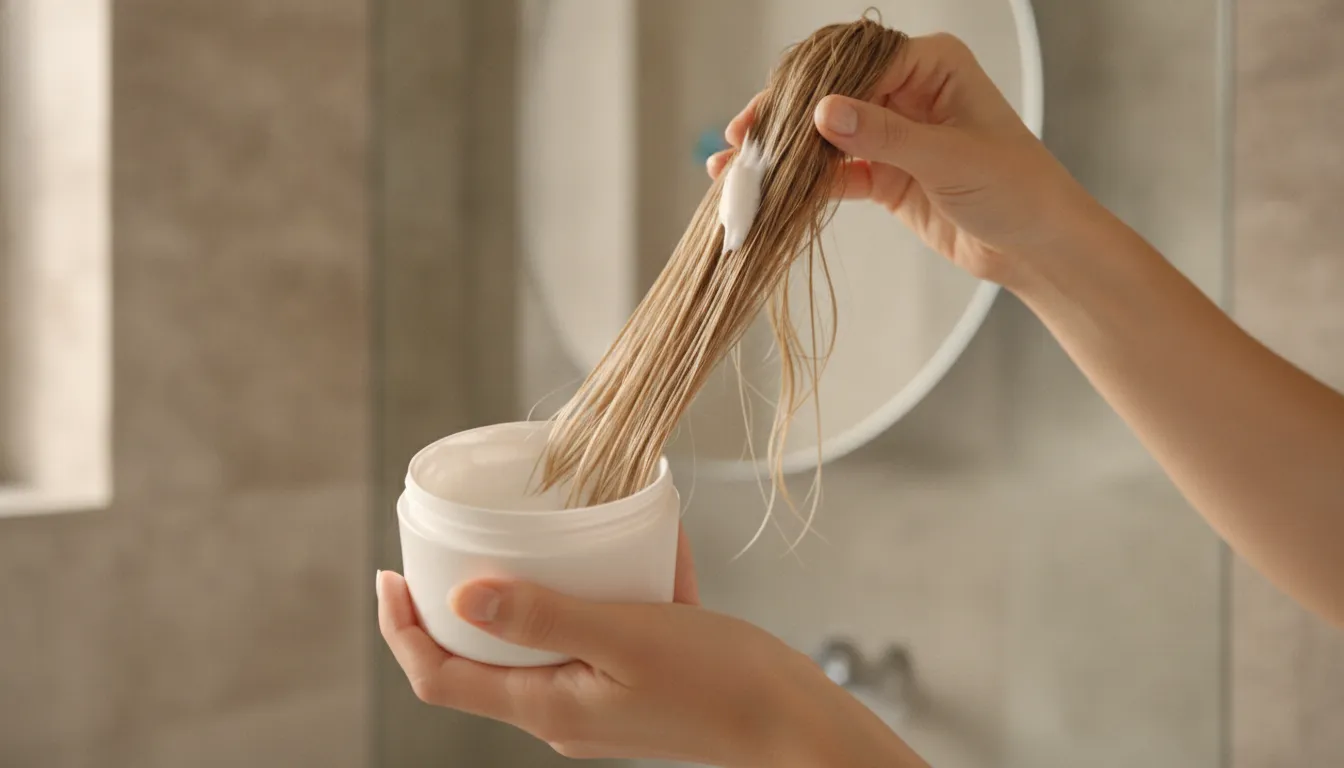
Fine hair can feel weighed down by rich treatments, yet color processing can leave the same delicate strands dry, rough, or more vulnerable to breakage. The goal is not to avoid deep conditioning. It is to deliver enough support to the lengths without coating the hair in residue.
The best deep conditioner for fine hair gives color-treated lengths targeted softness and slip while allowing you to control the amount, placement, processing time, and rinse. Look for a formula that matches your hair’s needs, apply it mainly where dryness is concentrated, and adjust frequency based on how your hair responds.
For a post-color option, Solanesse Deep Conditioner – Post Color Revitalizer is described by the brand as suitable for fine-to-thick hair and all textures. Its directions recommend applying it to warm, damp hair, leaving it on for 10-15 minutes, and rinsing thoroughly.
Shop the Solanesse Deep Conditioner – Post Color Revitalizer
Before choosing a treatment, it helps to understand why strand fineness and overall hair density are different concerns. And why chemically processed lengths may still benefit from deeper conditioning.
Why Fine Hair Can Still Need Deep Conditioning
Fine hair can need intensive conditioning after color because a small strand diameter does not make the fiber immune to dryness, roughness, or breakage. The practical goal is not to coat every strand heavily. It is to give processed lengths enough lubrication and flexibility to feel manageable without leaving the roots flat or coated.
Fine hair and thin hair are not interchangeable descriptions. Fine hair refers to the diameter of each strand. Density refers to how many strands grow across the scalp. Someone can have fine strands with high density, or relatively coarse strands with lower density. That distinction matters when choosing a treatment: the amount and placement should respond to how the hair behaves, not to the label alone. A deep conditioner may be useful for fine, dense hair and still require careful dosing for fine, sparse hair.
Color can affect the hair fiber, regardless of diameter
Hair is a layered fiber made up of the cuticle, cortex, medulla, and cell membrane complex. The cortex contains much of the keratin structure that contributes to the fiber’s mechanical behavior. This is a structural description, not a promise that a rinse-out product can rebuild every layer. Academic research on hair structure helps explain why surface feel and internal strength should be treated as related but distinct concerns.
Coloring and bleaching can produce changes in the hair shaft that are detectable under scanning electron microscopy. A controlled study comparing regularly treated hair with controls found greater shaft damage in the treatment group. While its authors described the changes as subtle and detectable early by SEM. That finding does not mean that every coloring session causes visible deterioration. But it supports a measured reason to condition lengths that feel drier, more tangled, or less smooth after processing.
Conditioning mainly improves the hair’s surface behavior: slip, softness, manageability, and the feel of the cuticle. Those benefits can reduce friction during detangling and styling, but they are not the same as permanent structural repair. If the hair feels smoother after a treatment, that is useful information about its surface condition, not proof that the underlying fiber has been restored. This distinction is especially important when comparing a deep conditioner with a bond-focused or protein treatment.
For fine hair, the best deep conditioner is therefore a balance. It should address the dryness and friction that can follow color without encouraging buildup through excessive product or root application. Start with the mid-lengths and ends, observe how the hair moves after rinsing, and adjust the amount and frequency to its response. If your needs are broader than a deep treatment, see this guide to lightweight conditioner for fine hair for the everyday-care distinction.
What Should You Look For in the Best Deep Conditioner for Fine Hair?
The right deep conditioner should improve softness and manageability without leaving a film that makes fine strands look flat. Start with texture: a rich formula is not automatically better, and a thin formula is not automatically lighter once rinsed. Look for a product that spreads easily through damp lengths, gives enough slip to reduce tugging, and rinses cleanly. That balance matters because conditioners can help minimize the effects of mechanical and thermal exposure while restoring a smoother surface. But fine hair has less room for excess product. A lightweight conditioner for fine hair may be sufficient for regular washing, while a deep treatment is reserved for more intensive care.
Choose moisture with control, not weight
Fine hair can be dry, brittle, or prone to breakage even when it does not need more volume. Humectants such as glycerin, panthenol, and sodium PCA are examples of ingredients used to support lightweight hydration, although your hair’s response remains individual. Check how your strands feel after rinsing and drying. If they feel soft and flexible, the formula is likely meeting the immediate conditioning need. If they feel coated, limp, or difficult to separate at the roots, use less, keep it on the lengths, or reduce frequency. Readers who frequently experience residue may also benefit from reviewing guidance on conditioning fine hair without buildup.
Evaluate protein balance and formula transparency
Protein can be useful in a deep-conditioning routine, particularly when hair has been exposed to coloring, bleaching, or repeated heat. However, high-protein and low-to-no-protein formulas serve different needs, and excessive protein may contribute to a dry or brittle feel for some people. Treat ingredient response as feedback rather than a fixed rule. Alternate or adjust products if softness, flexibility, and combability change in an unfavorable direction.
Formula transparency should make that adjustment possible. Solanesse lists hydrolyzed keratin, collagen, plant-based peptides, and sunflower oil among its ingredients. You can read the science behind the formula and compare the ingredient profile with your current routine. The product page also states that its formula is free of sulfates, parabens, silicones, and synthetic fillers. Those claims describe the brand’s formula; they do not guarantee a specific result for every head of hair.
Understand what makes a deep treatment different
A deep conditioner is generally more concentrated than a daily conditioner, with masks often designed to deposit higher levels of smoothing and hydrating ingredients and used about weekly. That does not mean longer or heavier application is always better. The goal is targeted conditioning for lengths that need more support, followed by thorough rinsing. Fine hair usually benefits from a modest amount, careful placement away from the roots, and an honest evaluation of movement after drying.
How Do You Deep Condition Fine Hair Without Weighing It Down?
Fine hair usually needs precision more than intensity. Start with clean, warm, damp strands, remove excess water. And place a modest amount of treatment where dryness and chemical stress are most likely to show: the mid-lengths and ends. The goal is enough slip and softness to improve manageability without coating the roots. If you are evaluating the best deep conditioner for fine hair, judge the result after drying: hair should feel smoother and easier to detangle, while movement and root lift remain intact.
- Cleanse first. Shampoo thoroughly enough to remove oil, styling residue, and buildup. Rinse until the water runs clear. A treatment has a more predictable feel when it is applied to clean hair rather than layered over several products.
- Squeeze out excess water. Gently press the hair with your hands before applying conditioner. Hair should be damp, not dripping. Too much water can dilute the product and make it slide away before it coats the strands.
- Use a modest amount. Begin with less than you think you need, then add a small amount only if the ends still feel dry. Fine strands do not require a thick coating to receive conditioning. Spread the product between your palms first so the application stays even.
- Section the hair. Divide it into two to four loose sections, depending on length and density. Working in sections helps you cover the areas that need treatment without repeatedly applying more product to the same surface.
- Focus on mid-lengths and ends. Smooth the treatment downward, concentrating on the oldest and driest parts of the hair. Avoid the scalp and roots unless they are specifically dry and your product directions say otherwise. This placement can help preserve a lighter feel at the crown.
- Follow the processing time. Solanesse directs users to massage its Deep Conditioner – Post Color Revitalizer through warm, damp hair, leave it on for 10 to 15 minutes, and then rinse thoroughly. Do not assume that leaving it on longer will improve the result.
- Rinse completely. Use warm water and continue until the hair feels cleanly conditioned rather than coated or slippery with residue. Incomplete rinsing is a common reason fine hair looks flat after a mask.
- Dry and evaluate. Blot gently, then air-dry or style with your usual method. Assess softness, tangling, shine, movement, and how quickly the roots lose freshness. If the lengths feel better but the roots fall flat, use less product, move it farther from the scalp, or reduce the frequency next time.
This method keeps the treatment targeted. Fine hair can receive meaningful care after coloring without treating every inch of the head as equally dry or equally in need of product.
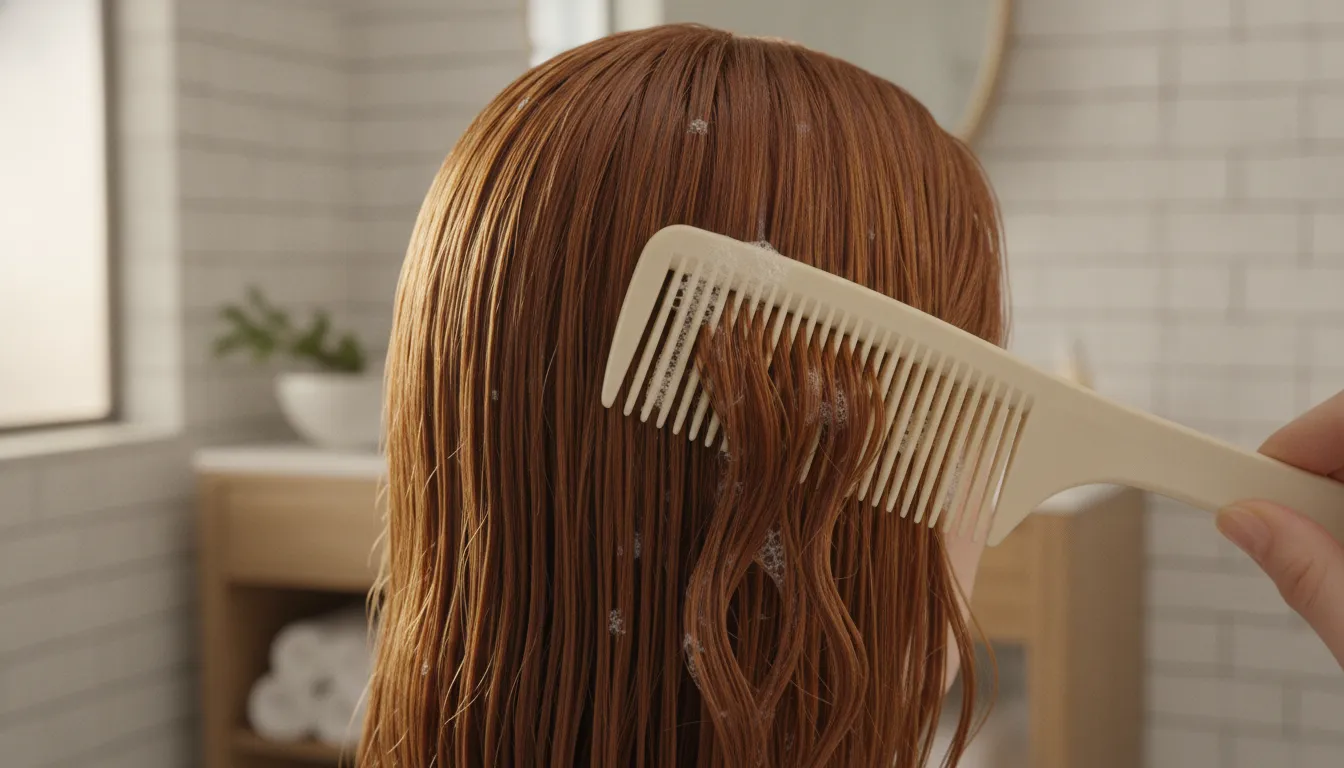
How Often Should You Deep Condition Fine, Color-Treated Hair?
For fine, color-treated hair, start with one deep-conditioning session per week, then adjust according to how your strands feel and behave. Solanesse directs users to apply its Deep Conditioner – Post Color Revitalizer weekly or as needed. While research shows that coloring and bleaching can affect hair’s mechanical and structural properties. That makes a weekly starting point reasonable for many people, not a prescription that applies to every head of hair.
Your best schedule depends on porosity, processing history, heat exposure, wash frequency, and the amount of product your hair can tolerate. Fine strands can need support for dryness and roughness, yet still become limp when a rich formula is used too often or left behind after rinsing.
When to stay with weekly conditioning
Continue once a week if your lengths feel softer and easier to detangle without losing movement at the roots. This cadence may be especially useful when your hair is regularly colored, highlighted, heat styled, or exposed to friction. Studies have documented visible shaft changes after repeated bleaching, dyeing, or straightening, but they do not establish one universal deep-conditioning schedule. Treat weekly use as a measured starting point and evaluate the result over several wash cycles.
When to use it less often
Reduce frequency or use a smaller amount if your hair feels coated, dull, stringy, or unusually flat after treatment. These signs can point to residue or an overly rich routine rather than a need for more conditioning. Low-porosity hair may be particularly sensitive to buildup, so review this guide to conditioning fine hair without buildup before increasing use. Apply the treatment mainly where the hair feels dry, and rinse thoroughly.
When to consider more support
If your ends remain rough, tangle easily, or feel less flexible after coloring, keep the weekly session consistent and reassess your cleansing, heat, and color routine. Do not automatically increase to several treatments each week. Instead, look for a pattern: persistent dryness may justify discussing a second, lighter conditioning session. While sudden brittleness or breakage calls for reducing chemical and thermal stress rather than simply adding product.
After each treatment, judge softness, movement, detangling, and next-day texture. That response is more useful than a calendar alone when fine, color-treated hair is finding its balance.
Protein or Moisture: Which Deep Treatment Does Fine Hair Need?
Fine, color-treated hair may need both strengthening support and conditioning moisture, but the right emphasis depends on how the hair feels and behaves. Start with moisture when strands feel dry, rough, tangled, or less flexible. Consider protein support when the hair feels unusually weak, overly stretchy when wet, or more prone to snapping after chemical processing. These are practical signals, not a diagnosis, and ingredient response varies from one head of hair to another.
Coloring and bleaching can affect hair’s mechanical and structural properties. In one study, researchers evaluated conditioner agents on oxidative-dyed hair using protein loss, combability, and breaking-strength measures, which illustrates why post-color care should address more than surface softness. The study examined specific tested samples, not every formula or hair type, so its findings should inform your expectations rather than dictate a universal routine. Read the oxidative-dye conditioning research.
| What you notice | Likely priority | Practical approach |
|---|---|---|
| Roughness, dryness, tangling, or a lack of softness | Moisture and surface conditioning | Choose a conditioning treatment that improves slip and smoothness without leaving a coated feel. Apply mainly through the mid-lengths and ends. |
| Stiffness, a straw-like feel, or hair that seems less flexible after repeated protein use | More moisture, less added protein | Pause or reduce protein-heavy treatments and reassess after cleansing. Do not assume that a stronger-feeling formula is automatically better. |
| Weakness, excessive stretch when wet, or breakage after color processing | Balanced conditioning with cautious protein support | Try a moderate approach and observe softness, elasticity, and manageability over several washes. Avoid stacking multiple protein products at once. |
| Softness but limpness, residue, or buildup | Less product or less frequent deep treatment | Use a smaller amount, keep it away from the roots, rinse thoroughly, and adjust based on movement and scalp comfort. |
Protein is not automatically harsh, and moisture is not automatically lightweight. Some deep conditioners are broadly categorized as high-protein or low-to-no-protein formulas, while excessive protein may build up and contribute to dryness or breakage in some hair. Use the table as a troubleshooting framework, then change one variable at a time. Fine hair benefits from enough conditioning to protect feel and manageability, not from chasing a fixed protein-to-moisture schedule.
A Post-Color Deep-Conditioning Routine for Fine Hair
Post-color conditioning works best when it is treated as a focused step, not an invitation to coat every strand with as much product as possible. Coloring and bleaching can affect the hair shaft’s surface and mechanical properties, while fine hair has less margin for excess residue. A rinse-out deep treatment can support softness and manageability through the lengths without turning a practical care routine into a heavy mask ritual.
Start by connecting the treatment to your color schedule. Use it after a color service once your hair feels dry, rough, tangled, or less flexible, then adjust based on how the lengths respond. It belongs alongside, not in place of, a broader post-color hair recovery routine. That distinction keeps this step specific: it is about applying and evaluating a deep conditioner for fine strands, rather than promising to reverse every effect of chemical processing.
Place the treatment where color stress shows up
Cleanse first, then squeeze out excess water so the formula does not slide away. Apply a modest amount through the mid-lengths and ends, concentrating on areas that feel coarse or catch during detangling. Fine hair often benefits from keeping richer conditioning away from the roots, where residue can reduce movement. If your hair is prone to buildup, our guide to conditioning fine hair without buildup can help you think through porosity and product weight.
Solanesse instructs users to work its Deep Conditioner – Post Color Revitalizer into warm, damp hair, massage, leave it for 10 to 15 minutes, and rinse thoroughly. The product page describes it as suitable for fine-to-thick hair and all textures. For ingredient context, review the science behind the formula, including the ingredients Solanesse lists, such as hydrolyzed keratin, collagen, plant-based peptides, and sunflower oil. These are product details, not independent clinical proof or a guarantee of volume.
Evaluate the result before increasing frequency
After drying, assess more than softness. Does your hair detangle with less effort? Do the lengths look smoother without losing movement? Does the finish remain comfortable at your next wash, or does it feel coated, limp, or harder to style? If the result is balanced, follow the product’s weekly or as-needed guidance. If fine hair feels heavy, use less, keep placement lower, rinse longer, or extend the interval. If it remains dry or rough, consider whether cleansing, heat, or repeated color processing also needs attention.
Shop the Solanesse Deep Conditioner – Post Color Revitalizer
Frequently Asked Questions
Should fine, thin hair use a deep conditioner?
Yes. Fine strands can still become dry, rough, or fragile, especially after coloring or heat styling. Use a modest amount on the mid-lengths and ends, then evaluate how your hair feels and moves after rinsing and drying.
What makes a deep conditioner suitable for fine hair?
Look for a formula that provides slip and softness without requiring heavy application. Placement and dosage matter as much as the ingredient list: keep the product away from the roots when they become flat easily, and rinse thoroughly.
How long should a deep conditioner stay on fine hair?
Follow the product directions rather than assuming longer is better. Solanesse instructs users to apply its Deep Conditioner – Post Color Revitalizer to warm, damp hair, leave it on for 10 to 15 minutes, and rinse thoroughly.
How often should fine, color-treated hair be deep conditioned?
Start with once weekly or as needed, then adjust based on your hair’s response. If the lengths feel soft and manageable, maintain that cadence. If hair feels coated, limp, or difficult to style, reduce the amount or frequency and reassess.
Should a post-color treatment contain protein or moisture?
There is no universal answer. Color-treated hair may benefit from conditioning that improves softness and manageability, while some routines also use protein-focused products for added support. Change one variable at a time and watch for persistent dryness, stiffness, or increased breakage.
Ready to Choose a Focused Deep Treatment?
Fine, color-treated hair can benefit from concentrated conditioning when the formula and application are adjusted to avoid excess weight. For a focused rinse-out step, shop the Solanesse Deep Conditioner – Post Color Revitalizer. Follow the product directions, apply it thoughtfully through the lengths and ends, and rinse thoroughly.


