


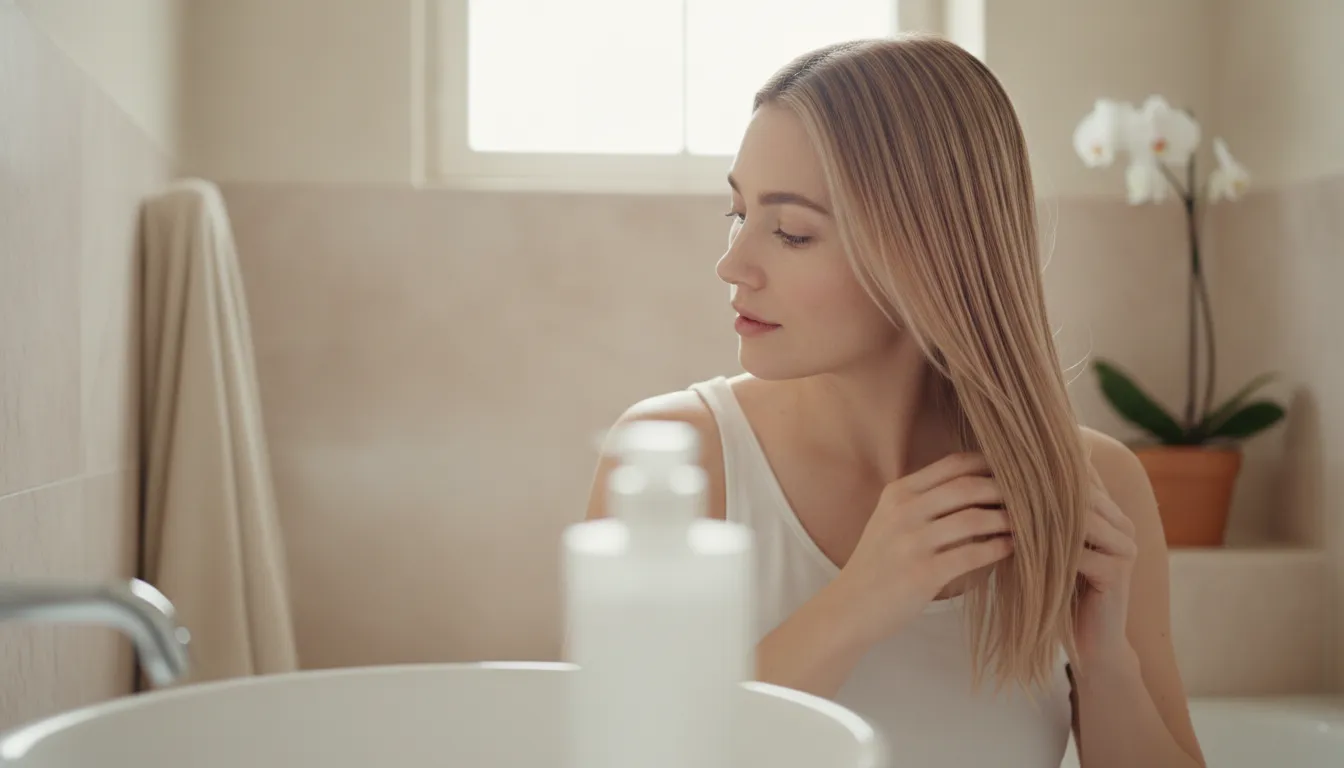
Color-treated fine hair often needs more than softness. It needs enough slip to detangle comfortably, enough support to feel resilient, and a controlled application that does not leave strands flat or coated. The right conditioner is less about choosing the richest formula and more about matching texture, amount, placement, and timing to your hair.
Shop the Deep Conditioner – Post Color Revitalizer
The best conditioner for fine hair after coloring provides lightweight slip and targeted nourishment without oversaturation or excess weight. Look for a formula that helps improve manageability. Then apply a modest amount through the lengths and ends and adjust by density, porosity, and how your hair feels after rinsing.
That balance becomes clearer when you consider what fine, color-treated strands actually need from conditioning, from surface smoothness to post-color care. Here is how to evaluate those priorities with a more precise routine.
What Makes the Best Conditioner for Fine Hair After Coloring?
The best conditioner for fine hair after coloring has to do two things at once: provide enough slip and softness for easier handling while leaving the fiber light enough to retain movement. Coloring can make the cuticle feel less smooth, but fine strands can quickly look flat when a rich formula deposits more product than they need. The right choice is therefore less about finding the heaviest conditioner and more about matching conditioning performance to strand size, density, porosity, and the way your hair feels after rinsing.
Conditioner is designed to improve manageability, reduce static, and add luster, benefits supported by cosmetic science research. Research on hair conditioners also helps explain why application matters: product deposition changes the hair’s surface properties, and the way conditioner binds to that surface influences how evenly it is distributed. In practical terms, a formula should smooth enough to support detangling without creating a coated, limp, or greasy feel.
Look for balance, not maximum moisture
Fine, color-treated hair still needs nourishment. Skipping conditioner can leave strands dry, tangled, and more difficult to manage, while oversaturating them can reduce body and make the style collapse sooner. A useful formula balances moisture, softness, and strength without assuming that every fine strand needs the same ingredients or intensity. Lightweight conditioning can offer the slip needed for gentler detangling while preserving a sense of lift.
After coloring, pay attention to both immediate feel and repeat-use behavior. Hair should feel smoother when wet and easier to comb, but it should not feel waxy, stiff, or weighed down once dry. If the roots become oily or lose their lift, use less product and keep it through the lengths and ends. If the ends remain rough, a slightly more conditioning formula or more targeted placement may be appropriate. This is a responsive ritual, not a fixed prescription.
Why post-color context matters
Fine hair is often more vulnerable to the effects of routine brushing, heat styling, and tight hairstyles because each strand has a smaller diameter. Color-treated strands may also need more thoughtful handling when dryness or brittleness appears. Choose a conditioner that supports softness and manageability without making permanent repair or color-preservation promises. A well-designed post-color treatment should complement your hair’s natural movement, helping you care for the fiber while continuing to enjoy color as self-expression.
The most reliable test is simple: after rinsing and drying, does your hair feel conditioned, flexible, and touchably soft, or merely coated? That answer is more useful than a label promising intense moisture.
How Should Fine Hair Be Conditioned After Coloring?
Fine hair benefits from conditioning after color, but the goal is not to coat every strand in the richest formula available. Color services can leave the hair feeling drier, more fragile, or harder to detangle, while a heavy application may flatten movement and make the roots appear oily. The most useful routine balances post-color softness with careful control of placement, timing, and amount.
Start with warm, damp hair
After cleansing, leave the hair warm and damp rather than dripping wet. Excess water can dilute the conditioner before it has a chance to distribute evenly. Apply a modest amount and massage it from root to tip, using your fingers to encourage even coverage and gently loosen tangles. If your scalp becomes oily quickly or your hair loses lift at the roots, concentrate more product through the mid-lengths and ends while using a lighter touch near the scalp.
For a post-color treatment, allow the conditioner to remain on the hair for 10 to 15 minutes, then rinse thoroughly. This is different from generic fine-hair advice that often centers only on a quick, lightweight rinse. Color-treated strands may need a more deliberate conditioning interval, especially when the service involved bleach or other chemical processing. The right approach is still measured: a longer leave-on time does not mean using an excessive amount.
Adjust the ritual to your hair, not just its thickness
Fine hair is not one uniform category. Density, porosity, curl pattern, and the condition of the ends all influence how conditioner feels after rinsing. Learning about hair porosity and color can help explain why one head of fine hair absorbs a treatment readily while another feels coated with the same application.
After rinsing, the lengths should feel smooth enough to comb without drag, but not waxy, limp, or difficult to style. If the hair feels weighed down, reduce the amount or keep more of the formula away from the roots next time. If it still feels rough or tangles easily, distribute the conditioner more carefully through the ends and use the treatment weekly or as needed. A conditioner selected for fine hair after color should support slip and softness without making permanent color-preservation or repair guarantees.
Which Ingredients Give Fine Hair Slip Without the Heavy Feel?
The most useful ingredients for fine, color-treated hair are not defined by a single must-have list. They are selected for how they distribute through the strand and how the hair feels after rinsing. Conditioner deposition and the way ingredients bind to the hair surface can influence performance and thickness distribution. This helps explain why the same formula can feel elegant on one head of hair and too rich on another. Research on conditioner deposition supports looking at the finished texture, not just the ingredient name.
Look for hydration that keeps the fiber flexible
Humectants are one category to consider when fine hair feels dry but easily loses movement. Glycerin, panthenol, and sodium PCA can draw in hydration without requiring a dense, oily texture. Aloe is another lightweight hydration option. These ingredients may help hair feel softer and easier to detangle, while the right amount and placement still determine whether the result feels airy or coated. A formula that gives slip without flattening is often more useful than one that simply feels rich in the shower. Glycerin, aloe, and other lightweight hydration ingredients are commonly discussed for this balance.
Consider smoothing ingredients in the context of your hair
Ceramides may be used to smooth the cuticle and support weak areas. Lightweight oils such as jojoba and sweet almond oil can soften and detangle without necessarily weighing fine strands down. That does not make any one of them a universal prescription. Porosity, density, curl pattern, scalp oiliness, and recent chemical processing all change what feels comfortable. If your hair becomes limp or coated, a lighter formula or smaller application may be a better adjustment than eliminating conditioner altogether.
Solanesse’s post-color treatment is described as not greasy or too thick and is silicone-free. Its formula includes hydrolyzed keratin, collagen, plant-based peptides, and sunflower oil. These are formulation choices, not promises that every strand needs protein, oil, or a particular smoothing agent. Read more about how the formula supports the hair structure, then judge the result by practical signals: easier detangling, softness through the lengths, and movement that remains after the hair dries.
How Much Conditioner Should You Use on Fine Hair?
- Start with a modest amount. Fine strands can benefit from conditioning after color, but more product is not automatically more care. Begin with a small amount and add only if your lengths still feel rough or difficult to detangle. The right quantity depends on your hair’s density, length, porosity, and current condition, so avoid treating a teaspoon or pump count as a universal rule. Conditioner deposition and the way it binds to the hair surface influence how the finished hair feels. A measured, responsive approach works better than applying generously by habit. (Read the research on conditioner deposition.)
- Place it where the hair needs support. Work the product through the mid-lengths and ends, where dryness, tangling, and post-color roughness are often most noticeable. If your scalp becomes oily quickly, keep conditioner away from the roots and concentrate on the lengths instead. This placement preserves a lighter feel near the scalp while giving the more vulnerable ends the slip they need for gentler detangling. For more guidance on avoiding excess coating, explore these lightweight products for fine hair.
- Emulsify with water before adding more. Once the conditioner is distributed, wet your hands and gently smooth the lengths again. The added water can help spread the product across more strands, allowing you to assess coverage before reaching for another amount. Use your fingers to work through tangles rather than repeatedly piling on product. You are looking for even slip, not a thick layer sitting on the hair.
- Allow the formula its intended time. A rinse-out conditioner may need only a short application, while a post-color treatment should follow its product directions. The Solanesse Deep Conditioner – Post Color Revitalizer is designed to remain on warm, damp hair for 10 to 15 minutes before a thorough rinse. Timing is part of the routine, just like amount and placement, so do not compensate for a short application by using an excessive quantity.
- Rinse, then use the result as your guide. Rinse thoroughly and notice how your hair behaves once dry. If it feels soft, flexible, and easy to comb without looking flat, your amount and placement are likely working. If it feels coated, limp, or oily, use less next time, keep the product farther from the roots, or shorten the frequency. If it still feels dry, tangles easily, or lacks slip, gradually increase coverage through the ends. Adjust again after considering density and porosity, since fine, dense hair may need more distribution while fine, low-porosity hair may need less product and more careful rinsing.
What Should a Fine-Hair Routine Look Like After Color?
After coloring, fine hair benefits from a routine that creates slip without leaving the fiber coated. Handle it gently from the first rinse onward. Use warm, damp hair as the starting point for treatment. Distribute a modest amount through the hair and let the formula sit long enough to support a consistent ritual. Fine strands can be more vulnerable to brittleness, dryness, and breakage, so the goal is not simply softness in the moment. It is easier handling with less unnecessary stress on the hair.
Start by detangling with care rather than pulling through knots. Fine hair may be more susceptible to everyday damage from brushing, heat styling, and tight ponytails because each strand has a smaller diameter. Work from the ends upward with your fingers or a wide-tooth comb, especially when the hair is wet. This approach does not eliminate breakage, but it can make post-color handling more deliberate. For broader guidance, see how to repair color-damaged hair at home without turning every wash into an intensive process.
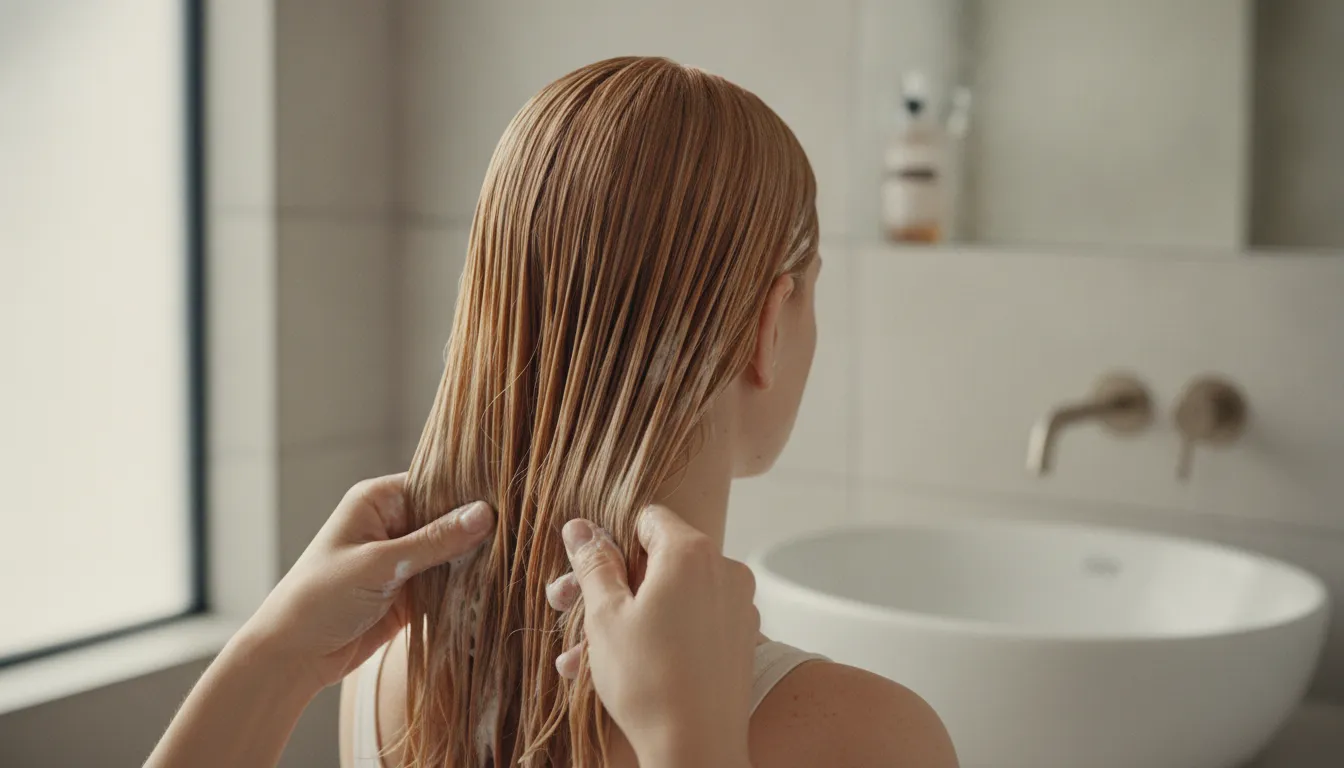
A measured post-color treatment
On treatment days, apply the Solanesse Deep Conditioner – Post Color Revitalizer to warm, damp hair and massage it from root to tip. If your scalp becomes oily easily or your hair loses lift, begin with less product and concentrate more attention on the lengths and ends. Hair density, porosity, and post-rinse feel should guide the amount. More product is not automatically more care, particularly for fine hair.
Leave the treatment on for 10-15 minutes, then rinse thoroughly. A complete rinse matters because residual conditioner can contribute to a coated or limp feel, while insufficient conditioning can leave the hair difficult to manage. Product information describes the treatment as supporting softness, shine, smoother frizz and flyaways, and weakened strands. These are product claims, not guarantees, and your result will depend on your hair’s condition and routine.
Choose a cadence your hair can support
Use the treatment weekly or as needed rather than forcing a fixed schedule. Weekly care may suit hair that feels persistently dry after color, while less frequent use may be enough when the hair already feels soft and buoyant. Reassess after rinsing and once the hair is dry: if it feels clean, flexible, and easy to detangle, the cadence is likely working. If it feels heavy, reduce the amount or space out applications. If it remains rough or fragile, review heat, brushing, and styling habits alongside your conditioning routine.
When Is a Deep Treatment Better Than Everyday Conditioner?
Everyday conditioner is designed for repeat use: it adds slip, improves manageability, and helps reduce the friction that makes fine strands feel tangled. A deep treatment has a different role. It stays on the hair longer and gives dry, stressed lengths a more concentrated conditioning step. For fine, color-treated hair, the better choice depends on how the hair feels after routine washing, not on the assumption that a richer product is always more effective.
If your lengths detangle easily and still have movement after rinsing, a lightweight conditioner may be enough for regular care. If they remain rough, dry, or unusually difficult to comb after coloring, an occasional treatment can add needed softness. A weekly hydrating mask or leave-in may provide additional hydration when fine hair still feels dry, although it is not a universal requirement. For more detail on intensive care after lightening, see this guide to a deep conditioner for bleached hair. For a broader treatment comparison, explore care for color-damaged hair.
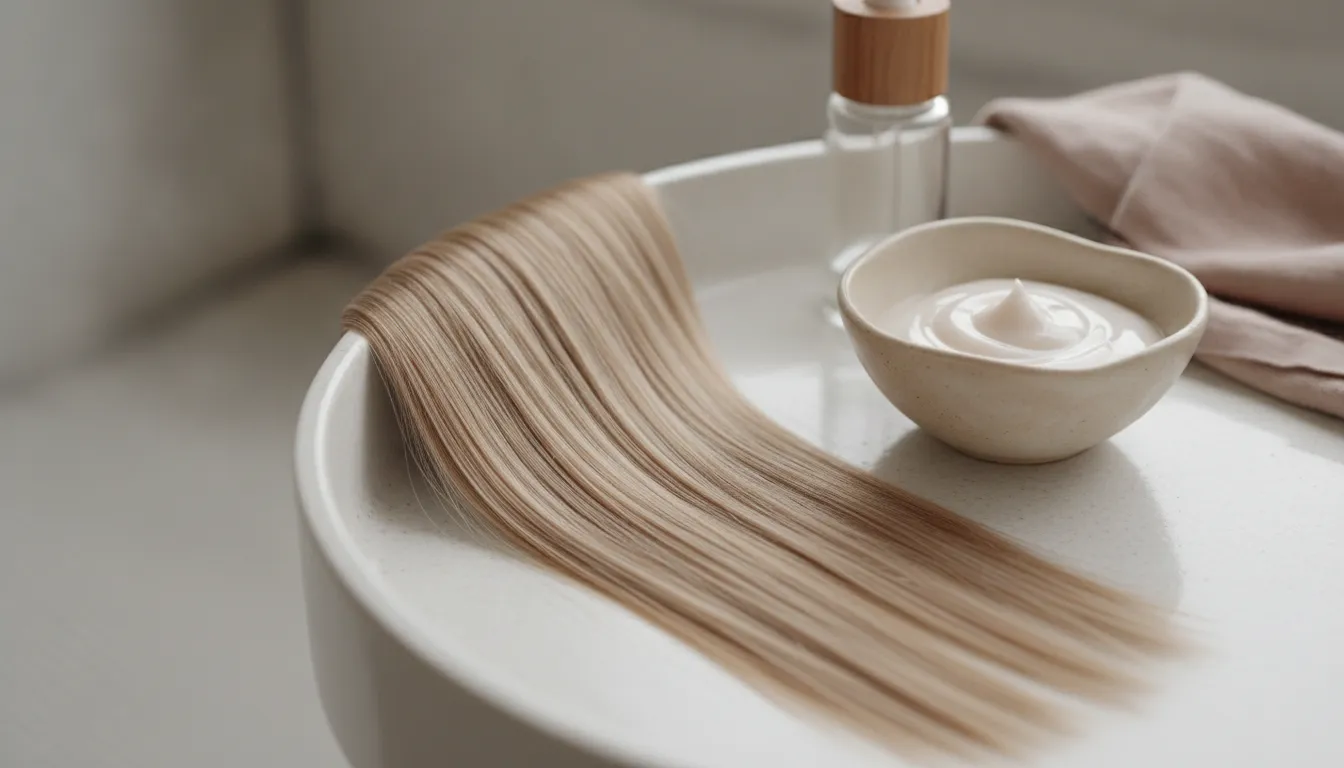
Use this comparison when deciding between everyday conditioner and a deep treatment.
| Consideration. | Everyday conditioner. | Deep treatment or mask. |
|---|---|---|
| Best use | Regular detangling, softness, and manageable movement. | Extra care when lengths remain dry or stressed. |
| Texture goal | Light slip without flattening fine hair. | More sustained softness, balanced against possible weight. |
| How often | As part of the normal wash routine. | Occasionally or weekly if the hair continues to feel dry. |
| Fine-hair check | Use enough for the lengths and rinse thoroughly. | Adjust frequency and amount if hair loses lift or feels coated. |
The Deep Conditioner – Post Color Revitalizer is intended for hair affected by coloring, bleaching, and chemical processing. Its product guidance recommends applying it to warm, damp hair, leaving it for 10 to 15 minutes, and rinsing thoroughly, weekly or as needed. Start modestly and assess the post-rinse feel. Fine hair should feel soft and flexible, not coated or limp.
Shop the Deep Conditioner – Post Color Revitalizer
Frequently Asked Questions
What is the best conditioner for fine hair that does not weigh it down?
Choose a formula that gives strands slip and softness without leaving a heavy coating. Start with a modest amount, work it through the lengths and ends, and adjust based on how your hair feels after rinsing. Fine hair still needs conditioning after color, but more product is not automatically better. A lightweight texture and careful placement can help preserve movement while reducing tangles.
How much conditioner should you use on fine, color-treated hair?
Begin with less than you think you need, then add only enough to distribute evenly through the lengths and ends. Your ideal amount depends on density, porosity, and the condition of your hair after coloring. If the roots feel flat or the hair becomes coated, use less and keep the product farther from the scalp. If the ends still feel rough after rinsing, increase gradually.
Should conditioner go on the roots or just the ends?
For many people with fine hair, the lengths and ends are the best starting points because they are more likely to feel dry and tangled. If your scalp becomes oily quickly, avoid applying rich conditioner directly at the roots. After coloring, distribute the product where the hair needs softness and slip, then rinse thoroughly rather than leaving excess product behind.
Can I use a deep conditioner after coloring fine hair?
Yes. A deep treatment can be useful when fine, color-treated hair feels dry, fragile, or difficult to detangle, but it should complement rather than replace your everyday routine. The Solanesse Deep Conditioner – Post Color Revitalizer is designed for hair affected by coloring, bleaching, and chemical processing. Apply it to warm, damp hair, leave it on for 10-15 minutes, and rinse thoroughly as directed on the product page.
Ready to Care for Fine Hair After Color?
A lightweight, controlled conditioning ritual can help you add slip and softness without leaving fine strands feeling weighed down. When your post-color routine calls for a focused treatment, shop the Deep Conditioner – Post Color Revitalizer. Apply it with attention to your hair’s density and rinse feel, so care stays tailored to what your strands need.


