


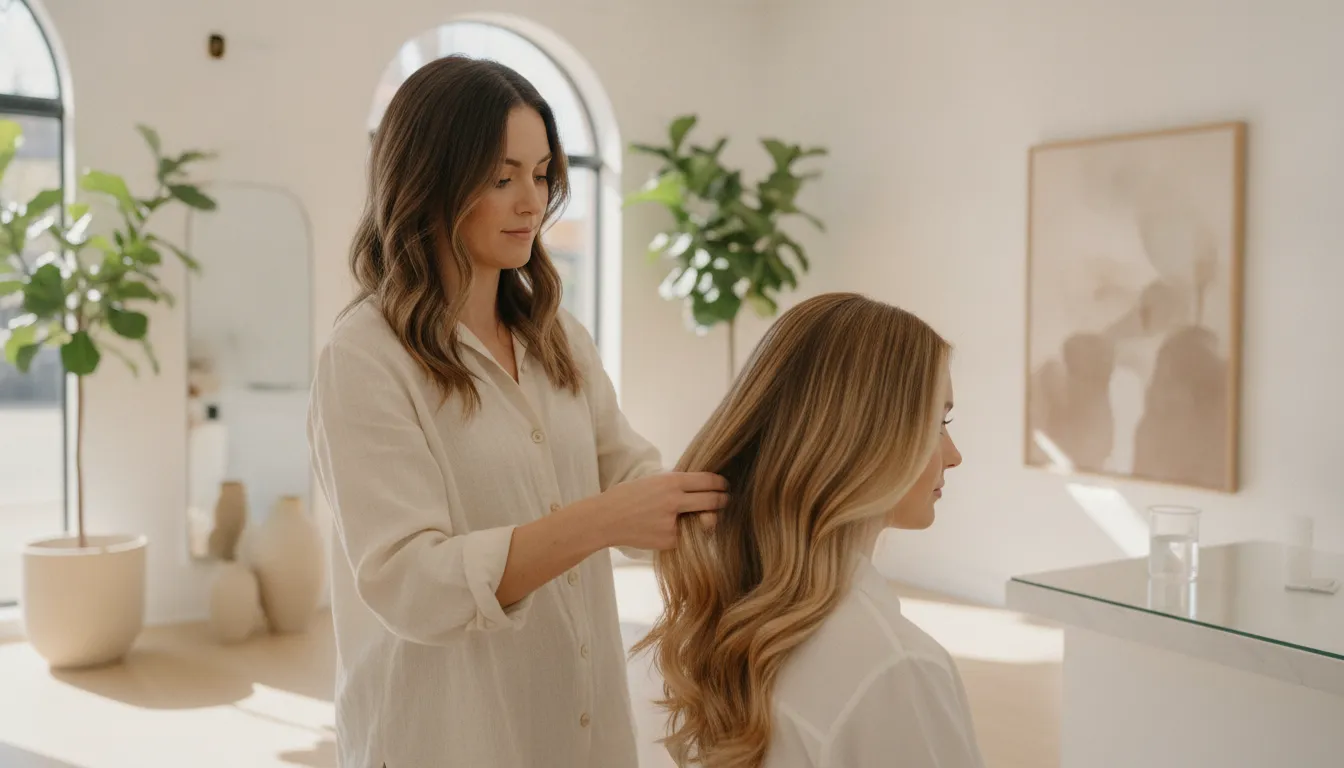
An unwanted shade can look like one simple problem, but its color may be sitting on the hair surface or formed deeper within the strand. That difference changes what a cautious correction can realistically do.
Shop the Deep Conditioner – Post Color Revitalizer
How to remove hair dye safely depends on the dye type and the hair’s history. Temporary and direct dyes sit mainly on the cuticle. Permanent oxidative color forms larger dye molecules within the cortex, so each type needs a different approach. Professional hair-color education describes these differences. It does not make a home method universally safe or guarantee complete removal. Follow product directions, avoid mixing dyes, and ask a colorist about a complex correction.
Start by identifying whether the color was temporary, semi-permanent, demi-permanent, or permanent, then consider what has already been done to the hair. Understanding where the color sits helps set realistic expectations before deciding whether gentle fading or professional correction is the more prudent path.
For another perspective on how color changes hair, read our guide to hair dye and hair structure.
What Actually Determines Whether Hair Dye Can Be Removed?
Whether color can be removed depends first on the dye chemistry and then on the hair’s color history. Temporary and other direct dyes mainly sit on or near the cuticle. Oxidative demi-permanent or permanent color can penetrate farther into the hair and form larger colored molecules in the cortex. Because those pigments are held in different places and ways, one removal approach cannot be expected to work equally on every shade or formula.
Hair dyes are broadly described as oxidative or nonoxidative. Temporary dye adheres superficially and does not penetrate the cortex; semi-permanent dye can coat the cuticle and partly enter the cortex. Permanent dye penetrates into the cortex, where oxidation changes colorless precursors into larger colored molecules that are less likely to diffuse back out. A cosmetology education text describes these differences and why the dye type matters to removal.
| Color type | Where the color sits | Practical implication |
|---|---|---|
| Temporary or direct | Mostly on or near the cuticle. | Use only a remover labeled for that color type. |
| Semi-permanent | Can coat the cuticle and partly enter the cortex. | Check the product directions or ask a colorist. |
| Demi-permanent or permanent oxidative | Small molecules enter the cortex and form larger color molecules. | Correction depends on hair history and may need a professional assessment. |
That distinction helps explain why fading is not the same as removal. With fading, visible color becomes less intense, but some pigment can remain. Removal aims to reduce or alter the artificial color more substantially, and the process needed depends on the dye type. A direct dye near the surface may respond differently from oxidative pigment inside the hair fiber. Neither category guarantees a clean return to the original shade.
Hair history matters, too. Previous dye, lightening, or other chemical processing can affect the starting color and condition, so the same product may not produce the same result on two people. A colorist needs to know what has been applied, including approximate shades and whether the hair has been bleached or recolored. That context helps determine whether a gentle fade, a targeted correction, or no further chemical processing is the more sensible route.
Bleach is not simply another name for dye removal: lightening changes the hair’s natural pigment, while correction addresses unwanted artificial color. Read more about how dye removal differs from bleach. Knowing the chemistry can set realistic expectations, but it cannot predict an exact result without assessing the product and hair in front of you.
How Can You Remove Temporary or Direct Dye More Gently?
For temporary or direct dye, start with the product label and identify the dye type before choosing a removal product. Some color may fade gradually with washing, but the amount and pace vary; fading does not guarantee that every trace will disappear. If the label is unclear or the color result is unexpected, ask a qualified colorist before trying a stronger correction.
Check whether the color is described as temporary, direct, or semi-permanent, and look for removal or aftercare directions from that product’s maker. A remover specifically formulated for direct or semi-permanent color may be an option. Follow its instructions exactly, and do not combine it with another dye or remover. The FDA advises consumers to follow hair-dye directions and warns that mixing different hair dye products can harm the hair and scalp. See the FDA’s hair dye safety guidance.
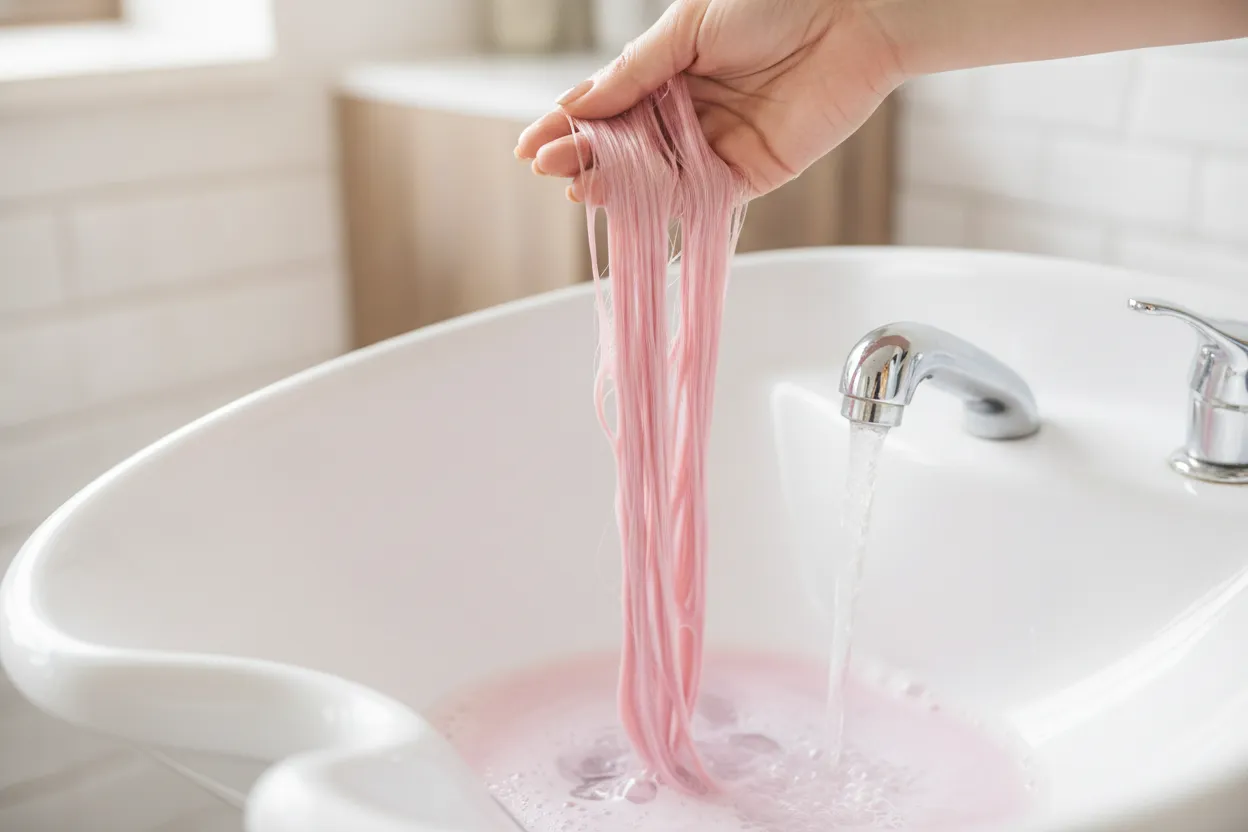
Avoid home bleach and household mixtures, including baking soda or vitamin C recipes. Repeated aggressive washing is not a reliably gentle shortcut either. These approaches can be difficult to control, and combining products goes against the FDA’s warning. Do not extend processing time or repeat an application beyond the product label to chase a faster result.
If you choose a labeled remover, read its cautions first and use it only as directed. Stop and seek professional advice if the instructions do not fit your dye history. If you are unsure what is in your hair, or if your hair or scalp already feels compromised. Do not treat conditioning as color removal: a conditioner may support post-color care, but it will not take pigment out. For routine washing after coloring, see this guide to care after the first wash following hair coloring.
The gentler choice is usually the one that avoids stacking uncertain treatments. Allow for gradual change, reassess the color in natural light, and consult a colorist if you need a more predictable correction rather than escalating at home.
How to Remove Hair Dye When the Color Is Permanent
Permanent color is harder to shift than a temporary stain because oxidative dye forms colored molecules inside the hair shaft. A qualified colorist should assess your hair history and condition before choosing a controlled correction plan. Trying to force a fast change at home can make the result less predictable.
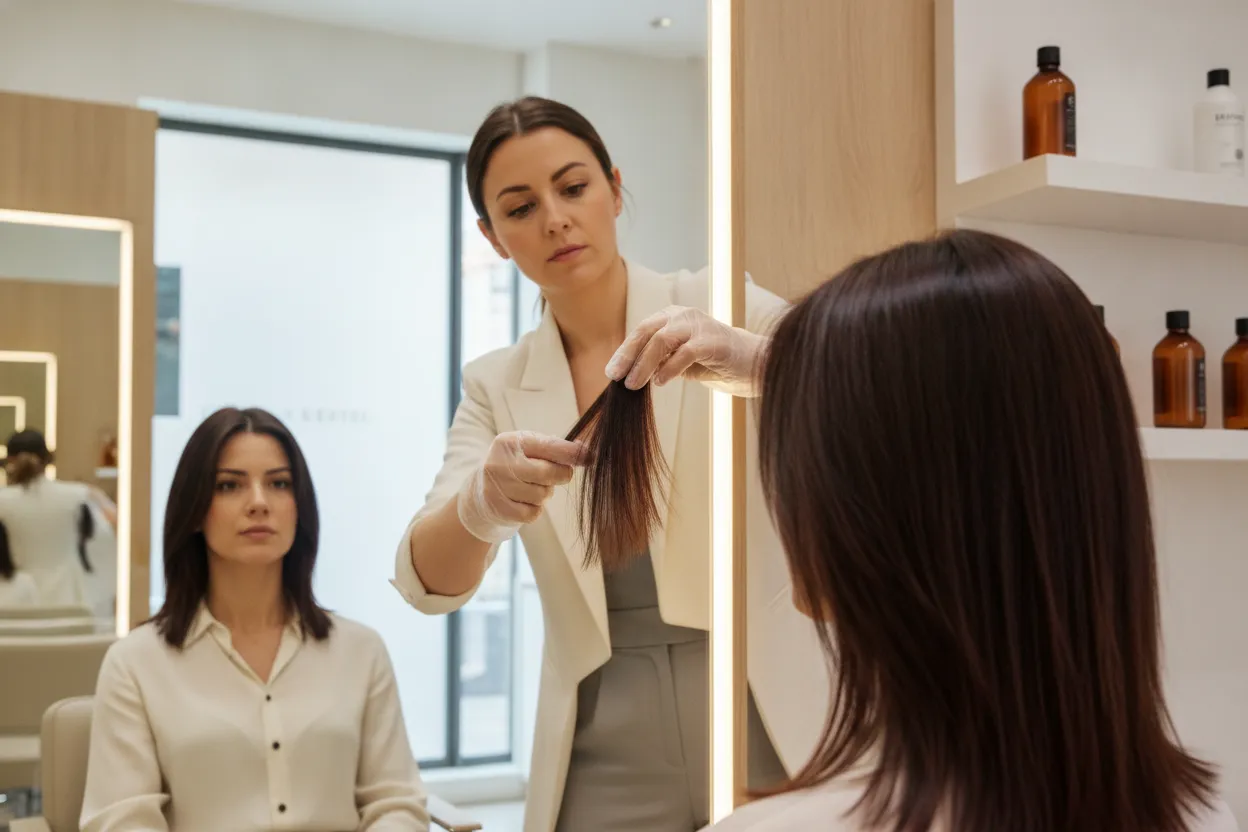
In permanent coloring, dye precursors enter the hair and oxidize into larger colored molecules that remain in the cortex. That is why fading or removing the visible shade may involve more than washing it out. The professional decolorization overview explains how colorists approach decolorization; it is not a set of home-use directions.
A colorist can review the shade you want, the color products used previously, and any lightening or other chemical services. Bring the product names or photographs of the packaging if you have them, and be candid about previous color at home or in a salon. These details help the colorist understand what is on the hair before proposing a correction. They may assess a strand and choose an approach based on how the hair responds.
The plan can involve several controlled steps or appointments, with the next step adjusted after seeing the result. The realistic goal may be a more wearable shade or a gradual transition, rather than an immediate return to your original color. Ask what the first appointment is intended to achieve, what condition-related limits could change the plan, and when it makes sense to pause rather than continue processing. Exact timing and outcome depend on your hair and color history, so a careful colorist should explain uncertainties before starting instead of promising a specific result.
Permanent dye correction and bleach are related but not interchangeable. Permanent color can lighten some natural pigment as it deposits new color, while decolorization focuses on lifting pigment. Read how dye removal differs from bleach before assuming a stronger lightening process is the right fix. A professional can explain which service, if any, suits your starting point.
Laboratory research on synthetic dye removal is not evidence that a research method is a consumer product or safe at-home option. Do not use a paper as a recipe. Follow product labels and avoid mixing different hair dye products, which the FDA advises against. If you have a history of reactions, do not reapply dye without appropriate professional advice.
Which DIY Color-Removal Methods Can Backfire?
Trying several aggressive fixes in sequence can make the result harder to predict, not easier to control. Hair color responds differently depending on the dye type and the condition of the hair. So a harsh wash, bleach, or remover should not be treated as a universal reset.
Home bleach is especially risky as a shortcut. In the case of direct dyes. An educational cosmetology text warns that lightening can open the cuticle and drive some color molecules deeper into the cortex, making them more difficult to remove. Bleaching or lightening can also strip the hair fiber’s protective coating, leaving the shaft weaker and more susceptible to damage, according to Cleveland Clinic. These outcomes are not guaranteed for every product or head of hair, but they are reasons not to improvise with bleach.
Repeated harsh washing is not a reliable color-correction plan either. It may add another stressful process without addressing how the pigment was deposited. Likewise, avoid mixing household ingredients or combining products based on online recipes. Without knowing how a formula interacts with your dye and hair history, the result can be uneven or require further correction. Do not overlap remover, bleach, or other chemical processes in an attempt to speed things up.
Even a product designed for color removal can be misused. Some removers can affect natural melanin in uncolored hair, so precise application matters. Follow the product label exactly, including its warnings and directions, rather than extending or repeating a process on your own. If you are unsure which color you used, or where the artificial color remains, pause and ask a professional colorist before applying anything else.
Stop if your scalp becomes irritated or your hair feels compromised, such as unusually weak or fragile. A colorist can assess the dye history and hair integrity before recommending a next step. For background on how hair dye can affect hair structure, see our related guide.
When Should You See a Professional Colorist?
Consult a professional colorist before attempting removal if you cannot identify the dye or its history, want a major color change, or see dark, uneven, or banded results. A consultation is also prudent after repeated chemical services, prior lightening, henna or metallic-salt products, or when your strands seem fragile or are breaking. These are reasons to get an assessment, not diagnoses or guarantees that a correction will cause damage.
Color products do not all behave alike. Temporary and semipermanent direct dyes may stain or sit within the cuticle, while oxidative demi-permanent and permanent colors form color molecules within the cortex. That difference affects which correction options may be suitable. A colorist can review product labels and your service history, assess the hair, and discuss whether the result you want is realistic. If you still have the packaging, bring it, along with the names of any color, bleach, or other chemical services you remember. Professional decolorization guidance describes consultation and hair analysis as an initial step.
Ask what the proposed process can and cannot achieve, how it may affect the existing color, and whether the plan may need more than one step or appointment. A gradual correction may be more realistic than reaching a specific shade in one visit. Color removal can involve different methods, including removers and lightening processes. So do not assume that a salon service is risk-free or that one approach fits every dye history. The FDA advises consumers to understand hair-dye risks and follow the product label directions: FDA guidance on hair dye and hair relaxers.
Before deciding what to do next:
- Write down the color products and chemical services you remember using.
- Bring product names or packaging to a colorist and describe the shade you want.
- Ask what the proposed correction can realistically achieve before agreeing to another process.
A colorist consultation is not a substitute for medical care. If dye use is followed by scalp redness, itching, scaling, or blisters, contact a medical clinician for advice. Cleveland Clinic recommends evaluation by a dermatologist or primary care clinician when symptoms are severe or last longer than two days. For eye exposure or an urgent reaction, seek prompt medical help.
What Should You Do After a Color Correction?
After a color correction, give your hair a pause. Follow the colorist’s aftercare advice and each product’s directions. Focus on gentle conditioning rather than another chemical process. A correction can involve several steps or appointments. Ask your colorist what was done, what result to expect, and when it is appropriate to color or lighten again. The details depend on the formula and your hair’s condition. A general online routine cannot replace those instructions.
For routine care, choose a conditioner suited to your hair and handle wet lengths gently. Use any colorist-recommended treatment as directed. Do not layer on products to change the result. The FDA advises people to follow hair-dye label directions, heed warnings, rinse the scalp after dyeing, and never mix different hair dye products. Read the FDA hair-dye safety guidance. If you are unsure about washing or product compatibility, ask the colorist instead of guessing. Keep product names and care instructions for any follow-up appointment.
Solanesse Deep Conditioner – Post Color Revitalizer is a conditioning option for after coloring or other processing, not a color remover. It does not remove unwanted pigment or guarantee repair. The product directions are to apply it to warm, damp hair, leave it on for 10-15 minutes, then rinse thoroughly. Read the label and use it only as a conditioning treatment.
Once the correction is complete, your goal may shift from removing color to maintaining the shade you chose. Our guide to preventing unwanted color fade covers color-care habits; those tips are for preserving color, not removing it. If the result still feels wrong, check back with your colorist before attempting another at-home chemical step. A short conversation can clarify what is realistic. It can also help you plan the next service without rushing.
Shop the Deep Conditioner – Post Color Revitalizer
Frequently Asked Questions
Can I remove hair dye at home without bleach?
Sometimes, but the safest option depends on the dye and your hair’s condition. Direct or semipermanent color may respond to a remover formulated for that dye type; follow its label exactly. For permanent color, a home treatment may not deliver the result you want, so ask a colorist before trying another process.
Does fading mean the dye has been removed?
No. Fading means the color looks less intense, while removal aims to reduce artificial pigment more substantially. Direct dyes can stain or sit in the cuticle, while oxidative permanent and demi-permanent dyes form color molecules within the cortex. Those differences affect what a correction can achieve. Learn more about how dye types differ.
Are natural methods a safe way to get hair color out?
There is no one-size-fits-all household recipe that can reliably remove artificial color without risk. Avoid mixing household ingredients or repeating harsh stripping routines. If you use a product made for color removal, follow its directions and keep it to the colored areas. Removal products can also affect natural pigment in uncolored hair.
Can permanent hair color be removed in one appointment?
Not always. A colorist first assesses the dye type and hair condition, then explains realistic options. Permanent-color correction may require multiple steps or appointments, depending on the existing color and your goal. For dark, uneven, or previously processed hair, get a professional assessment before attempting another chemical treatment. The decolorization guidance discusses consultation and staged correction.
Choose Conditioning After Color Correction
After a color-removal or correction service, a conditioning step can support your after-color routine without changing the pigment. Solanesse Deep Conditioner – Post Color Revitalizer is a conditioning treatment, not a dye remover or a guarantee of repair. Explore the product and its use instructions.
For another perspective on how color changes hair, read our guide to hair dye and hair structure.
When you are unsure what to do next, ask a qualified colorist to assess your hair before another chemical process.


