


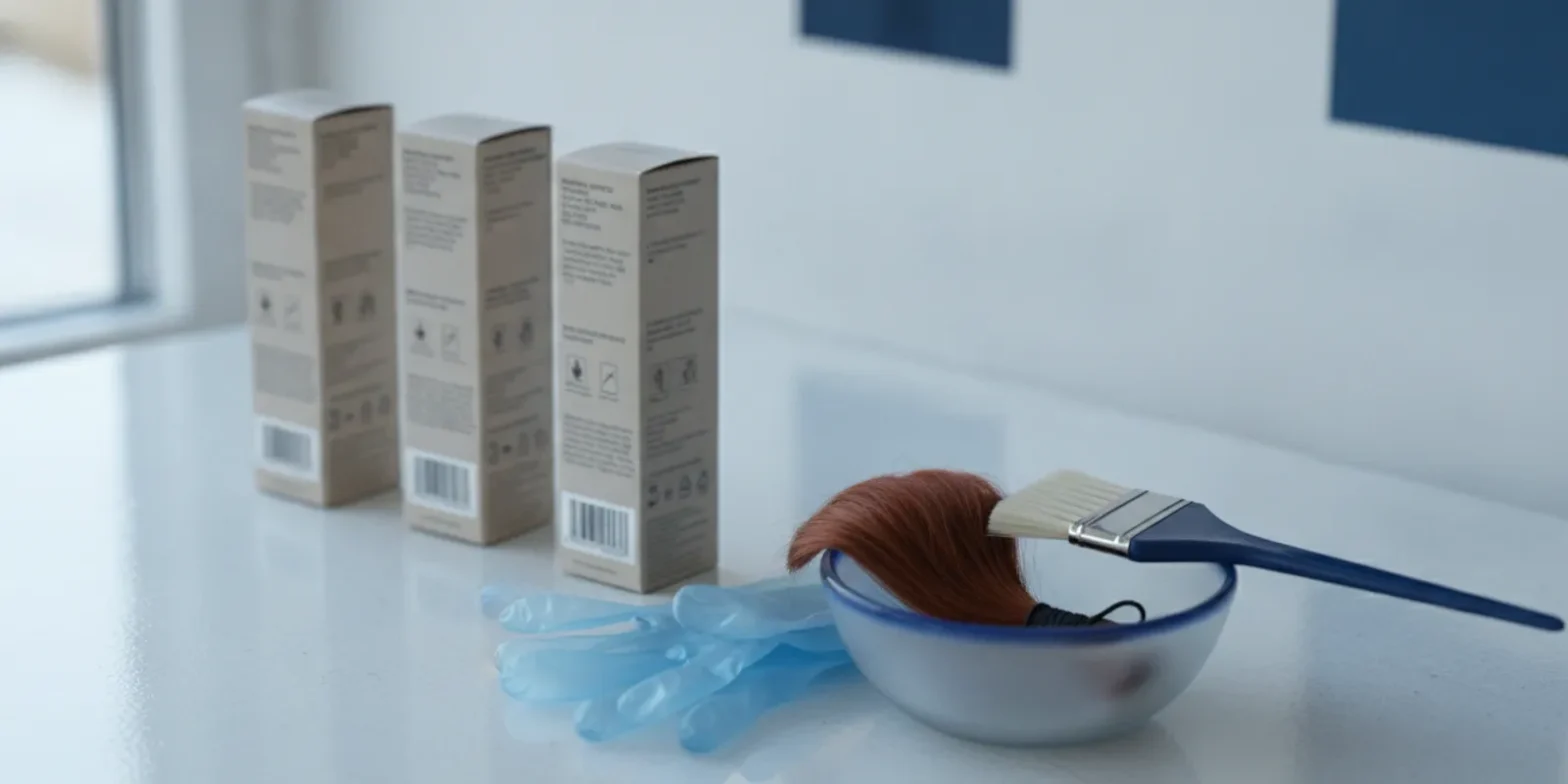
Choosing PPD free hair dye can feel like a simple label search, but the ingredient list and safety directions matter as much as the front-of-box claim. PPD is a common hair-dye ingredient that can cause allergic reactions in some people. A product that does not contain it may still contain other colorants that can irritate or trigger an allergy. The goal is to understand what the label says, choose a formula that fits your needs, and test carefully—not to assume that any dye is risk-free.
Ask us about a post-color care routine
What does PPD-free mean?
PPD is short for p-phenylenediamine, an ingredient used in many permanent oxidative hair dyes. It helps create lasting color through a chemical process that develops color inside the hair shaft. You may see the name written as p-phenylenediamine in an ingredient list. The abbreviation PPD is commonly used in product descriptions and consumer discussions.
A PPD-free claim means the product is represented as being made without that specific ingredient. It does not mean the dye contains no colorants, is suitable for every person, or cannot cause irritation or an allergic reaction. Formulas differ: one may use a different oxidative dye intermediate, while another may deposit color more temporarily. Check the full ingredients and directions for the exact product rather than relying on a shade name or a general description of the product type.
PPD-free is also not the same as ammonia-free. These terms refer to different ingredients and formulation choices. A product can be free of PPD but contain ammonia, or be ammonia-free and contain PPD or another dye ingredient. Read each claim separately and verify it against the ingredient list and manufacturer instructions.
How can you check a PPD-free claim?
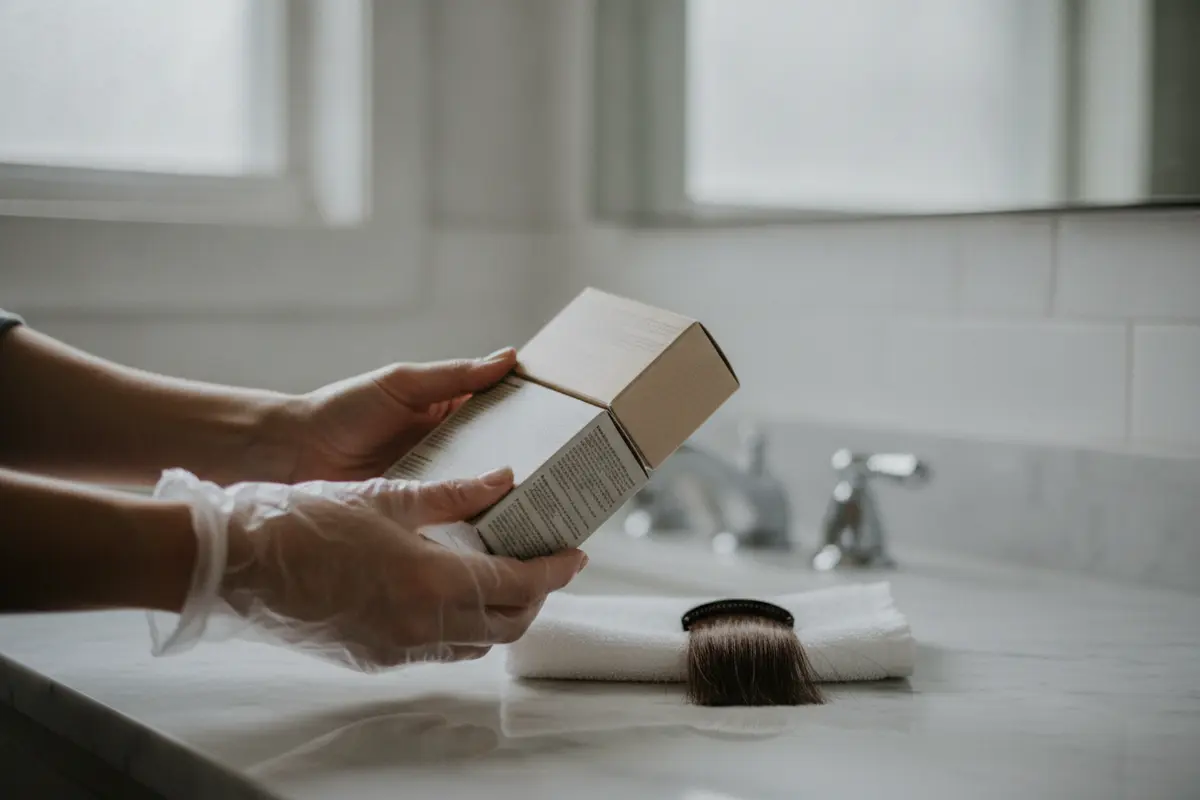
Start with the complete ingredient list on the package or manufacturer’s product page. Search for “p-phenylenediamine” and “PPD,” but do not stop after finding one absent ingredient. Hair color kits may have more than one component, such as a color cream and a developer. Review the directions, warnings, and ingredients for every component included in the kit.
- Read the exact product label. Do not assume that every shade or product in a brand’s range has the same ingredients.
- Check the whole kit. Look at the colorant, developer, and any other included preparation product.
- Look for alternate dye names. Toluene-2,5-diamine (often abbreviated PTD or PTDS) is a different dye ingredient from PPD, but it is not a guarantee of safety for someone with a dye allergy.
- Read every warning. Follow the product’s restrictions and allergy-alert test instructions, not just the marketing copy.
- Ask the manufacturer if details are unclear. Keep the product name and shade handy so you can ask about the exact formula.
Do not infer that a product is PPD-free simply because it is described as natural, gentle, clean, salon-inspired, or ammonia-free. Those phrases do not answer whether a specific ingredient is present. If an ingredient list is missing, incomplete, or hard to interpret, pause and seek clarification before using the dye.
A quick label check works best as a deliberate pass rather than a glance at the front panel. First, match the exact shade and format you plan to buy. Next, locate the ingredient information for each container in the kit and look for both the full ingredient name and the abbreviation. Then read the allergy warning and directions from start to finish. If the product page and box appear to disagree, do not guess which one is current. Ask the manufacturer to confirm the formula for that precise product and shade before opening it.
For example, a box might prominently say “PPD-free” while the fine print names a different oxidative dye. That does not automatically make the claim false; it means the claim has a narrow meaning. It answers whether PPD is included, not whether the substitute is appropriate for a person with a history of dye allergy. Keep the package or save a photo of the ingredients so you can discuss the exact formula with a qualified clinician if needed.
What ingredients may appear instead of PPD?
Some oxidative formulas use related color ingredients, including toluene-2,5-diamine or its sulfate form. These are not simply another name for PPD, but some people who react to PPD may also react to related dyes. A PPD-free claim therefore cannot establish that a product is suitable for someone with a prior hair-dye allergy. An ingredient substitution is a reason to read carefully, not a personal safety clearance.
Other products use direct dyes or semi-permanent colorants that work differently from permanent oxidative dyes. They may fade with washing and may not provide the same coverage or longevity as a permanent formula. However, “semi-permanent” does not mean “allergy-free.” The individual ingredients still matter, and a person can react to many substances beyond PPD.
Plant-derived color products also need a complete ingredient check. “Henna” can refer to different products and mixtures; do not assume a product is pure henna or free of added dyes based only on its name or imagery. Be especially cautious with products advertised as “black henna” for temporary skin designs: they may contain PPD and can cause a reaction. If you have had a reaction to hair dye or a temporary tattoo, speak with a dermatologist or other qualified clinician before trying another coloring product.
When comparing formulas, separate the color result you want from the ingredient question you need answered. A permanent product may be chosen for longer-lasting color, while a direct or semi-permanent product may be chosen for a different type of deposit or a shorter-lived result. Neither format can be declared safer for a particular person from the product category alone. A simple comparison helps keep those questions distinct:
| Product description | What it may tell you | What to verify |
|---|---|---|
| PPD-free permanent dye | The product claims not to use PPD; it may use another oxidative dye ingredient. | All ingredients, alternate dye names, kit components, warnings, and allergy-alert test directions. |
| Ammonia-free dye | The formula claims to omit ammonia. | Whether PPD or other colorants are present. Ammonia-free does not mean PPD-free. |
| Semi-permanent or direct dye | Color is deposited differently and may not last as long as permanent color. | Every colorant and precaution. A different dye process is not a guarantee against allergy. |
| Plant-based or henna-labeled color | The product uses or emphasizes a plant-derived ingredient. | The complete formula and whether other dyes or additives are included. |
Why does patch testing still matter?
Patch testing matters because a PPD-free label is not a prediction of how your skin will respond to the rest of a formula. Dye products can contain other ingredients that may cause irritation or an allergic reaction. Skin sensitivity can also change over time. A test performed previously, or a successful result with a different product, does not guarantee that a new formula will be tolerated.
Follow the allergy-alert test included with the exact product you plan to use, at the timing and in the manner specified by its manufacturer. Do this before each use when the instructions say to, even if you have used the product before. Do not improvise a different test or apply the full dye to your hair first. Keep the package instructions available so you can follow the exact steps and observe the specified waiting period.
Make testing a planned step, not something squeezed in just before coloring. Read the instructions early enough to complete the test and wait for the full period stated by the manufacturer before deciding whether to proceed. Use only the method described for that product; do not substitute a test from another brand or a generic online instruction. If the instructions are missing or unclear, contact the manufacturer rather than inventing a procedure.
A patch test can help identify a possible reaction, but it cannot guarantee that no reaction will happen during or after full use. Do not use the product if a reaction appears during the test. If you have previously experienced a reaction to hair dye, do not treat a home patch test with a different dye as a substitute for medical advice. A dermatologist can assess possible hair-dye allergy and discuss appropriate testing and alternatives.
It can help to keep a simple record: product name, shade, date of the test, ingredients, and what you observed. If you notice an unexpected response, note when it started and what areas were affected, and keep the packaging. This record does not diagnose an allergy, but it gives a clinician concrete information and helps you avoid relying on memory when comparing products later.
For background on how different dye formulas are evaluated, a published study examined a specific MEA-based, ammonia-free cream hair color that did not contain PPD or resorcinol. Its findings apply to the tested product and study conditions; they do not establish that all PPD-free formulas are safe for everyone. Read the study on that specific hair color formula.
What should you do if a test or color causes a reaction?
Stop and do not apply the dye if the allergy-alert test causes redness, itching, swelling, or another unexpected skin response. If you are already using a product and your scalp or skin starts to burn, itch, or swell, follow the package’s removal instructions and stop exposure. Do not try to push through a reaction or cover it with another product.
Seek prompt medical advice for a significant or persistent reaction. Swelling of the face, lips, tongue, or throat, trouble breathing, faintness, or rapidly worsening symptoms can be an emergency; seek emergency care immediately. Keep the product packaging or ingredient list to share with a clinician. That can help identify what was used without guessing at the cause yourself.
After a suspected allergy, avoid re-challenging yourself with the same dye or a related ingredient before you have received professional guidance. “PPD-free” does not necessarily mean appropriate for someone whose reaction history is unknown. A clinician may recommend formal allergy evaluation and explain how to read future labels for your individual situation.
How do you choose a dye with more confidence?
Use a short, repeatable checklist instead of relying on one reassuring phrase on the box:
- Define your priority. Decide whether you need lasting coverage, a temporary refresh, or a specific ingredient exclusion. These are different goals.
- Compare complete formulas. Review every component and the exact shade, not only a brand’s general product page.
- Identify related ingredients. If you are avoiding PPD because of a prior reaction, do not assume PTD/PTDS or another alternative is safe for you. Ask a qualified clinician.
- Check product directions. Confirm that you can meet the allergy-alert test, timing, and use precautions before buying or applying it.
- Keep a record. Save the brand, shade, ingredient list, and any reaction details. This makes future conversations with a clinician more precise.
Turn those steps into a decision path. If your only goal is to avoid PPD, verify that the exact product and every kit component do not list it, then review all other directions and ingredients. If you have had a reaction to hair dye, do not use a PPD-free claim as the deciding factor; pause and get clinician guidance about the specific alternative ingredients. If you cannot confirm what is in the formula, choose not to use it until the manufacturer clarifies. If you do not have a known reaction history, still follow the product’s complete instructions and allergy-alert test requirements.
Before purchase, consider practical fit as well as the ingredient list. Ask whether the color format suits your coverage and longevity needs, whether you can follow the test and application directions exactly, and whether the label gives enough detail to make an informed choice. A product that does not meet those basic needs is not a better choice simply because one claim sounds reassuring. When in doubt, the safest next step is more information—not testing a formula on your full scalp or hair.
For general background on color chemistry and aftercare, see Solanesse’s guides to how hair dye works and what to know about dye and hair condition. For readers comparing color approaches, our overview of hair dye versus bleach explains that these processes are not interchangeable.
How can you care for hair after coloring?
Choosing a formula and caring for the lengths afterward are separate parts of a color routine. Once you have followed the dye’s safety directions and rinsed as instructed, handle wet hair gently. Use a conditioner suited to your hair’s needs, detangle without force, and limit unnecessary heat or rough towel friction if your strands feel fragile. A conditioner can improve feel and manageability; it does not reverse an allergic reaction or guarantee that hair will not break.
Color-treated hair may feel dry, rough, or less smooth after a service. Notice what is changing: Is the issue mainly tangling, a dry feel, or breakage? If breakage or scalp discomfort continues, consider pausing further chemical processing and asking a qualified hair professional or clinician for guidance. Avoid layering additional chemical treatments over an irritated or uncomfortable scalp.
A useful after-color routine is specific but gentle. Rinse according to the dye instructions, then follow with conditioning care appropriate for the lengths. When detangling, begin at the ends and work upward rather than pulling through knots from the roots. If you use heat styling, consider whether you can reduce the frequency or temperature while hair feels rough or fragile. These are care choices for the hair fiber; they are not substitutes for medical advice about an itchy or swollen scalp.
Solanesse focuses on care after coloring, not on choosing or applying hair dye. Its Science & Ingredients page describes the brand’s approach to ingredients, while its post-color hair repair guide offers broader care context. For a simple routine, explore ways to care for hair after coloring and habits that help maintain color. These general care steps are not allergy treatment.
For an at-home conditioning step after a color service, learn about the Deep Conditioner Post-Color Revitalizer. It is a hair-care product, not a hair dye, allergy test, or medical treatment. Review its product information to decide whether it fits your routine.
Explore post-color conditioning care
Frequently Asked Questions
Is PPD-free hair dye completely allergy-free?
No. PPD-free means the product claims to omit PPD; it may contain other ingredients that can irritate skin or cause an allergic reaction. Follow the product’s test instructions and consult a clinician if you have a history of reactions.
Can someone allergic to PPD use PTD hair dye?
Not automatically. PTD or PTDS is a different ingredient, but some people with PPD allergy can also react to related dyes. Ask a dermatologist or qualified clinician before trying a product with an alternate dye ingredient.
Does ammonia-free mean PPD-free?
No. The terms refer to different formulation claims. Check the complete ingredient list to determine whether a particular product contains PPD or another dye ingredient.
Can a patch test guarantee that I will not react?
No. A patch test is a precaution that may reveal a reaction before full application, but it cannot guarantee a reaction will not occur. Follow the exact product directions, and seek medical advice if you have reacted to hair dye before.
Choose with care, then care for your color
A PPD-free claim is a useful starting point, not a complete safety assessment. Read the full formula, understand which dye ingredients may be used instead, and follow the product’s allergy-alert test instructions every time they apply. If you have a history of reaction, get medical guidance before experimenting. Then build a gentle post-color routine that supports the feel and manageability of your hair without confusing conditioning care with allergy prevention.


