



Color can leave hair looking polished while making the fiber more vulnerable underneath. Lightening and chemical coloring alter the hair’s structure, so the right oil should support softness and shine without adding weight or encouraging buildup.
Shop the Deep Conditioner Post-Color Revitalizer to protect your color while you rebuild strength.
The best hair oil for color treated hair is usually a lightweight, color-safe formula used sparingly on damp mid-lengths and ends. Oils primarily act as emollients, helping lubricate the shaft and improve shine, while a smooth cuticle can help keep color molecules contained. For the science behind structural changes caused by coloring, see this PubMed review.
The distinction between a helpful finish and a dulling layer comes down to oil type, hair porosity, and timing. Understanding how color-treated hair responds differently to oil makes it easier to choose a formula and build a post-color ritual that preserves both vibrancy and manageability.
Why Color-Treated Hair Needs Oil Differently
Coloring and bleaching change more than the shade of your hair. To reach the cortex, chemical services swell and lift the cuticle, then alter the fiber’s internal structure. Research on cosmetic hair treatments finds that bleaching and coloring can significantly impair hair’s structural properties, which helps explain why freshly colored lengths feel rougher and drier. A study indexed by PubMed also found that targeted protein and polysaccharide treatments reduced structural damage and improved resistance and luster after washing.
That altered surface changes how your routine behaves. Color-treated hair is typically more porous, so it can absorb conditioning products quickly, including oil. The result may be helpful softness at first, but an oil that is too heavy or applied too generously can leave the hair coated rather than supple. Porosity also means the cuticle is less effective at holding onto moisture and color, making the balance between nourishment and buildup especially important.
Oil supports the outer fiber
Most hair oils work first as emollients. They lubricate the shaft, improve slip, and add surface shine rather than repairing every layer of the fiber. By smoothing and coating the cuticle, an appropriate oil can reduce the rough feel that often follows chemical processing. It also helps create a more even surface, so light reflects cleanly instead of scattering across raised cuticle edges. The underlying oil science is reviewed in this academic overview of hair oils and their emollient properties.
Why application matters for color longevity
A smoother, better-conditioned cuticle is less likely to release moisture and color as quickly as a dry, raised one. That does not make oil a substitute for a color-safe cleanser or a restorative conditioner. But it gives oil a practical role in preserving the feel and appearance of treated lengths. Use a small amount where porosity is highest, usually through the mid-lengths and ends, and adjust based on how quickly your hair absorbs it.
- Fine, porous hair usually needs a lighter layer than dense, highly textured hair.
- Dryness calls for consistent conditioning, not necessarily more oil.
- When your hair feels coated or looks flat, reduce the amount before adding another product.
For a more complete treatment, consider incorporating nourishing oils into a deep-conditioning step, where hydration and surface lubrication can work together.
The Best Hair Oil for Color Treated Hair: What to Look For
The right formula should support softness and shine without leaving a film that makes freshly colored hair look flat. Start with texture. Lightweight oils and fast-absorbing serums are usually easier to control on fine or color-treated strands because they add slip and polish without excessive weight. Apply a small amount first, then increase only if your mid-lengths and ends still feel dry.
Look for a product that clearly states it is color-safe. That label should signal that the formula is designed to fit into a color-care routine, rather than relying on aggressive cleansing or ingredients that leave hair feeling stripped. A color-safe oil is not a substitute for gentle shampoo, but it can help reduce the friction and dryness that make a fresh color service look less polished.
Choose a cuticle-smoothing formula
Color and lightening services can compromise the hair’s structure, so the most useful oils help the surface feel smoother. Oils primarily act as emollients, lubricating the shaft and improving shine. A formula that coats and smooths the cuticle can also help keep the surface more uniform, which makes light reflect evenly and helps pigment appear richer for longer. Think of oil as a finishing layer, not a repair claim.
There is some useful evidence for argan oil in color care. In a peer-reviewed study of rinse-off conditioners, an argan oil formulation retained bleached color and improved tensile strength compared with a camellia oil formulation. The study does not mean every argan product will produce the same result, but it supports looking for well-formulated argan-based products when softness and color appearance are priorities. Read the Springer study.
Keep the finish light and buildable
Heavy application is a common reason oil does not work well for fine, color-treated hair. Begin with one or two drops warmed between your palms, and concentrate on the driest areas rather than saturating the scalp. If the result feels greasy, dull, or difficult to wash out, the formula or amount is not suited to your hair’s current needs. Argan oil is valued for its fatty acids and vitamin E, which can help smooth the cuticle and enhance shine. Medical News Today explains argan oil’s reported benefits.
- Lightweight texture: Choose a fast-absorbing oil or serum that leaves movement rather than a coated finish.
- Color-safe positioning: Look for clear compatibility with color-treated hair and a gentle overall routine.
- Cuticle support: Favor formulas that smooth the surface and help seal in moisture.
- Gentle cleansing: Avoid pairing your oil with sulfates or harsh cleansers that can strip away moisture and make color look less vibrant.
- Controlled use: Start with a small amount on damp or dry mid-lengths and ends, then adjust based on porosity and density.
The best choice is the one that leaves your hair supple, reflective, and clean-feeling after styling. Texture, application amount, and the gentleness of the rest of your routine matter as much as the oil named on the label.
Argan, Jojoba, and Other Lightweight Oils That Protect Color
Color-treated hair usually benefits from a light touch. The right oil can improve slip, soften a rough cuticle, and add reflective shine without leaving a film that makes carefully maintained color look flat. Because porous, processed strands can absorb products quickly, start with a small amount and build only where the hair feels dry.
Argan oil: softness with a polished finish
Argan oil is a useful choice when colored hair feels dry, coarse, or less reflective after processing. It contains fatty acids and vitamin E, nutrients associated with a smoother cuticle and increased luster. Medical News Today summarizes these cosmetic benefits for hair, including argan oil’s ability to support softness and shine: argan oil benefits for hair.
There is also research more directly relevant to color care. In a study of rinse-off conditioners, an argan oil formulation helped retain bleached hair color and improved tensile strength compared with a camellia oil formulation. That does not mean a few drops of oil can reverse every effect of bleaching, but it supports argan as a sensible emollient in a broader conditioning routine. Read the Springer study on argan oil and bleached hair for the full methodology.
Jojoba oil: a light option for fine strands
Jojoba is especially appealing when you want conditioning without a rich, coated finish. Its structure is similar to sebum, the oil naturally produced by the scalp. Cleveland Clinic describes jojoba as a lightweight ingredient that can soften and condition without feeling excessively heavy. You can review the Cleveland Clinic overview of jojoba oil.
For fine or easily weighed-down hair, use jojoba sparingly through the mid-lengths and ends rather than applying it heavily at the roots. A light veil is usually enough to improve manageability between washes while preserving movement and volume.
Sunflower, grapeseed, and rosehip oils
Sunflower oil offers emollience and helps hair retain a softer feel, which makes it a practical supporting oil in a post-color formula. Solanesse uses sunflower oil in its own formula for this reason: to contribute lightweight conditioning without turning the ritual into a heavy coating. Grapeseed and rosehip oils are also commonly selected when the goal is a fluid, non-greasy finish with added shine.
Whichever blend you choose, judge it by the result on your hair. Apply a few drops to damp mid-lengths and ends, then reduce the amount if strands lose bounce or appear dull. Lightweight oils work best as part of balanced conditioning, not as a substitute for it.
Which Oils Can Strip or Dull Your Color
Not every oil behaves the same way on chemically treated hair. Color-treated strands are often more porous, so they can absorb products quickly and show the effects of too much richness, buildup, or aggressive cleansing. The goal is not to avoid oils altogether. It is to choose a texture and application method that support softness and shine without making the color look flat.
Coconut oil can be too penetrating after fresh color
Coconut oil has a low molecular weight and linear structure that allow it to penetrate into the hair shaft and cortex more readily than many surface-coating oils. That penetrating behavior is part of what makes it useful in some pre-shampoo treatments, but it also means you should use it cautiously on freshly dyed hair. Depending on the formula, timing, and condition of the hair, a deeply penetrating oil may contribute to faster-looking color change or leave strands feeling stiff when overused. Research on coconut oil’s ability to enter the hair fiber is documented by PubMed.
If you like coconut oil, reserve a small amount for an occasional pre-wash treatment rather than applying it daily as a finishing oil. Test how your hair responds between color appointments, especially during the first several washes after a salon service.
Heavy olive oil can overwhelm fine strands
Olive oil is intensely moisturizing, but its richness can be too much for fine or thin color-treated hair. Instead of creating reflective shine, an excess can flatten the hair’s movement and make the tone appear muted. Thicker, drier, or curlier textures may tolerate more, while fine strands usually need only a trace through the mid-lengths and ends.
Watch the cleanser, not only the oil
A product can contain a suitable oil and still be a poor fit if its cleansing base is harsh. Avoid formulas that rely on strong sulfates or other aggressive cleansing agents, which can remove moisture and contribute to color fading during washing. Look for color-safe labeling and consider the full formula rather than judging an oil by one ingredient alone.
- Use less than you think: over-oiling can attract dust and residue, leaving color looking dull or greasy.
- Match the texture: fine hair generally needs a lightweight finish, while very dry, coarse hair may accept a richer treatment.
- Adjust by timing: be especially conservative with penetrating or heavy oils immediately after a color service.
How to Use a Hair Oil in Your Post-Color Routine
A well-timed oil application can make a post-color routine feel more protective without turning it into a complicated system. The goal is to support moisture, reduce friction, and keep the lengths looking polished while using only enough product for your hair’s density and porosity.
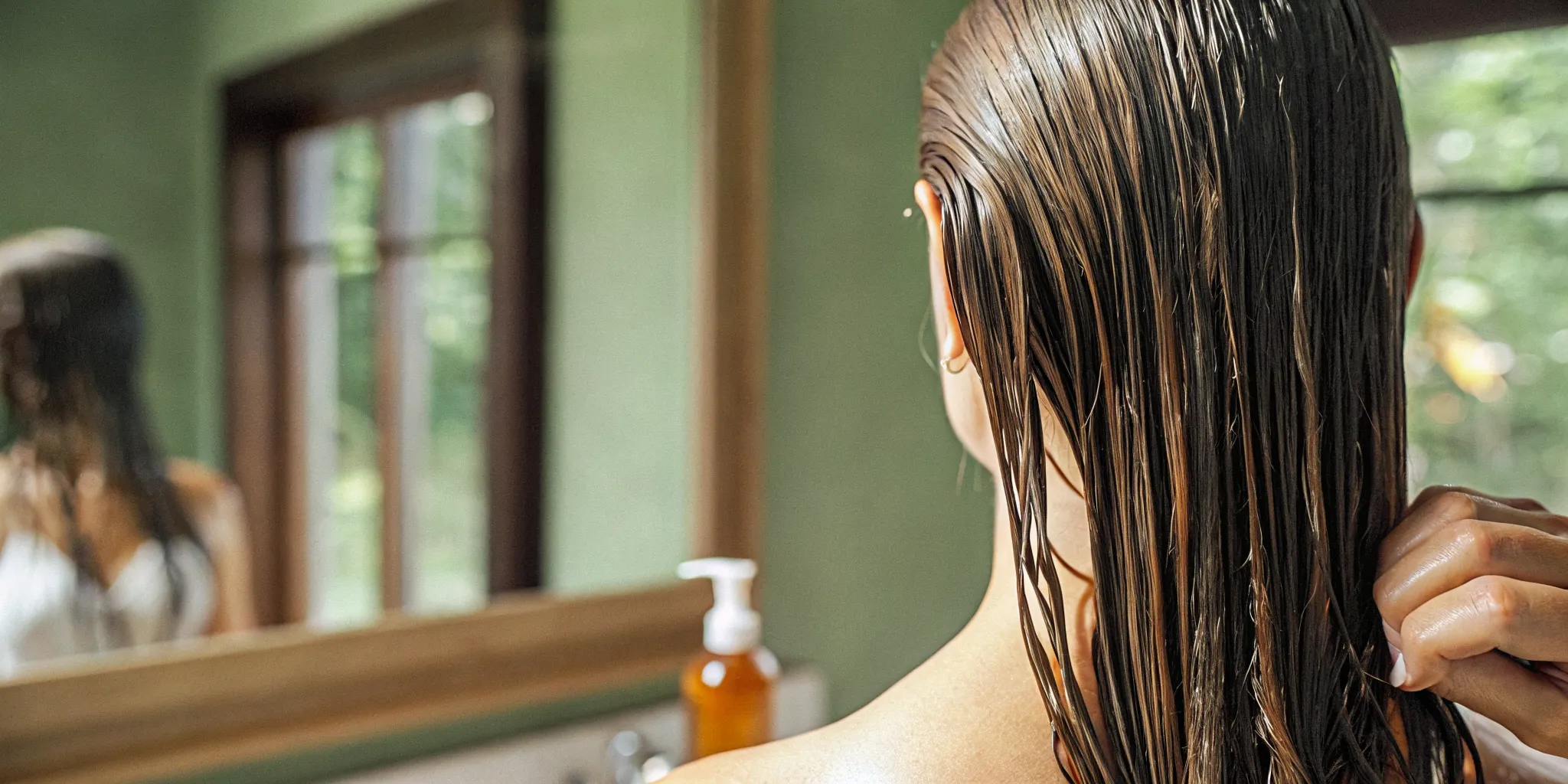
- Begin with damp, towel-dried hair. After cleansing, gently press out excess water with a towel. Do not apply oil while the hair is dripping wet, because the product will be diluted and may distribute unevenly. Damp hair gives the oil moisture to help seal in. Hair oils primarily act as emollients, lubricating the shaft and improving shine, as described in this review of hair oils and their cosmetic functions.
- Keep the application below the scalp. Warm a small amount between your palms, then smooth it through the mid-lengths and ends. These areas usually need the most support after coloring, while the scalp can become greasy or weighed down when oil is applied directly. Start with less than you think you need. You can add another drop, but removing excess usually requires another wash.
- Choose one conditioning role for the oil. For a pre-shampoo treatment, work a light layer through the lengths before washing, leave it on briefly, then cleanse as usual. Hair oiling is also described as a pre-shampoo practice in the medical literature. Alternatively, add a few drops to a deep conditioner and apply that mixture from mid-lengths to ends. This pairs naturally with a dedicated deep-conditioning treatment for colored hair when the strands feel dry or rough.
- Protect before heat styling. Once the hair is conditioned and towel-dried, use a light heat-protectant layer before blow-drying or using hot tools. Oil can help reduce moisture loss during styling. But it should not be treated as a substitute for a heat protectant unless the product specifically says it provides that protection.
- Clarify periodically. If the hair starts to feel coated, limp, or dull, use a clarifying shampoo occasionally to remove accumulated oil and styling residue. Follow with conditioner, since clarifying can leave the lengths feeling less supple. Between appointments, you can also explore these natural remedies for color-treated hair without adding multiple heavy layers to the routine.
Lightweight vs. Heavy Oils: A Quick Comparison
The right oil depends less on whether it is natural and more on how it behaves on the hair fiber. Color-treated hair often benefits from a light, smooth finish that improves slip and helps the cuticle feel conditioned without leaving a film that dulls the color. Lightweight oils are generally easier to distribute through the mid-lengths and ends, while heavier oils may be better reserved for occasional pre-shampoo use or especially coarse, dry hair.
| Oil type | How it behaves on color-treated hair | Best use |
|---|---|---|
| Jojoba | Lightweight and similar in structure to natural sebum, so it can add softness and slip without a heavy finish. Cleveland Clinic notes jojoba’s sebum-like qualities. | A few drops on damp or dry ends, especially for fine or easily weighed-down hair. |
| Argan | Rich in fatty acids and vitamin E, it helps smooth the cuticle and enhance shine. Medical News Today describes argan oil’s conditioning properties. | Finishing frizz, softening dry lengths, or adding polish after styling. |
| Grapeseed, rosehip, or sunflower | Light, emollient options that can coat the surface, improve slip, and support a conditioned appearance without as much weight. | Daily or occasional end care when you want softness and shine without a greasy feel. |
| Coconut | Unlike surface-focused oils, coconut oil can penetrate into the hair cortex. PubMed research reports this penetrating behavior, which may make it feel heavier or less predictable around freshly colored hair. | Use sparingly as a pre-shampoo treatment, not as a generous daily finish after a color appointment. |
| Olive | Intensely moisturizing but comparatively heavy, particularly on fine or thin color-treated strands. Too much can flatten movement and make the color look less fresh. | Occasional treatment for thick, coarse, or very dry hair, applied mainly to the lengths and ends. |
For most color-treated routines, start with less than you think you need. Warm one or two drops between your palms, then smooth them over the driest areas. If hair looks coated rather than glossy, reduce the amount or choose a lighter formula, and revisit your protein and moisture balance. This approach preserves movement while giving the cuticle the lubrication and shine associated with hair oils.
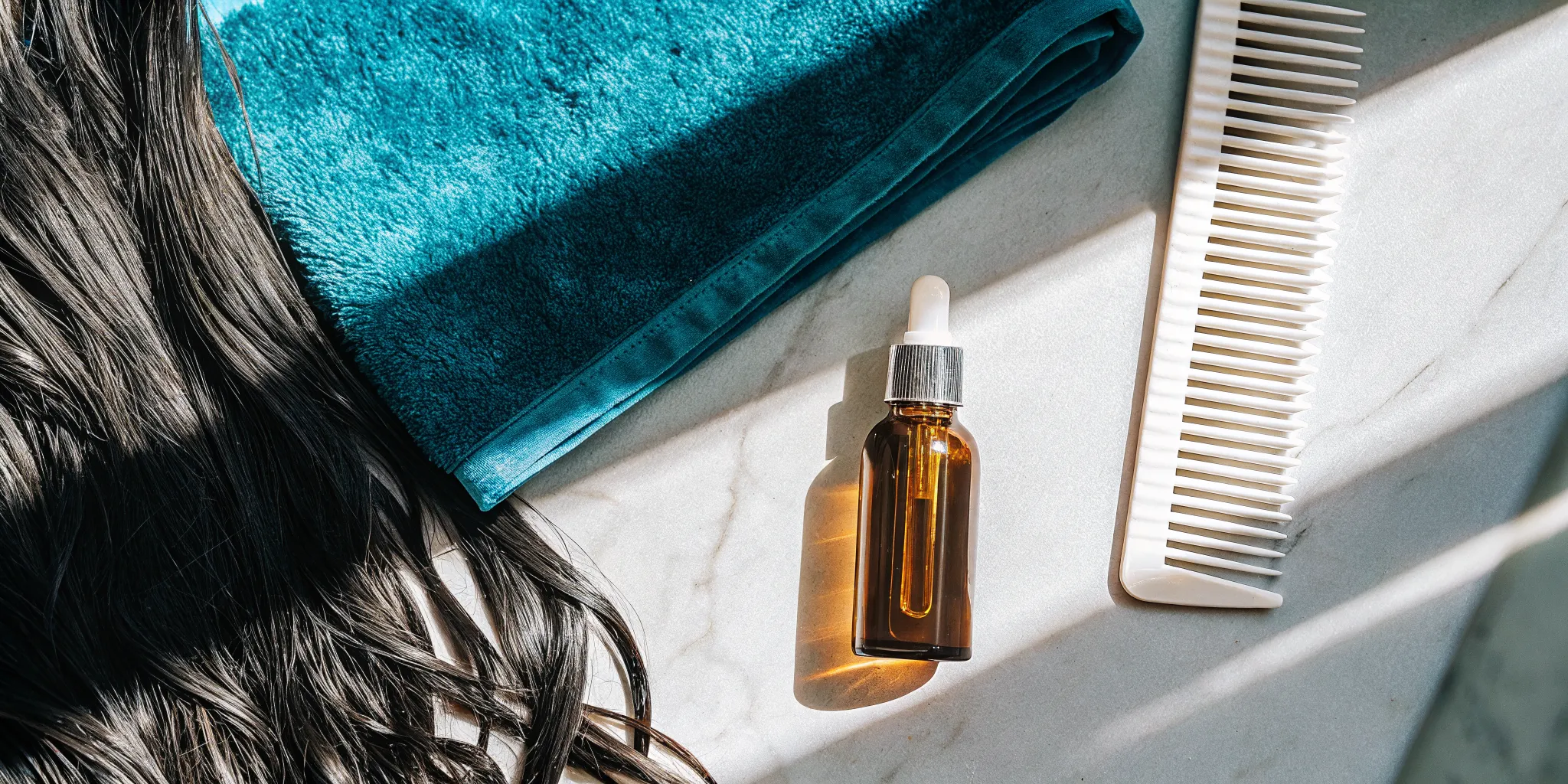
Get the Deep Conditioner Post-Color Revitalizer and pair it with a lightweight oil for a complete color-care ritual.
Frequently Asked Questions
Which oil is best for color-treated hair?
A lightweight oil is usually the most practical choice, especially for fine or porous strands that become weighed down easily. Argan oil can smooth the cuticle and add shine, while jojoba oil offers a lightweight feel similar to natural sebum. Start with a small amount and adjust based on how your hair responds. Research on argan oil’s fatty acids and vitamin E supports its smoothing and shine benefits.
Can I use oil immediately after coloring my hair?
Yes, but use a small amount and keep the application focused on the mid-lengths and ends rather than the scalp. Applying oil to damp hair can help seal in hydration, while a pre-shampoo oil treatment is another option when your hair feels dry. Follow your colorist’s aftercare instructions first, particularly after a major lightening service.
Can coconut oil fade freshly colored hair?
Coconut oil penetrates the hair shaft more readily than many oils because of its structure. That does not mean it will automatically remove color, but its deeper penetration and heavier feel make it a less predictable first choice immediately after coloring. If you use it, apply a small amount as a pre-shampoo treatment and observe how your hair and color respond. A review of hair oils describes coconut oil’s penetration into the fiber.
How often should I use hair oil on color-treated hair?
Use it when your lengths need softness or shine rather than on a rigid schedule. A few drops after washing may be enough for fine hair, while a pre-shampoo treatment can suit drier, coarser strands. If hair begins to look flat or greasy, reduce the amount and use a suitable clarifying wash occasionally to remove buildup.
Rebuild, Then Protect: A Color-Safe Routine That Lasts
Pairing a lightweight oil with the right repair step keeps color vibrant and hair resilient between salon visits. The Solanesse Deep Conditioner Post-Color Revitalizer targets the structural damage coloring leaves behind, with hydrolyzed keratin, collagen, and plant peptides that help strengthen the cuticle from the inside out. Add your chosen hair oil as a finishing step, then combine it with the long-term repair of a structured treatment for one simple ritual.
View the Deep Conditioner Post-Color Revitalizer to start a color-care routine that protects your investment.


