


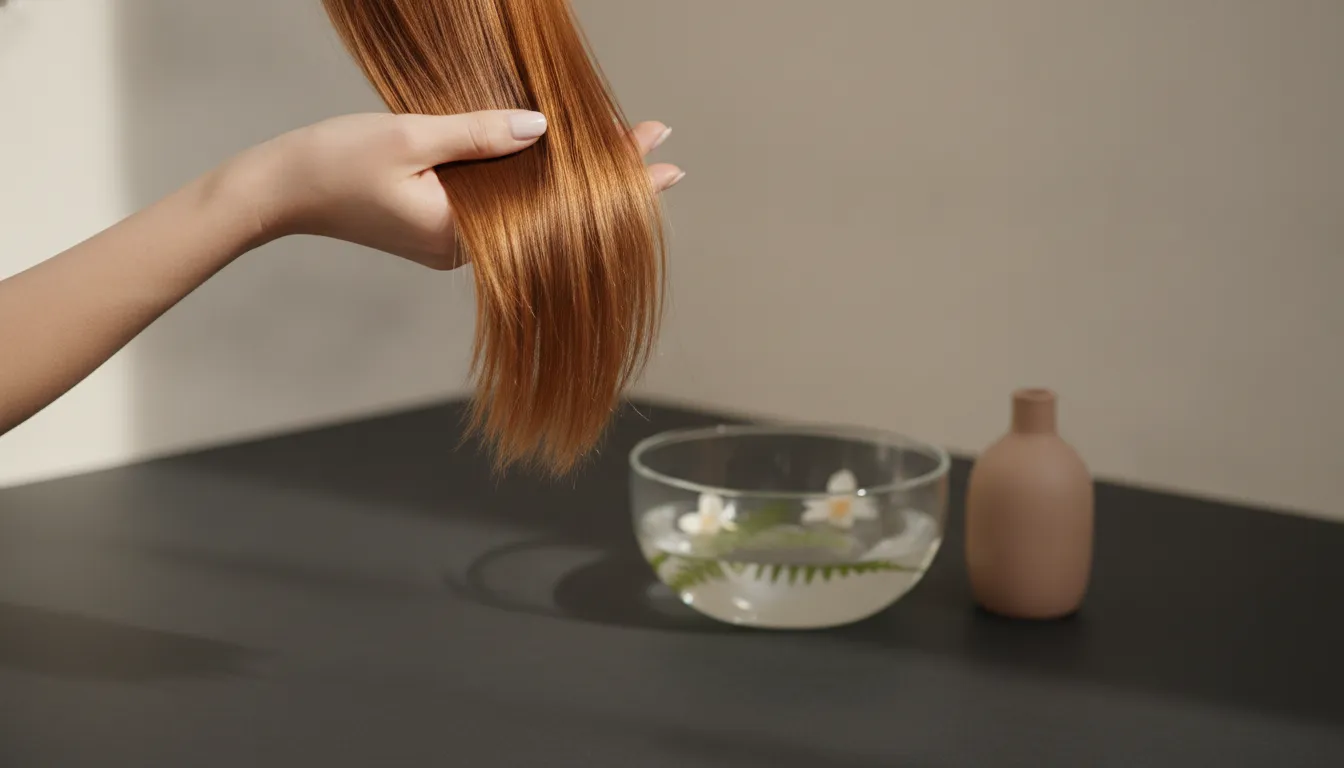
Hair that takes time to get fully wet, dries slowly, or feels coated after conditioning may be responding to a tightly packed cuticle layer. It may not need another rich product. That distinction matters even more after coloring, when the goal is to support softness without adding unnecessary weight.
The best low porosity hair products are usually lightweight, water-based layers used in small amounts. Gentle warmth during conditioning and occasional clarifying can help when buildup is suspected. This is a starting point, not a rule that bans every oil, silicone, or rich formula. Your texture, density, wash schedule, and color history should guide the final routine.
Explore the Solanesse post-color deep conditioner when your routine also needs focused care for chemically processed hair.
Before choosing ingredients by reputation, look at how your hair behaves in water and after application. The difference between moisture resistance, product buildup, and color-related structural care begins with understanding what porosity can and cannot tell you.
What Does Low Porosity Mean for Product Choice?
Low porosity describes how a hair fiber takes in and holds moisture. It is not a curl pattern, ethnicity, or fixed hair type. When the cuticle layers sit relatively flat and close together, water and conditioning ingredients may have more difficulty moving into the strand. That behavior is why the most suitable low porosity hair products often need to be chosen by weight, application method, and how your hair responds over time.
For a broader explanation of how fiber behavior can intersect with color services, see our guide to hair porosity and color. That discussion is distinct from this one. Here, the focus is product selection for low-porosity behavior. It is not a substitute for a post-color repair routine when bleaching, dye, or chemical processing has affected the hair’s structure.
Low porosity is a fiber behavior, not a texture identity
Low-porosity hair is commonly described as having tightly packed cuticles that resist moisture entering the fiber. The pattern may be influenced primarily by the hair’s natural structure. Buildup or heat damage can also change how the surface behaves. In practical terms, a strand can act less receptive to water or conditioner without that behavior defining whether the hair is straight, wavy, curly, or coily.
This distinction matters because there is no single product weight that suits every person with low porosity hair. Fine hair may become coated quickly with a formula that feels comfortable on a thick strand. A dense or coarse texture may need more conditioning support, even when the cuticle resists quick wetting. Start with the smallest useful amount and apply it evenly to wet or damp hair. Judge the result after the hair dries rather than assuming an ingredient category is universally right or wrong.
Signs that product behavior may be the issue.
Commonly reported signs include hair that takes a long time to become fully wet, products that remain on the surface, slow drying, dry ends, stiffness, or recurring buildup. These observations can guide experimentation, but they are not a diagnosis. Dryness can have several causes, including chemical processing, friction, heat styling, or an incompatible routine. Look for a consistent pattern across several wash days instead of relying on one shower or a single strand test.
If conditioner seems to sit on top, begin by reducing layers rather than abandoning all rich ingredients. A lightweight, water-based product may feel more balanced. A thick butter or oil used in excess can leave the surface dull or weighed down. Even lighter oils can be appropriate for some hair, particularly when used sparingly. The useful question is not whether a product is marketed for low porosity hair. It is whether the formula leaves the strand flexible, clean, and conditioned without a persistent coating.
Keep porosity care separate from post-color repair
Porosity-based selection helps you manage moisture, weight, and buildup. It does not repair every effect of coloring or bleaching. Color-treated hair may also need structural care that considers the cuticle, cortex, and cell membrane complex. Keep those goals clear: choose lighter layers when the hair feels coated, but address post-color dryness or fragility with a separate, appropriately timed repair ritual. This approach creates a more precise routine than treating every concern as a porosity problem.
How Should You Choose Low Porosity Hair Products?
Choose by how your hair responds to a formula, not by an ingredient blacklist. Low porosity hair often benefits from lighter, water-based layers because heavier products can remain on the surface and contribute to a coated or weighed-down feel. That does not make oils, silicones, rich conditioners, or humectants universally wrong. Your strand diameter, density, texture, color history, wash frequency, and current condition all change how much product feels comfortable.
Start with the smallest effective amount, apply products to thoroughly wet or damp hair, and observe the result over the next wash or two. If your hair feels flexible and conditioned without losing movement, the weight is probably appropriate. If it feels coated, dull, sticky, stiff, or unusually slow to dry, simplify the layers before adding more moisture.
| Category | A useful starting point | Adjust by observing |
|---|---|---|
| Cleanser | Use a cleanser that removes residue without leaving the hair feeling stripped. If buildup is suspected, occasional clarifying can reset the surface. | Persistent coating, dullness, or products that stop performing may call for clarification. Dryness or increased tangling may mean the cleanser is too aggressive. |
| Conditioner | Begin with a lighter conditioner and distribute it evenly through wet hair. Increase richness only where the hair needs more slip or softness. | Fine hair may lose volume with too much product, while dense or coarse hair may need more coverage. Rinse thoroughly and assess movement after drying. |
| Leave-in | Choose a lightweight, water-based leave-in and apply a small amount to wet or damp lengths. Layer only if the first application is not enough. | Reduce quantity if the hair feels tacky, limp, or slow to dry. Add a little more when the ends remain rough without becoming coated. |
| Oil or serum | Use a few drops as a finishing layer rather than saturating the strand. Lighter oils, including almond or argan oil, are common starting options. | Watch for surface residue and loss of shine. A heavier oil is not automatically forbidden, but it may require less product or less frequent use. |
| Humectant | Evaluate humectants in the context of your climate, styling routine, and the rest of the formula. They can support a hydrated feel, but they are not automatically beneficial or harmful. | Notice whether the hair feels soft and manageable across several washes. If it becomes frizzy, sticky, or unusually dry in your conditions, change the formula or reduce layering. |
Product weight is relative. A fine, densely packed head of hair may need a light conditioner but still benefit from a richer treatment on dry ends. Thick or coarse hair may tolerate a creamier formula even when the cuticle resists water. Curly and coily textures may also need enough conditioning slip to detangle safely. Solanesse’s audience includes straight, wavy, curly, and coily hair, as well as fine and thick densities, so there is no single ideal weight for every reader.
Do not treat silicones or oils as automatic causes of buildup. Used in excess, heavy butters, thick oils, or silicone-rich layers may sit on the strand and create a weighed-down feel. But the practical question is whether the complete formula and amount work for your hair. Research on coconut-based hair oils has also reported reduced increases in hair porosity after surfactant exposure. Along with a color-protection effect, so oil use should be assessed rather than dismissed outright: read the study on oils, porosity, and washing.
For readers who color their hair, product selection and structural repair are related but not identical decisions. Porosity can influence how hair interacts with color, while a color service can change the hair’s condition. Review the distinction in hair porosity and color, then choose the lightest routine that leaves your hair conditioned, flexible, and easy to rinse clean.
Can Gentle Heat Help Low Porosity Hair Absorb Moisture?
Yes, gentle warmth can make conditioning feel more effective for some low-porosity hair. But it should be treated as a temporary support step, not a way to permanently change the hair fiber. Start with warm, not hot, water when cleansing and conditioning. Warm water can help the hair become more receptive to a conditioner by softening the surface and helping the product spread evenly. It does not guarantee that every formula will move into the fiber or correct damage below the surface.
After shampooing, apply conditioner to thoroughly wet hair and distribute it in sections. If your hair tends to resist rich products, use a modest amount first. A warm towel, heat cap, or hooded dryer on a comfortable low setting can provide controlled conditioning warmth for about 15 to 30 minutes. A practical range suggested in low-porosity care guidance. Heat protection for color-treated hair remains important whenever a dryer or other heat tool is involved.
Conditioning warmth is different from high-heat styling
The goal of a conditioning cap or warm towel is mild, even warmth around already damp hair. High-heat styling is a separate exposure. Direct heat from a flat iron, curling iron, or hot blow-dryer concentrates thermal stress on the strand. Especially when hair is repeatedly styled or already fragile from color processing. Hair is exposed to both mechanical and thermal factors that can reduce smoothness and shine, so more heat is not a shortcut to better hydration. Research reviews also describe conditioners as helping minimize some undesirable effects from external damage and restore a smoother surface feel, which is surface care rather than permanent repair.
Keep the temperature low enough that your scalp remains comfortable and the hair never feels hot, brittle, or dry during processing. Rinse thoroughly and assess the result after the hair dries. If the strands feel coated, limp, or less responsive, reduce the amount of product or the frequency of heat-assisted conditioning instead of increasing the temperature. If the hair still feels rough or unusually fragile, focus on gentle handling and color-care practices rather than trying to force absorption.
For color-treated hair, this distinction matters. Gentle warmth may support the application of a conditioner on warm, damp strands, but it does not reverse chemical processing or create permanent structural repair. Use it as an optional, measured part of a routine, adjusting to your hair’s density, texture, condition, and response.
How Do You Prevent Buildup Without Drying Out Color-Treated Hair?
Clarifying is most useful when it responds to a pattern, not when it becomes an automatic part of every wash day. Low-porosity hair may resist water, leave products sitting on the surface, dry slowly, or feel coated and stiff despite repeated conditioning. Color-treated hair adds another consideration: an aggressive or poorly timed cleanse can leave already processed lengths feeling drier. The goal is to remove excess film while keeping the rest of the routine light, deliberate, and supportive.
- Identify buildup symptoms before reaching for a clarifier. Look for hair that feels coated after rinsing, loses movement, looks dull soon after styling, or seems unable to absorb products that previously worked. These signs can also reflect too many layers of oils, butters, silicones, masks, or styling products. A commercial guide describes low-porosity hair as benefiting from clarifying every two to four weeks, followed by a lightweight conditioner. That range is a starting point for commercial guidance, not a universal prescription. Source: Ulta’s low-porosity product guide.
- Adjust the interval to your routine and symptoms. If you wash infrequently, use minimal styling product, or do not see a coated feeling, you may not need to clarify on a fixed schedule. If you layer rich products often, exercise heavily, or notice surface buildup sooner, a shorter interval may be reasonable. Another low-porosity guide also recommends using a clarifying rinse sparingly, about every two to four weeks. Treat that window as a commercial guide starting range, then adjust for wash frequency, strand feel, dryness, and color-care needs rather than following the calendar blindly. Source: Dr. Serkan Aygin’s low-porosity guide.
- Clarify, then replace moisture without overloading the strand. Use the clarifying wash as a reset, rinse thoroughly, and follow with a conditioner that gives slip without leaving a heavy coating. Product selection guides group clarifying shampoo with a lightweight conditioner because removing buildup without conditioning can make color-treated lengths feel unnecessarily rough. Keep the amount focused on the scalp and areas that feel coated, while allowing the lather to rinse through the lengths. Avoid treating every dry feeling as proof that you need more oil or a thicker mask. Excess heavy butters, thick oils, and layered formulas can sit on low-porosity strands and contribute to a weighed-down feel. Source: Ulta’s low-porosity product guide.
- Separate buildup control from post-color structural care. Clarifying addresses surface residue. It does not replace care for hair affected by coloring, bleaching, or chemical processing. On a non-clarifying wash, use your color-care conditioner or treatment according to its instructions, and avoid stacking several rich treatments simply because the hair feels dry. If shine is the concern, follow a measured routine for safe shine and buildup control rather than adding more finishing products by default. When a post-color treatment is appropriate, keep its timing distinct from the clarifying reset and rinse thoroughly.
- Reassess after the next two washes. Hair should feel cleaner and more responsive without becoming squeaky, brittle, or persistently dry. If the coated feeling remains, review the total amount of leave-in, oil, serum, and styling product before clarifying again. If the lengths feel dry or color looks less polished, extend the interval and prioritize gentle conditioning. Lightweight oils and serums may add shine, but thick layers can leave hair feeling coated, so use the smallest amount that gives the finish you want. Source: Ulta’s product guidance.
This symptom-led approach keeps buildup control compatible with color care. It also leaves room for differences in density, texture, wash frequency, and color history, which matter more than a rigid clarifying schedule.
A Simple Low-Porosity Routine for Color-Treated Hair
Color-treated hair benefits from a routine that respects both how the fiber accepts products and what chemical processing can do to its structure. Low porosity is not a texture identity, and it does not mean every rich formula is unsuitable. It is a useful product-selection lens: start with lighter layers, watch how the hair responds, and adjust when the surface feels coated or the ends remain dry.
-
Begin with a measured cleanse. Wash according to your scalp and styling routine rather than forcing a fixed schedule. If your hair feels coated, dull, stiff, or unusually resistant to water, buildup may be limiting how your conditioner performs. A clarifying wash can be a reasonable occasional reset, but use it thoughtfully around color services and follow with conditioning. Commercial guidance commonly suggests a starting range of every two to four weeks, but your wash frequency. Color history, and symptoms should determine whether that is too often or not often enough. The goal is a clean, comfortable base, not a repeatedly stripped fiber.
-
Apply hydration in light, even layers. Use enough conditioner or leave-in to support softness without automatically stacking multiple heavy products. Fine hair may need less product than thick hair, while dense or highly textured hair may need more. This is why low-porosity hair products should be evaluated by performance, not by a universal ingredient blacklist. If a formula remains on the surface, leaves the hair limp, or creates a waxy feel, reduce the amount or simplify the routine. Humectants, oils, and silicones are not inherently good or bad; context, climate, formulation, and quantity matter.
-
Use controlled warmth when deep conditioning. Warm damp hair can make a conditioning step feel more effective for some people, while high heat from styling tools adds a separate risk. Hair is exposed to mechanical and thermal stress that can reduce smoothness and shine, and conditioners can help restore a smoother surface effect, as described in hair-care research. Choose gentle, controlled warmth rather than excessive temperature, and use heat protection for color-treated hair before hot-tool styling.
-
Keep color-repair care separate from porosity selection. Porosity can influence how hair interacts with water, products, and color processes. Research on hair structure has examined how porosity and overlapping keratin scales affect color uptake. While another study found that surfactant exposure can increase porosity and reported a color-protection effect from coconut-based hair oils. These findings support careful structural care, but they do not make one oil or one low-porosity routine a universal answer for treated hair. Porosity selection does not replace a post-color repair routine that addresses the cuticle, cortex, and cell membrane complex. Read more about Solanesse’s science and ingredients when you want to understand that structural-care distinction.
-
Add a targeted post-color treatment when your hair needs it. Solanesse’s treatment is designed for hair affected by coloring, bleaching, and chemical processing, across multiple textures and color histories. Apply the post-color deep conditioner to warm, damp hair, leave it for 10 to 15 minutes, then rinse thoroughly. Use it weekly or as needed, based on your hair’s condition and the rest of your routine. Its role is focused post-color structural care, not proof that every person with low porosity needs a richer regimen.
-
Review the result before adding another product. After a few washes, assess softness, manageability, shine, surface residue, and how readily the hair becomes wet. If the hair feels coated, simplify or clarify when appropriate. If it feels rough or fragile after coloring, prioritize gentle handling and conditioning support instead of repeatedly layering styling products. This feedback loop keeps product choice responsive to your actual hair rather than to a porosity label alone.
A simple routine works best when each step has a clear purpose: cleanse without overdoing it. Condition with an appropriate amount of weight, use warmth carefully, and reserve post-color treatment for structural care. That separation makes it easier to maintain color-treated hair without turning low-porosity product selection into a complicated system.
Frequently Asked Questions
How can you tell if product weight is too much for low porosity hair?
Watch for products that remain on the surface, slow drying, a coated feel, dullness, or hair that feels stiff despite conditioning. These signs suggest reducing the number of layers or switching to lighter, water-based formulas. Product weight should also reflect your density, texture, and color history.
Should low porosity hair use heat when deep conditioning?
Controlled warmth can help conditioning feel more effective by temporarily improving access to the hair surface. Use warm, not very hot, conditions and avoid treating heat styling as the same thing as conditioning warmth. A heat protectant remains important whenever you use a hot tool.
How often should low porosity hair be clarified?
Start with clarifying about every two to four weeks, then adjust to wash frequency, styling products, and color-care needs. Clarify sooner when hair feels coated or will not absorb conditioner, and less often if the process leaves color-treated lengths dry. Follow with a lightweight conditioner. A commercial product guide recommends this two-to-four-week starting range.
Can color-treated hair use low porosity hair products and a repair treatment?
Yes. Porosity-informed product selection helps manage weight, moisture, and buildup, while a post-color treatment addresses the separate needs of chemically processed hair. Apply a deep conditioner to warm, damp hair for 10 to 15 minutes, rinse thoroughly, and use it weekly or as needed according to the product guidance.
Get started with a post-color conditioning step
Low porosity hair often benefits from a measured routine that respects product weight, buildup, and your color-care priorities. For a focused conditioning step after coloring, explore the Solanesse Deep Conditioner Post-Color Revitalizer. Review the product details and decide whether it fits your current wash-day approach, especially when you want post-color care without adding unnecessary layers.


