


The best finishing products for colored hair do not all do the same job. An oil can add slip and a polished look; a cream can soften and shape; a heat protectant belongs in a heat-styling routine; and a shine product can refine the finish. Choose for your hair’s texture, porosity, and styling goal—not just the promise on the front of the bottle. And remember: a finisher supports the look and feel of your hair. It does not replace thoughtful post-color conditioning.
Ask Solanesse about your post-color routine
What does a finishing product do?
A finishing product is a leave-in formula used during or after styling to influence how hair feels or looks. The category is broad. A styling cream, oil, heat protectant, and shine spray may sit near one another on a shelf, but they serve different purposes. A government-hosted USPTO filing, for example, lists hair sprays, setting lotions, mousses, gels, and waxes among hair-preparation examples. See the hair-preparation examples in the filing.
For color-treated hair, the useful question is not “Which product repairs everything?” It is “What does my hair need at this step?” A finisher may help manage the surface, reduce the feel of dryness, add definition, or prepare hair for heat styling, depending on its formula and directions. It cannot reverse every effect of chemical processing, and no single finishing category covers all needs.
If your main concern is the condition of the hair after coloring, start with a care routine rather than layering finishers. Read more about post-color hair repair and fiber care and the role of the hair cuticle.
Which finishing products are worth comparing?
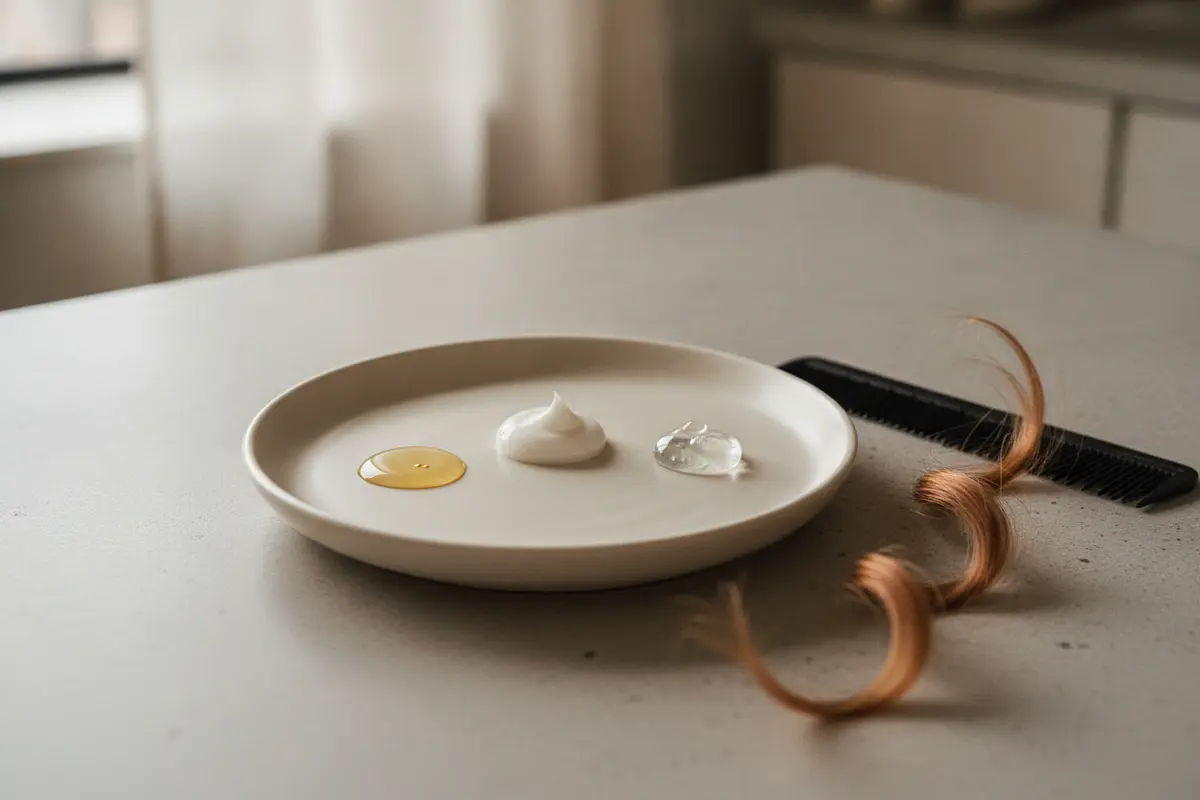
Think of the following options as tools for different finishing goals. The names alone do not guarantee a particular result, so check the directions and choose a texture you can apply sparingly.
| Product type | What it may help with | Best starting point | Watch for |
|---|---|---|---|
| Lightweight oil | Slip, a smoother feel, and a polished-looking finish | A small amount on mid-lengths and ends | Too much can make fine hair look flat or oily |
| Leave-in cream | Softness, shaping, or a more controlled finish | Use a small dab, then add only if needed | Rich creams may feel heavy on fine or low-porosity hair |
| Heat protectant | A product step intended for heat styling when the label says so | Follow the product directions before using hot tools | Do not assume every oil or cream is a heat protectant |
| Shine product | A glossy-looking surface or a final polish | Choose a light mist or serum and keep it away from roots | Some finishes can emphasize buildup or uneven texture |
These are broad categories, not interchangeable formulas. A cream might also offer heat protection if its label specifically says so, while another cream may be intended only for conditioning or styling. Read the actual directions. A product’s name or feel is not proof of a particular performance claim.
Heat protectants deserve a separate check because the purpose is specific: look for clear directions naming heat styling and follow how much to apply and when. Some products are made to be applied to damp hair before blow-drying; others may be intended for dry hair before another tool. The label, not the word “oil” or “serum,” should guide that decision. For context, an EPA regulation’s hair-spray definition includes spray products making finishing claims; that classification does not tell you whether a particular formula protects against heat. Read the regulation’s hair-spray definition.
How do you choose by hair texture and porosity?
Texture and porosity are useful clues, not rigid rules. Hair can also behave differently across the same head: roots may feel healthy while older lengths feel dry, or the ends may be finer than the rest. Begin with the area that needs the most help and use the smallest practical amount.
Fine or easily weighed-down hair
Start with a light spray or a tiny amount of a fluid product. Apply below the roots, focusing on the ends. Avoid combining several rich layers before you know how your hair responds. If your hair loses movement, looks coated, or feels limp, use less next time or choose a lighter texture. This is especially useful when comparing products for fine hair.
Thick, coarse, or very dry-feeling lengths
A cream or oil may be easier to distribute through substantial lengths, but start with a modest amount. Warm the product between your palms if its instructions allow, then smooth it over the mid-lengths and ends. Add another small amount only if the first application disappears without giving the finish you want. More product is not automatically more conditioning.
Low-porosity hair
If products tend to sit on the surface or build up, favor lighter textures and avoid stacking oil, cream, and serum at once. Apply to clean, evenly damp or dry hair as directed, and observe whether it absorbs or leaves a coating. The guide to choosing products for low-porosity hair offers more context on balancing moisture with buildup.
High-porosity or porous-feeling lengths
Hair that feels rough or dries quickly may respond better to a conditioning cream or a carefully placed oil than to a very light mist alone. That does not mean it needs several layers. Try one formula, assess the feel once dry, and adjust the placement or amount. A separate guide explains how porosity can relate to post-color hair.
For curls or waves, choose a product whose texture and directions suit your preferred definition. Spread it evenly rather than repeatedly touching the hair while it dries. If frizz is your main styling concern, see the guide to understanding common causes of frizz.
One practical way to compare candidates is to test them on separate wash days rather than combining them immediately. Keep the shampoo, conditioner, and drying method as consistent as you can. Use one new finisher, note the amount and placement, then check how the hair looks and feels after it is fully dry and later in the day. This makes it easier to tell whether the formula adds movement, definition, or gloss—or simply leaves a residue. If you change several products at once, it is much harder to know which one caused the difference.
Which product fits your styling goal?
- For a soft, touchable finish: Try a light cream or a small amount of oil on the ends. Keep the root area free of rich product unless your hair specifically needs it.
- For a sleek, smooth look: Use a product made for smoothing and apply in thin, even layers. A heavy coating can make hair look greasy rather than polished.
- For blow-drying or hot tools: Choose a heat protectant whose label identifies it for that use. Apply it as instructed, distribute it evenly, and follow tool directions. Do not treat a shine oil as a substitute unless its label says it offers heat protection.
- For visible gloss: Use a shine spray or serum as a final step if it suits your texture. Start with less than you think you need, especially on fine hair.
- For definition: A cream or styling product designed for your preferred finish may help shape strands. Use the product directions and avoid piling on multiple products before you see the result.
Picture two routines. If your fine, straight lengths look flat by midday, try a light mist or one tiny drop of oil on the ends, then reassess before adding anything else. If your thicker waves feel rough after blow-drying, try a small amount of a smoothing cream that is labeled for your styling method, distributing it evenly rather than concentrating it on a few sections. In both cases, the goal is a controlled finish, not the most layers. Use different products if your needs differ on wash days versus heat-styling days.
Color care also involves choices beyond the finishing step. If you are planning your next appointment or at-home color, review how often to color hair and practical ways to help maintain hair color.
How should you apply a finisher?
- Read the label first. Check whether the formula is meant for damp or dry hair, and whether it is a styling, shine, or heat-protection product.
- Begin with clean, detangled hair. Use the finishing step after washing and conditioning, or on dry hair if the directions allow.
- Use a small amount. For a cream or oil, start with a pea-sized dab or a few drops. For a spray, begin with a light pass rather than saturating one section.
- Place it where it is needed. Smooth product through the mid-lengths and ends. Keep it off the scalp unless the label specifically directs otherwise.
- Style as intended. If using heat, use a product labeled for heat styling and follow its application directions before using the tool.
- Assess once hair is dry. Notice softness, movement, shine, and whether the hair feels coated. Adjust one factor—amount, placement, or product type—next time.
Make the test repeatable: write down the product name, approximate amount, whether hair was damp or dry, and the result you wanted. For example, “two sprays per side on damp lengths, then blow-dried” gives you a useful baseline. If the finish looks too slick, reduce the amount or move application farther from the roots. If ends still feel rough, first check whether the formula was intended for that finish before layering a second product. Change just one variable at a time so you can learn what your hair responds to.
Where does post-color conditioning fit?
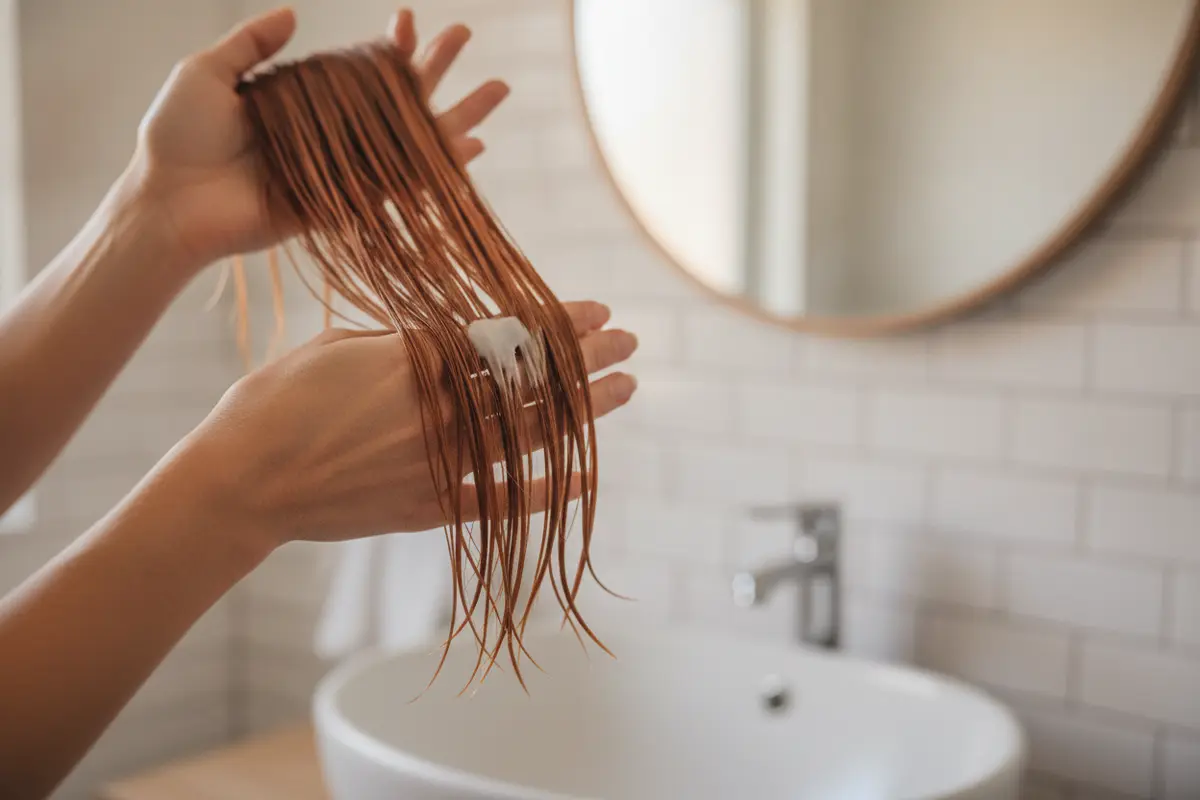
Finishers are the final layer of a styling routine; conditioning is a separate care step. Hair coloring can leave lengths feeling dry or rough. A leave-in oil or shine spray may improve the immediate finish, but those products are not a replacement for a rinse-out conditioner or a focused post-color treatment.
Solanesse’s Deep Conditioner Post-Color Revitalizer is a single-step, at-home treatment intended for color-treated hair. The brand describes a whole-structure approach that considers the cuticle, cortex, and cell membrane complex—not only bonds. Its formula includes hydrolyzed keratin, collagen, plant-based peptides, sunflower oil, bergamot, and vanilla, and is described as free from sulfates, parabens, silicones, phthalates, mineral oils, and GMOs. The treatment time is 10–15 minutes; follow the product directions. Learn more about its ingredients and hair-care approach.
The 4 oz product is $39 for either a one-time or subscription purchase. U.S. orders ship free; international shipping is unavailable. The 30-day satisfaction guarantee applies to first-time buyers. Conditioning can complement a styling finisher, but it is not a promise that one product reverses every kind of damage.
Shop the Deep Conditioner Post-Color Revitalizer
How can you compare labels before buying?
Use the label to narrow the field, then evaluate how the product behaves on your hair. A clear label should tell you whether the formula is a rinse-out or leave-in product, when to apply it, and what styling purpose it serves. For heat styling, look specifically for explicit heat-protection directions. If that information is missing, do not assume the product is intended to protect hair from hot tools.
- Check the format: Sprays and light serums can be easier to distribute in a fine veil; creams and oils need more careful portioning, especially on fine strands.
- Check the application stage: A damp-hair product may be intended to support blow-drying or shaping, while a dry-hair finisher may be designed for a final polish.
- Check how much to use: Follow the label’s amount and placement guidance before adding more. Several products applied together can make it harder to tell what is helping.
- Check the finish you want: “Gloss,” “smooth,” “soft,” and “defined” describe different aims. Select the one that matches your styling goal rather than expecting every result from one bottle.
- Check the feel afterward: A useful product should fit your preferences for movement and touch. If hair feels sticky, coated, or weighed down, change the amount or formula.
Ingredients can help explain a product’s texture, but an ingredient name alone does not tell you how the complete formula will perform. For example, oils, film-forming ingredients, and conditioning agents can appear in formulas with different consistencies and instructions. Read the complete usage directions and consider the product as a whole. When in doubt, patch-test according to the product’s instructions and stop using it if irritation occurs.
Frequently Asked Questions
Can I use hair oil on colored hair?
You can choose an oil intended for hair and incorporate it into your routine based on its label and your hair’s response. Start with a small amount on the mid-lengths and ends. If hair looks flat or feels coated, reduce the amount or choose a lighter product.
Does a shine serum protect hair from heat?
Not necessarily. A shine product should not be assumed to provide heat protection unless its label explicitly says it is intended for that use. Choose a labeled heat protectant when using hot tools and follow its directions.
Should finishing products go on wet or dry hair?
It depends on the formula. Some products are designed for damp hair before styling; others are used on dry hair as a final touch. Check the label, then use a small amount and observe the finish.
Can a finishing product repair color damage?
A finisher can help with the look or feel of hair, but its role depends on the formula. It should not be expected to repair every effect of coloring. Pair sensible styling choices with conditioning and gentle handling.
Choose the finish that serves your hair
Keep the routine purposeful: choose a product for the result you want, match its texture to your hair, and apply only as much as needed. Treat heat protection, shine, styling, and post-color conditioning as related but distinct steps. That way, your color remains an expression of you—and your routine supports hair that feels cared for.


